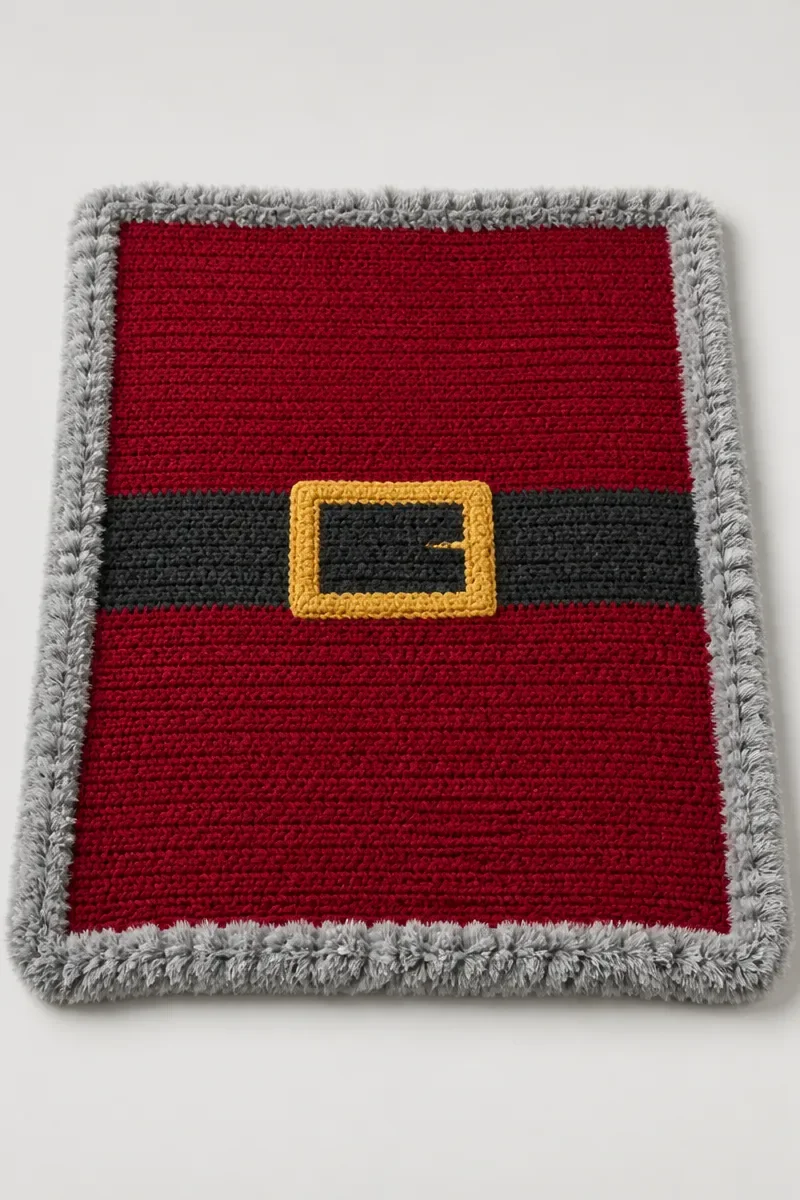
Santa’s Christmas Blanket with Fur Border

Affiliate disclosure: This post may contain affiliate links. I may earn a small commission at no extra cost to you. See our Privacy Policy for details HERE.
- What Is a Blanket?
- Why This Is a Great Choice for a Blanket
- Before You Start
- Yarn and Hook Recommendations
- Materials
- Santa’s Christmas Blanket with Fur Border Instructions
- Tips for Blanket Success
- Common Mistakes to Avoid
- Ways to Make It Your Own
- Care and Washing Instructions
- Frequently Asked Questions
- More Ideas to Try
- Conclusion
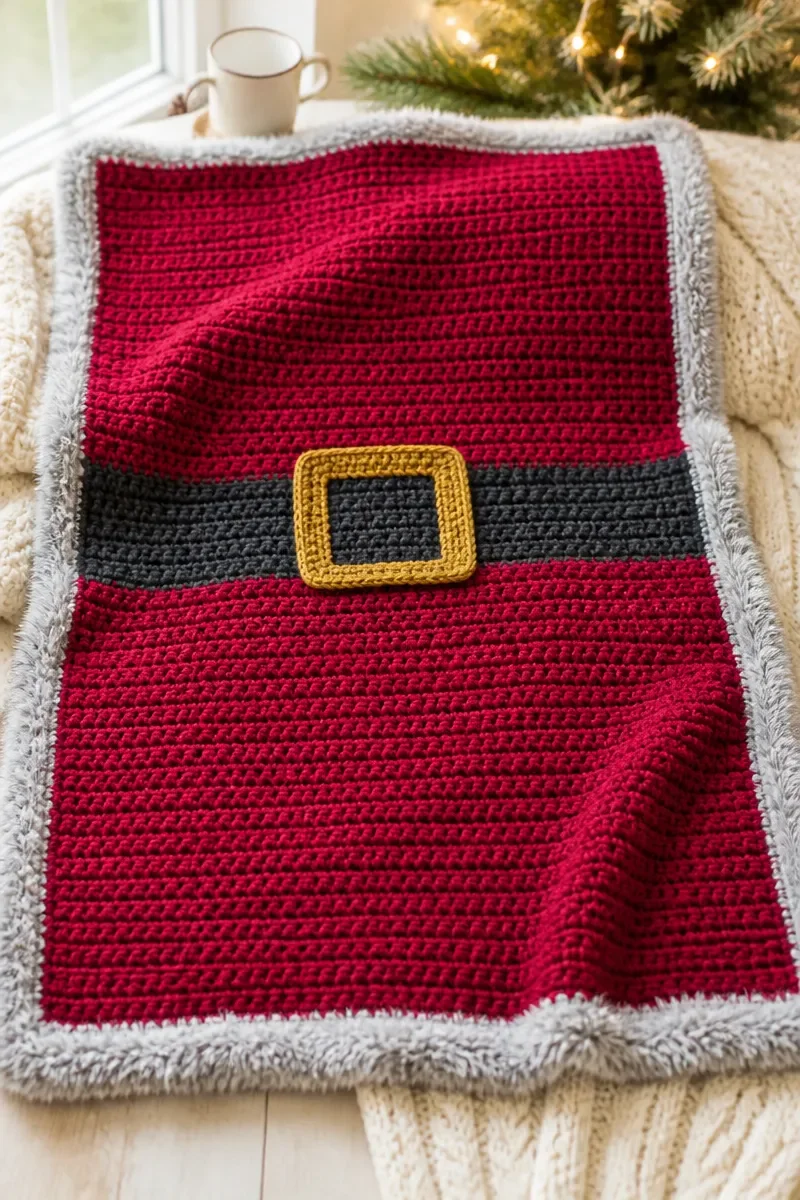
Santa’s Christmas Blanket with Fur Border is a handmade blanket project for the holiday season. It offers a welcoming way to create a useful piece with a festive character and a cozy feel.
This project can suit crocheters who enjoy making practical gifts or adding handmade touches to seasonal gatherings. The finished blanket can be kept at home, shared with family, or given to someone who appreciates a personal, useful present.
Working through a larger handmade piece can encourage patience and careful attention. It also offers satisfying practice in staying organized, making thoughtful finishing choices, and building confidence with a project that grows steadily in your hands.
What Is a Blanket?
A blanket is a broad piece of crocheted fabric made for comfort, warmth, and everyday use. It can rest across a lap, cover a bed or chair, or offer an inviting layer during quiet moments at home. The overall appearance depends on the yarn, texture, and design chosen by its maker.
Blankets are valued for their usefulness as well as their personal character. A handmade one can bring a room a softer, more welcoming feel, and its familiar presence may make a favorite chair or reading spot feel especially inviting. It can also become a thoughtful gift for a range of occasions.
Crocheters enjoy blankets because they can be adapted to suit different tastes and homes. Some are made with understated colors and textures, while others celebrate a season or a special person. The finished fabric is both practical and expressive, giving the maker room to create something that feels personal and lasting.
Why This Is a Great Choice for a Blanket
- Useful handmade gift: A blanket has an everyday purpose, so it can be appreciated long after the occasion that inspired it. Handmade work also carries the care and attention of the person who made it.
- Room for personal style: A blanket can reflect a recipient’s taste or complement a home’s surroundings. Thoughtful choices in fiber and appearance make the finished piece feel individual without taking away from its usefulness.
- Comforting project experience: Working on a larger fabric project can provide a calm, steady activity. Repeated motion and gradual progress give makers a chance to settle into their craft and enjoy the process.
- A seasonal favorite: A festive blanket can add a warm, welcoming touch to holiday gatherings. It can also become part of a household’s seasonal traditions, brought out again when celebrations return.
- A confidence builder: A project with a clear overall purpose lets a crocheter practice care and consistency over time. Watching a useful handmade item take shape can make the effort feel rewarding.
Before You Start
- Make a gauge swatch with the yarn and hook you plan to use. Measure it carefully, since matching gauge helps your fabric behave as intended.
- Read through everything before beginning, so you understand the overall flow and can notice any questions while your hands are still free.
- Keep a notebook or tally sheet nearby to record progress and note anything you want to remember when you return to the project.
- Organize and wind your yarn before you begin. Keeping skeins tidy and easy to reach helps prevent tangles and makes your workspace more comfortable.
Yarn and Hook Recommendations
- Choose a fiber that feels comfortable in the finished fabric and suits the way you expect to use it. Softness, warmth, and care needs can all influence your choice.
- Select a yarn weight that creates a fabric with suitable drape and substance. Very different weights can alter how the fabric feels and how much yarn the work uses.
- Smooth yarn makes it easier to see where the hook enters and to notice the shape of each loop. This can be especially helpful when you are still building confidence.
- Consider how clearly the yarn shows its texture. Defined strands make it easier to inspect your work, while highly textured yarn can conceal small irregularities.
- Choose colors with enough contrast for the details to remain visible. A palette that is pleasing to you also helps the finished work feel cohesive in its intended setting.
- Use a hook that works comfortably with your yarn and produces a fabric you like. A small swatch lets you judge the fabric’s feel before you start the larger project.
Materials
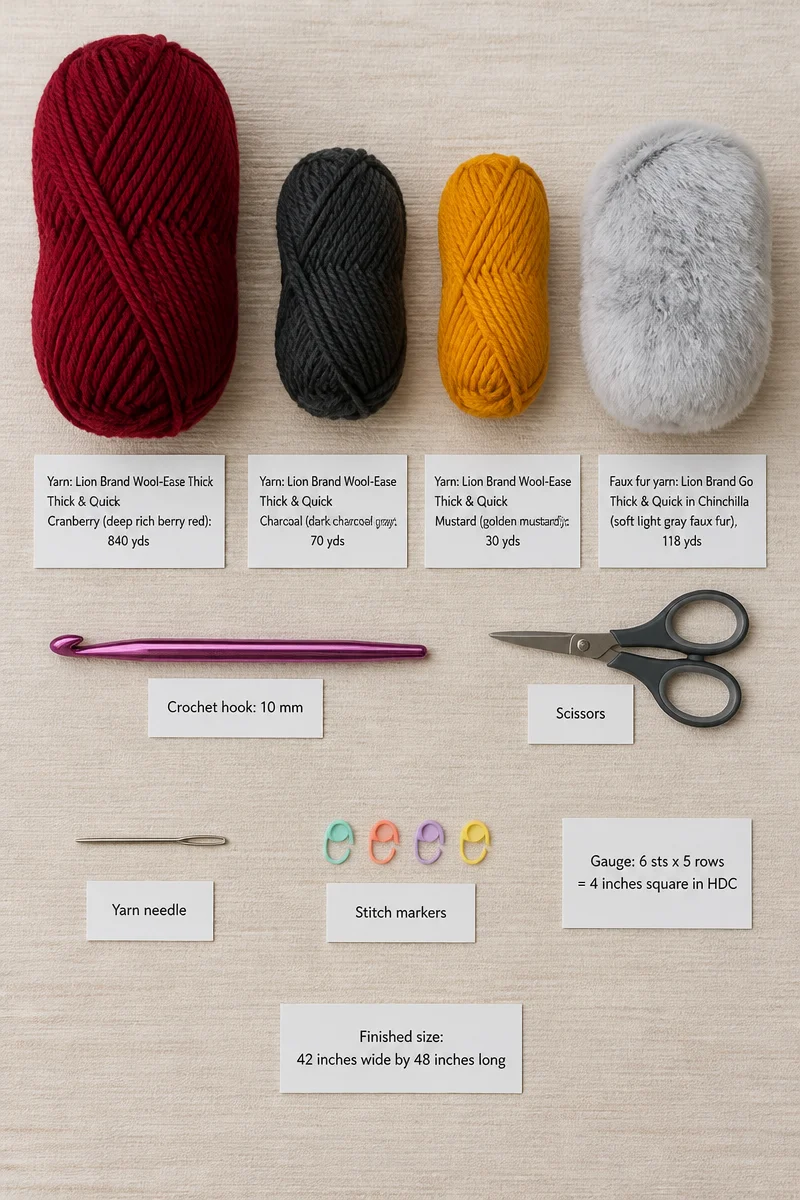
- Yarn: Lion Brand Wool-Ease Thick & Quick
- Cranberry (deep rich berry red): 840 yds
- Charcoal (dark charcoal gray): 70 yds
- Mustard (golden mustard yellow): 30 yds
- Faux fur yarn: Lion Brand Go for Faux Thick & Quick in Chinchilla (soft light gray faux fur), 118 yds
- Crochet hook: 10 mm
- Scissors
- Yarn needle
- Stitch markers
- Gauge: 6 sts x 5 rows = 4 inches square in HDC
- Finished size: 42 inches wide by 48 inches long
Santa’s Christmas Blanket with Fur Border Instructions
Color key
Cranberry = deep rich berry red; Charcoal = dark charcoal gray; Mustard = golden mustard yellow; Chinchilla = soft light gray faux fur.
Abbreviations
ch = chain; HDC = half double crochet; sc = single crochet; sl st = slip stitch; st(s) = stitch(es).
Notes
Chains at the beginning of rows do not count as a stitch. The pictured blanket has 2 rounds of faux fur sc border. If your border is too wavy, adjust your hook size or tension, or skip some sts at even intervals as you crochet around the blanket.
Blanket Body
-
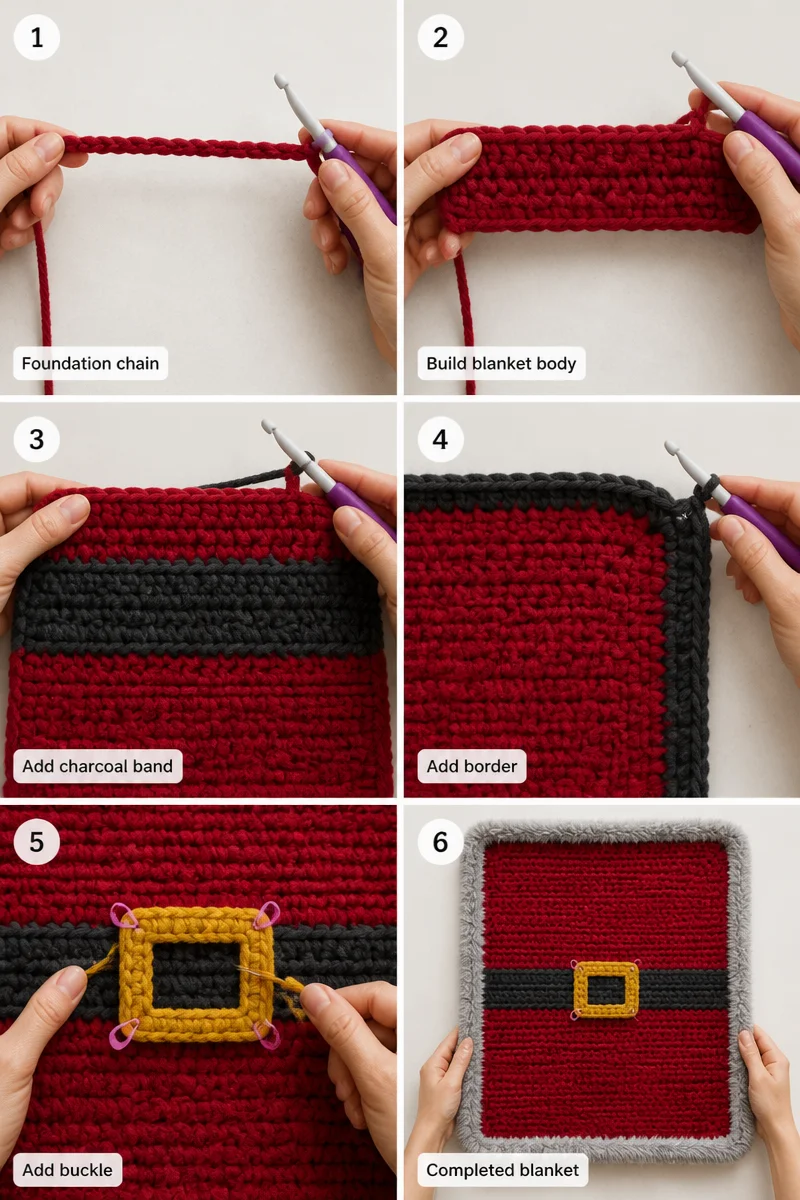
With Cranberry, ch 79.
-
Row 1: HDC in the 2nd ch from the hook and in each ch across. [77 sts] Turn.
-
Row 2: Ch 2, HDC in the first 2 sts. *HDC in the 3rd loop, HDC. Repeat from * across. HDC in the last st of the row. Turn.
-
Row 3: Ch 2. *HDC, HDC in the 3rd loop. Repeat from * across. HDC in the last st of the row. Turn.
-
Rows 4-17: Repeat Row 2 on even rows and Row 3 on odd rows.
-
Rows 18-22: Using Charcoal, repeat Row 2 on even rows and Row 3 on odd rows.
-
Rows 23-66: Using Cranberry, repeat Row 2 on even rows and Row 3 on odd rows.
Border
- Ch 1 and sc evenly around the edge, chaining 2 at each corner. Join with a sl st when you reach the start of the round. Switch to the faux fur yarn and join it in any corner. Ch 1 and sc for 2 more rounds, working (sc, ch 2, sc) in each ch-2 corner from the previous round. Join with a sl st at the start of the round.
Buckle
-
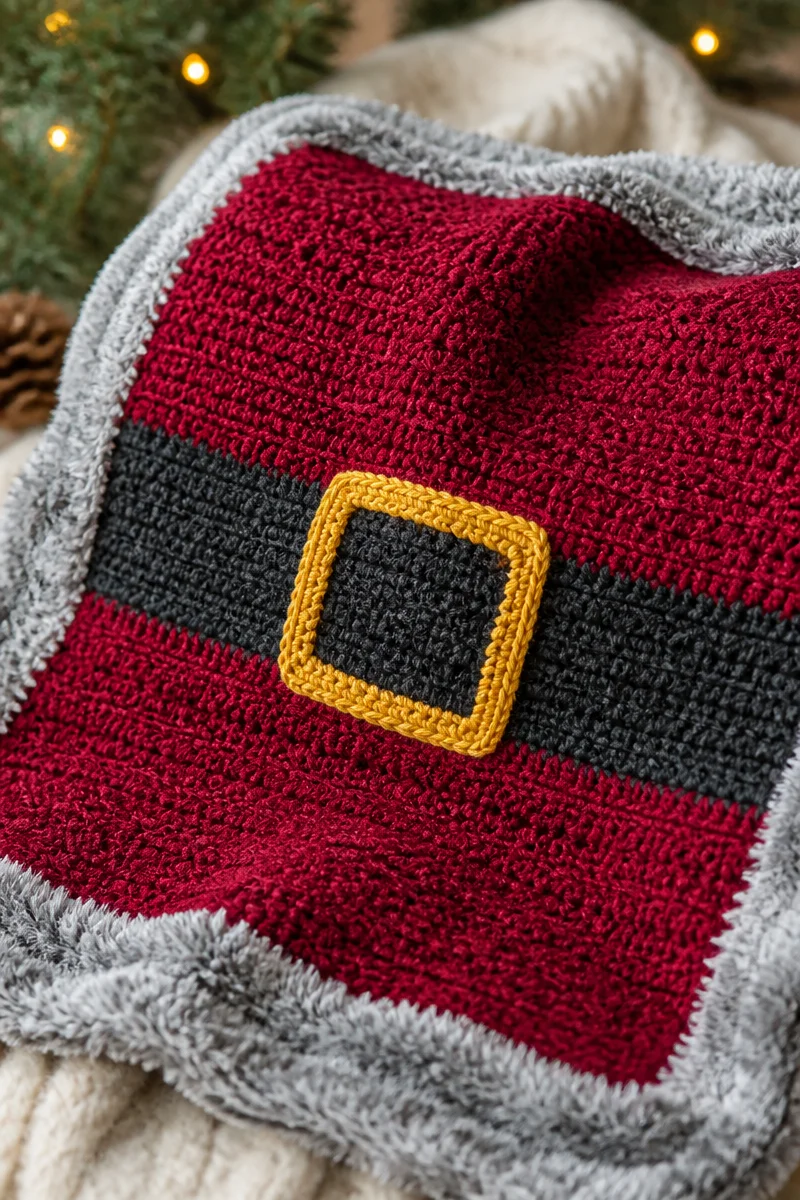
Mark the middle of the blanket with a stitch marker, then mark the 4 corners of the buckle (the pictured buckle is about 10 sts across). Using Mustard, surface crochet a rectangle, using the stitch markers as guides. Go around the rectangle one more time so the buckle is 2 rows of surface crochet wide.
-
Fasten off and weave in all ends.
Tips for Blanket Success
Comfortable posture
Choose a chair that lets your shoulders rest naturally and keeps your arms supported without crowding your movement. A relaxed position can reduce strain during a longer crochet session.
Good lighting makes it easier to see your hands and the yarn clearly. Place a lamp where it brightens your work without casting a shadow across the area you are watching.
Even tension
Let the yarn travel smoothly through your fingers rather than gripping it tightly. A relaxed hold helps each loop form consistently and keeps your hands from tiring as quickly.
Pause now and then to notice how the fabric feels. If your grip has tightened, set the work down briefly, loosen your fingers, and resume at a comfortable pace.
Track your place
Use a notebook or tally sheet to record your progress whenever you pause. A short note about where you stopped can make it easier to settle back in without guesswork.
Keep your notes clear and consistent, using a mark or brief description that makes sense to you. This habit is especially useful when you divide your crochet time across several sessions.
Check as you go
Look over your work periodically for missed loops, uneven edges, or an unexpected change in the fabric. Noticing a small issue early usually makes it easier to correct without disturbing much work.
Lay the fabric flat when you want to judge its overall shape. A calm visual check can reveal whether the work is sitting evenly and whether your hand movements have stayed consistent.
Common Mistakes to Avoid
Skipping the swatch
It can be tempting to begin the main work right away, especially when the yarn feels familiar. Without a swatch, though, you have less information about how your chosen yarn and hook behave together.
Make a sample and measure it before committing to the full project. If the fabric feels too firm or too loose, adjust your approach and make another sample until it feels suitable.
Pulling too tightly
Tight yarn handling often comes from gripping the strand for control or working while tense. Loops that are difficult to enter can slow your hands and make the fabric stiff.
Let the yarn move through your fingers with light, steady contact. If the hook feels difficult to insert, pause and relax your grip rather than forcing it through the work.
Miscounting work
It is easy to lose your place while chatting, setting the project down, or switching attention between tasks. A small counting error can affect the balance of later work if it goes unnoticed.
Count at regular checkpoints and mark your progress on a tally sheet. If a count seems off, examine the recent work carefully before continuing so you can identify where it changed.
Leaving short ends
Short yarn ends can be difficult to secure neatly, and they may work loose as the fabric is handled. This often happens when a crocheter trims before allowing enough yarn for careful finishing.
Leave a comfortable length when ending a strand, then use a yarn needle to work it securely into the surrounding fabric. Weave in the end without pulling so firmly that the fabric puckers.
Changing yarn or hook
Switching to a different yarn or hook partway through can change the feel and appearance of the fabric. Even materials that seem similar may produce a different result in your hands.
Gather enough yarn for the project before starting, and keep the same hook available throughout. If a substitution becomes necessary, make a swatch first and compare its texture with your existing work.
Ways to Make It Your Own
- Choose a different color palette that suits the person or home you have in mind. A coordinated set of shades can create a calm look, while a lively mix can feel celebratory.
- Try a different yarn of the same weight if you prefer another fiber or texture. Check that it feels comfortable and make a swatch before choosing it.
- Make a matching second project to create a thoughtful set. Coordinated handmade pieces can be useful for a household or make a gift feel especially considered.
- Give the finished work with a handwritten note that shares why you chose to make it. A personal message can turn a practical present into a meaningful keepsake.
- Present it neatly folded in a reusable fabric bag or gift box. A simple presentation makes the handmade care easy to appreciate without needing extra decoration.
Care and Washing Instructions
Washing: Follow the yarn label for washing guidance, since care needs vary by fiber and yarn construction. Use a gentle approach suited to the label, and avoid rough handling that could distort the crocheted fabric.
Drying: Support the fabric as you move it while wet, since its weight can stretch the work. Lay it in a suitable place to dry, arrange it evenly, and let it dry fully before storing.
Blocking: Gentle blocking can help the fabric lie more evenly if its surface looks uneven after washing. Use a method that suits the yarn label, and handle the work carefully to preserve its natural texture.
Frequently Asked Questions
Can I use a different yarn?
Yes, another yarn can work if its weight and feel are suitable for the fabric you want. Make a swatch first so you can assess the texture and drape. Keep in mind that substitutions may change the finished appearance and the amount of yarn needed.
How can I keep my work even?
Let the yarn move comfortably through your fingers, and avoid tightening each loop to force a uniform look. Check your fabric from time to time rather than judging only by touch. Relaxed hands and steady attention usually help create a more consistent result.
What helps me count reliably?
Count at regular checkpoints and record each completed section on a tally sheet. Stitch markers can help identify a place you want to revisit or use as a reference. If you are interrupted, write down your location before putting the work aside.
What if it looks different than expected?
First, lay the fabric flat and view it in good light before deciding that something is wrong. Small differences can come from tension, yarn texture, or the way the fabric rests. Compare the overall appearance with your own preferences, then choose whether any adjustment is worthwhile.
How long should yarn tails be?
Leave enough yarn to handle comfortably with a yarn needle when you finish a strand. A tail that is too short can be awkward to secure neatly. Weave the end through the fabric without pulling hard, then check that it stays in place.
More Ideas to Try
If you enjoy making useful handmade pieces, consider a seasonal cushion cover, a cozy scarf, a pair of simple mittens, or a decorative pillow. Each offers a different way to explore texture, color planning, and gift making while creating something suited to a home or wardrobe. Small projects can also be thoughtful companions to larger handmade gifts.
Conclusion
Give Santa’s Christmas Blanket with Fur Border a place in your seasonal making plans and enjoy creating something useful by hand. Take your time, make a comfortable space to work, and let each session bring you closer to a finished gift or a welcoming addition to your home. Explore more crochet ideas on the blog whenever you are ready to choose another project.