Crochet Starry Night Baby Nursery Rug

Affiliate disclosure: This post may contain affiliate links. I may earn a small commission at no extra cost to you. See our Privacy Policy for details HERE.
A crochet Starry Night baby nursery rug can make a room feel cozy, calm, and a little magical. I love how a rug can bring a nursery’s colors together while adding a handmade touch. With moon-and-star details or a night-sky color palette, this project can become a special accent for a baby’s room.
The title describes a project style, not one specific crochet stitch. The rug may use a familiar stitch, such as single crochet, while color changes and appliqués create its starry-night look. The difficulty depends on the stitch and design you choose, so a simple version can suit a confident beginner, while shaped motifs and colorwork take more practice.
In this guide, you’ll learn how to choose a stitch and yarn for a nursery rug, along with practical tips for getting an even finish. You’ll also find care advice and common mistakes to watch for. Since this rug is intended for a baby’s room, we’ll cover important safety points, too.
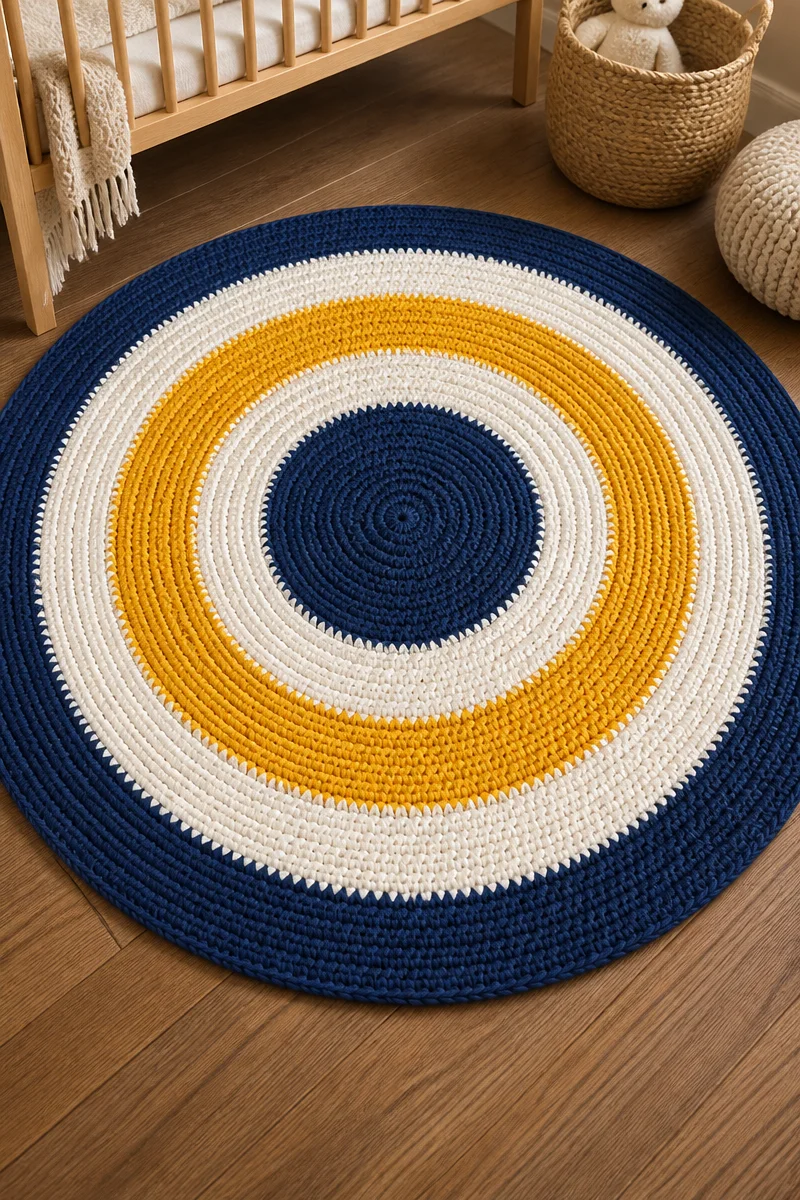
What Is the Starry Night Crochet Rug Technique?
A Starry Night crochet rug is a themed home décor project rather than a named stitch. Crocheters create the look with a deep blue or purple background, then add stars, moons, or other celestial details. The motifs can be crocheted separately and sewn on, worked into the rug with color changes, or embroidered onto the finished surface.
For the base, many makers choose single crochet or half double crochet. These stitches form a sturdy fabric that can handle regular use. Single crochet creates a dense, firm texture, while half double crochet works up faster and gives a slightly softer feel. In either case, the look comes from combining the stitch with thoughtful color choices and carefully placed details.
This style appeals to crocheters because it offers plenty of room to personalize the design. For example, you can make the rug round, oval, or rectangular, then add a crescent moon or a scattering of stars. However, a nursery rug should be designed for decoration and supervised use, not as a sleep surface or an unattended play mat.
Why This Is a Great Choice for a Baby Nursery Rug
- It adds a warm, personal touch. A handmade celestial rug can tie together a nursery’s colors and theme.
- You can choose a sturdy stitch. Single crochet and other compact stitches create a firm fabric for a decorative rug.
- The design is easy to personalize. You can adjust the colors, shape, size, and number of stars to suit the room.
- It can use simple techniques. A plain base with separate appliqués is often easier than complex colorwork.
- It makes a thoughtful gift. A custom rug can be a meaningful addition to a nursery, provided the family follows safe-use guidance.
Yarn and Hook Recommendations
- Choose a yarn weight that suits the design. Bulky yarn can make a rug work up faster, while medium-weight yarn gives you more control over small details.
- Look for durable, washable fibers. Machine-washable acrylic is a practical choice for many home projects. Cotton can also be sturdy, though it may feel heavier and less springy.
- Check the yarn label before buying. Care instructions vary, even among yarns made from similar fibers. For a nursery item, easy cleaning is especially useful.
- Use a hook that makes a firm fabric. Start with the size suggested on the yarn label, then test a small swatch. A slightly smaller hook may help keep the rug dense, but the fabric should not feel stiff or difficult to work.
- Plan for color changes or appliqués. If you want a night-sky design, choose a main color and a few contrasting shades for stars and moon details. Make sure the yarns have similar care needs.
- Consider the rug’s final placement. A crocheted rug can slide on a smooth floor. Use an appropriate, secure rug pad underneath, and keep the rug away from a crib or sleep space.
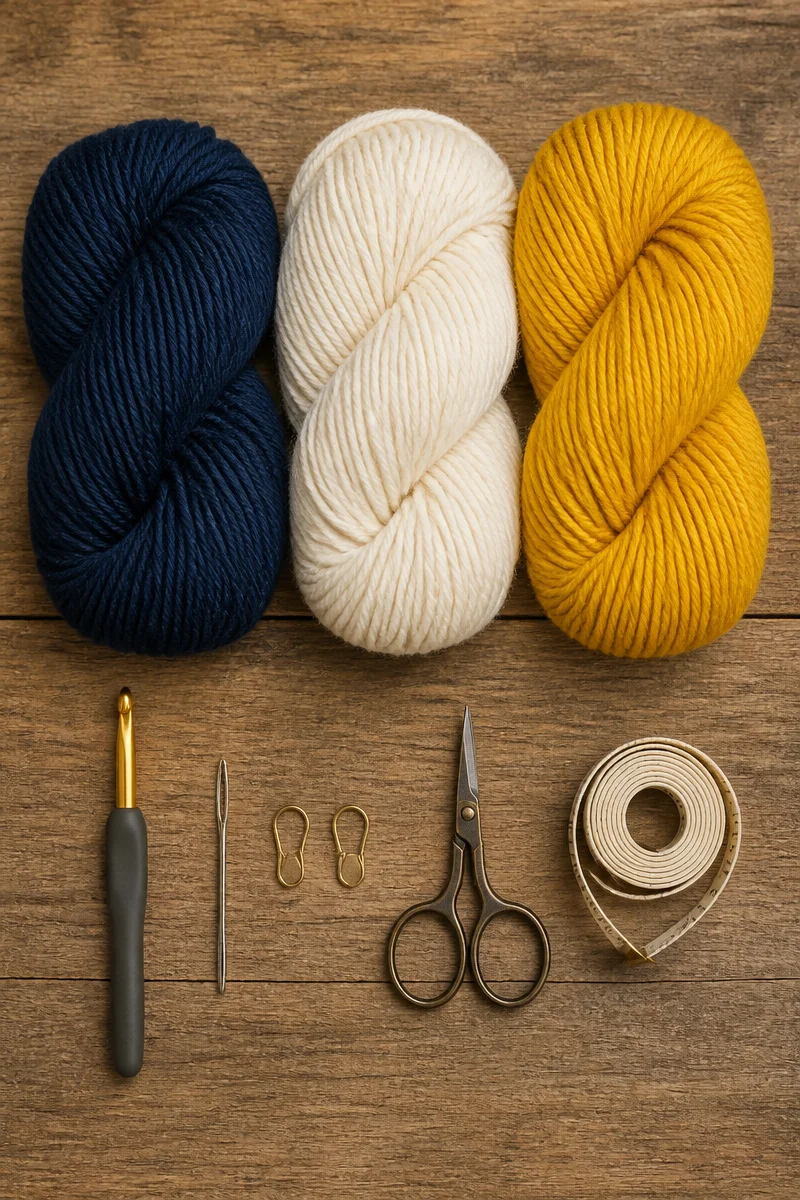
Tips for Starry Night Rug Success
First, make a small swatch in your chosen yarn and stitch. This helps you check the fabric’s firmness, see how the colors look together, and estimate how much yarn the project may need. Also, measure the planned area before you begin, so the finished rug suits the room without blocking a doorway or creating a trip hazard.
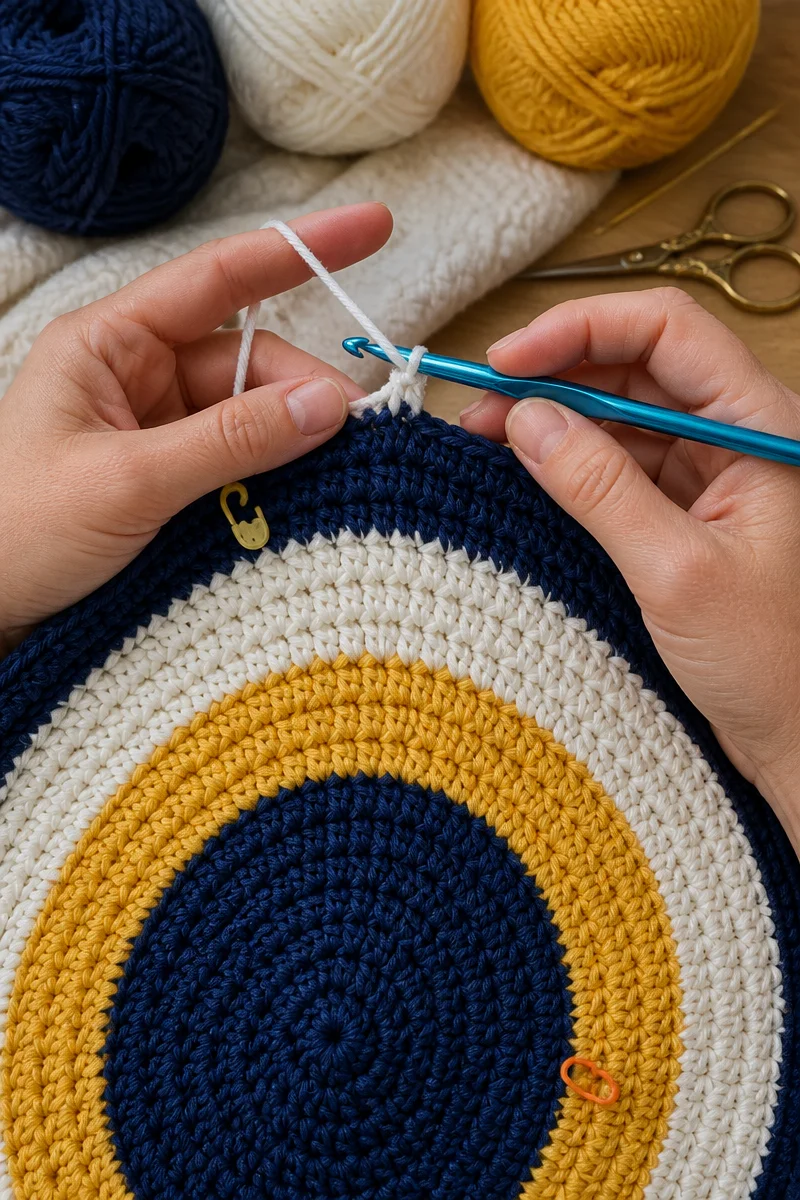
Next, keep track of stitches and increases, especially if you are shaping a round or oval rug. A stitch marker can help you find the start of each round. If you are attaching separate stars or a moon, arrange them on the rug before sewing them down. Then secure each detail firmly and weave in yarn ends. Take breaks as needed, because rug projects can take time and steady hands make neater stitches.
Common Mistakes to Avoid
One common problem is uneven tension. If some rows are tighter than others, the rug may ripple or pull out of shape. Instead, check your swatch and pause now and then to lay the work flat. If the edges curl, review your stitch count and consider whether your hook is too small.
Another mistake is choosing yarn only for its color. A delicate or difficult-to-wash yarn may not suit an item that could collect dust or need regular cleaning. Before starting, check the label and think about how the rug will be used. Also, avoid mixing yarns with very different thicknesses unless you have tested how they look and behave together.
Small decorative pieces need special care in a baby’s room. Stars, moons, beads, buttons, and other add-ons can loosen, so avoid detachable parts and secure any crocheted appliqués with strong stitching. Even with firmly attached details, keep the rug out of the crib and supervise babies around it.
Finally, do not assume that a crocheted rug will stay put on its own. On smooth floors, it may slide or bunch. Use a suitable rug pad, check it often, and remove the rug if it becomes a tripping risk.
Care and Washing Instructions
Washing: Follow the yarn label first. Machine-washable acrylic or cotton may be washed on a gentle cycle if the label allows it. Use mild detergent, and place the rug in a laundry bag if it fits. For a large or delicate rug, spot-cleaning or hand-washing may be easier.
Drying: Reshape the rug while it is damp, then lay it flat to dry when possible. Avoid high heat unless the yarn label specifically allows it, since heat can damage or distort some fibers. Make sure the rug is completely dry before placing it back on the floor.
Blocking: A light block can help smooth the edges and even out the shape. However, blocking will not fix major rippling caused by missed stitches or incorrect increases. Use a method that suits the yarn, and avoid stretching the rug beyond its intended size.
More Ideas to Try
If you enjoy making a Starry Night crochet rug, try a moon-and-stars pillow, a simple striped nursery blanket, or a star appliqué garland for wall décor. You could also explore a textured waffle stitch or granny square project for another way to add cozy patterns and color to a room.
Conclusion
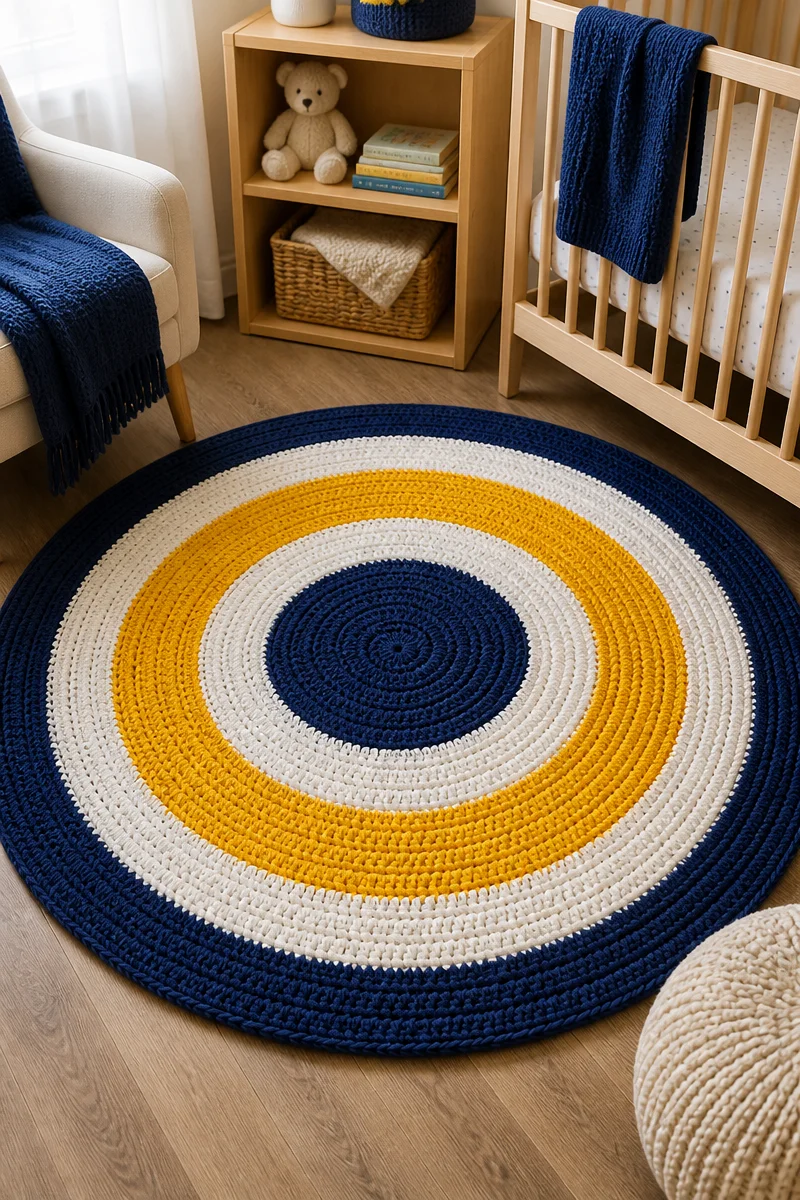
A crochet Starry Night baby nursery rug combines a sturdy crochet base with colors and details inspired by the night sky. Choose washable yarn, test your stitch, and secure every decorative piece. Most importantly, treat the rug as a supervised décor item, keep it away from sleep spaces, and use a suitable rug pad to help prevent slipping.
Pick your favorite colors and start with a small swatch. Then, enjoy shaping a rug that feels right for your space. When you finish, share your design or explore more nursery crochet ideas on the blog.