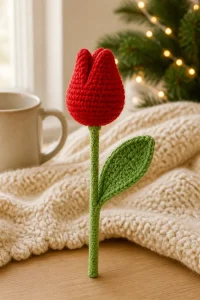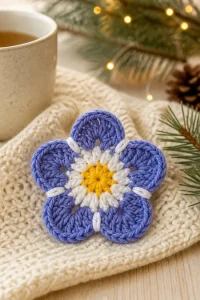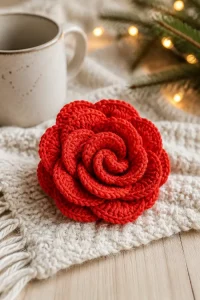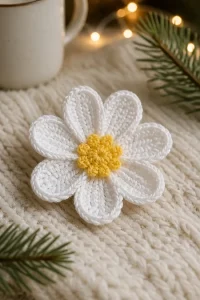
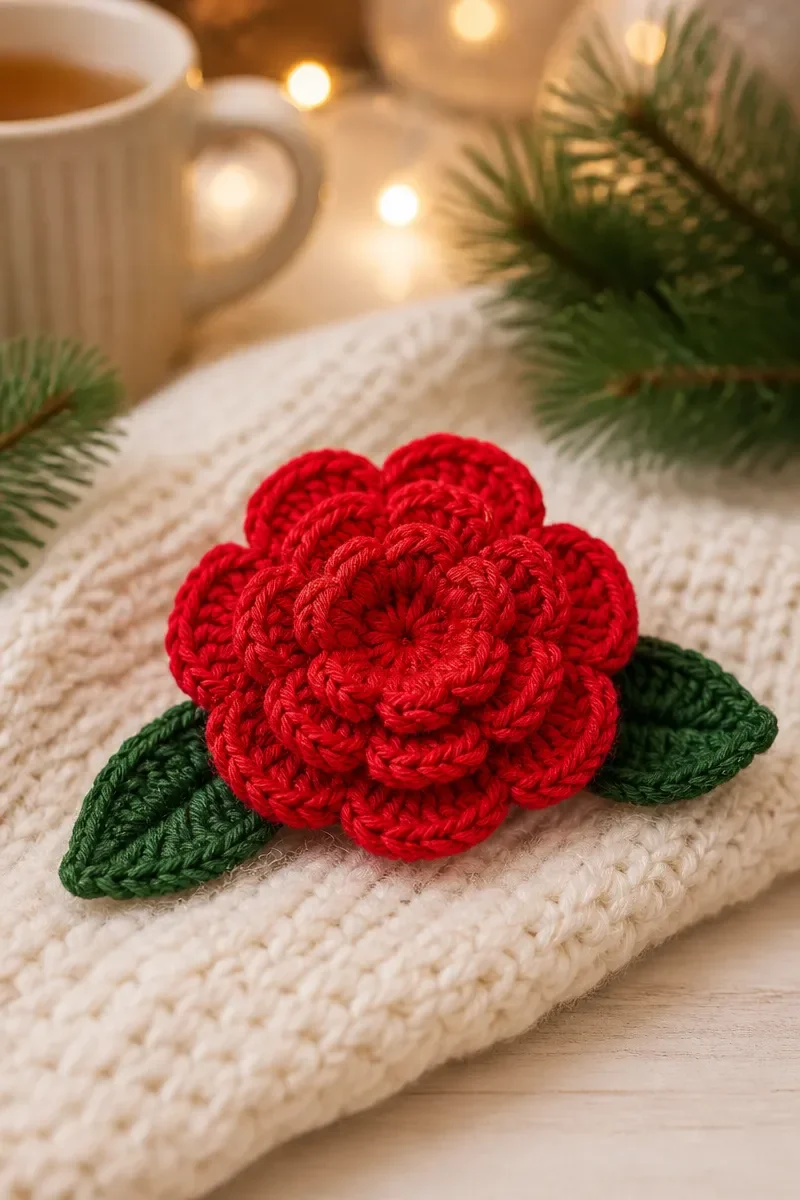
Red Crochet Carnation Flower With Leaves
Affiliate disclosure: This post may contain affiliate links. I may earn a small commission at no extra cost to you. See our Privacy Policy for details HERE.
- What Is a Crochet Carnation?
- Why This Is a Great Choice for a Crochet Carnation
- Before You Start
- Yarn and Hook Recommendations
- Materials
- Red Crochet Carnation Flower With Leaves Instructions
- Tips for a Crochet Carnation Success
- Common Mistakes to Avoid
- Ways to Make It Your Own
- Care and Washing Instructions
- Frequently Asked Questions
- More Ideas to Try
- Conclusion
The Red Crochet Carnation Flower With Leaves is a decorative crochet project for making a small handmade keepsake. It offers a pleasant way to turn a modest amount of yarn into a finished piece that can be enjoyed on its own or included in a thoughtful handmade gift.
This project can appeal to beginners looking for a focused make as well as experienced crocheters who enjoy compact creative work. The finished flower can be given to a friend, added to a handmade gift, or kept as a small reminder of time spent making something by hand.
Working on a project like this encourages patience and attention to detail. It also gives you a chance to build confidence, practise careful finishing, and enjoy the satisfaction of making a personal gift from simple supplies.
What Is a Crochet Carnation?
A crochet carnation is a handmade interpretation of a familiar flower. It brings a soft, crafted quality to a classic form, while yarn gives the finished piece a tactile character that differs from a fresh bloom.
This kind of crochet project can be used as a small decorative accent or offered as a keepsake. Its compact nature makes it suitable for occasions when a personal touch is welcome, without needing a large or elaborate handmade item.
Crafters enjoy flower projects because they invite personal expression and make good use of yarn already on hand. The finished work can be enjoyed by itself, paired with other handmade pieces, or presented as part of a thoughtful gift.
Why This Is a Great Choice for a Crochet Carnation
- Personal touch: A handmade flower carries the care and attention that go into every crafted gift. It can help a simple present feel more personal, especially when you choose details with the recipient in mind.
- Manageable project: A compact make is a comfortable choice when you want a focused creative activity. It gives you room to work at a relaxed pace without taking on a large household project.
- Flexible display: Small crocheted decorations can suit a range of settings. Place one where a handmade accent is welcome, or include it in a gift arrangement that reflects the recipient’s taste.
- Yarn from your stash: Projects that use modest amounts of yarn are useful for making thoughtful things from supplies already available. Keep suitable leftovers together so they are easy to consider for future makes.
- Room to learn: A flower project gives you a chance to practise paying attention to details and assembling a finished handmade item. The process can make future crochet projects feel more familiar.
Before You Start
- Make a gauge swatch with the yarn and hook you plan to use. This gives you a chance to see how your hands work together and whether the fabric feels comfortable.
- Read through the full project before beginning, so you understand the overall flow and can spot anything that may need extra attention.
- Keep a notebook or tally sheet nearby. A brief record can help you mark your place if you need to pause and return later.
- Organize your yarn and wind any loose skeins or hanks before you begin. A tidy working area makes it easier to handle supplies without tangles or interruptions.
Yarn and Hook Recommendations
- Choose a fiber that feels comfortable to handle and suits the way you want the finished fabric to feel. Acrylic, cotton, or a blend can each be suitable, depending on the yarn label and your preference.
- Match the yarn weight to the intended project type. A consistent weight helps the fabric behave predictably and makes it easier to compare your work with the expected result.
- Look for smooth yarn with clear plies. Fuzzy or highly textured yarn can make it harder to see individual loops, particularly when the project includes detailed shaping.
- Select colors with good contrast if you want the construction to be easy to read while working. Strong visibility between the yarn and your surroundings can also reduce eye strain.
- Use a hook size that works comfortably with your yarn and produces a fabric you like. The size printed on a label is a useful starting point, but your personal tension matters too.
- If you substitute yarn, check that it feels similar in weight and handle. A very different fiber or texture can affect how the finished piece drapes and holds its form.
Materials
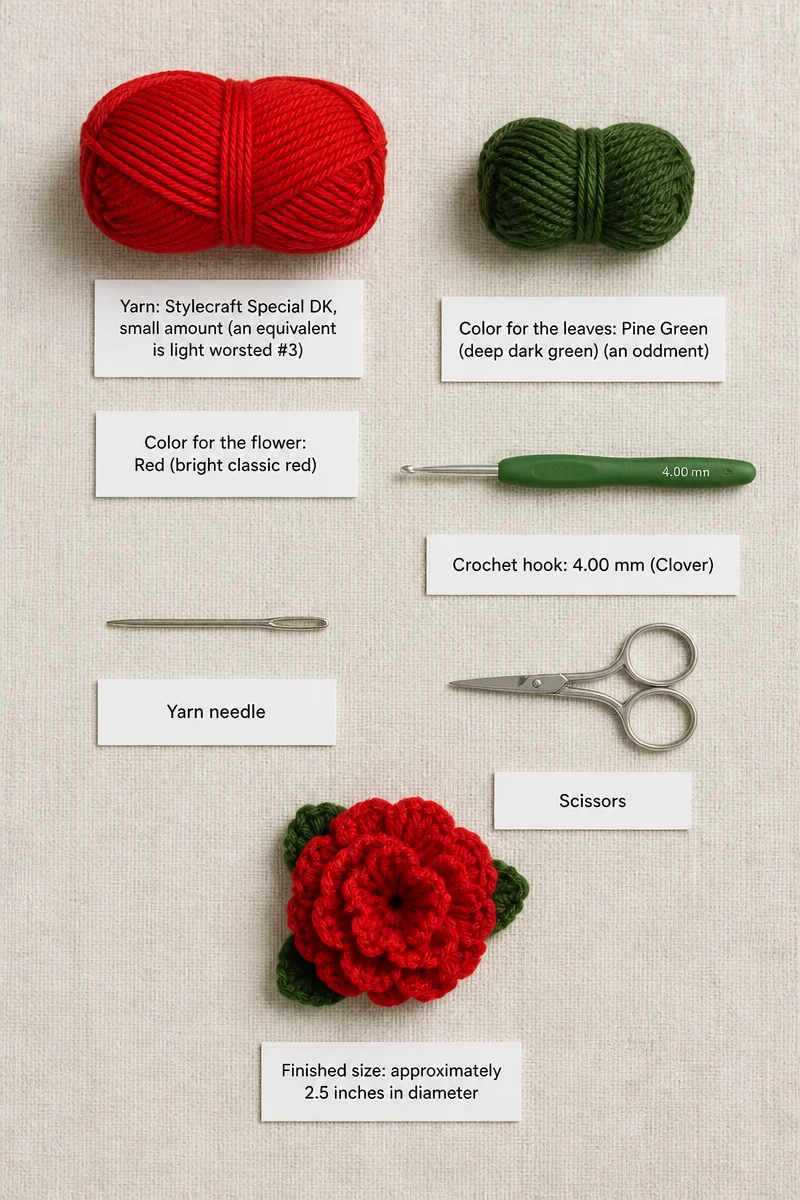
- Yarn: Stylecraft Special DK, small amount (an equivalent yarn is light worsted #3)
- Color for the flower: Red (bright classic red)
- Color for the leaves: Pine Green (deep dark green) (an oddment)
- Crochet hook: 4.00 mm (Clover)
- Yarn needle
- Scissors
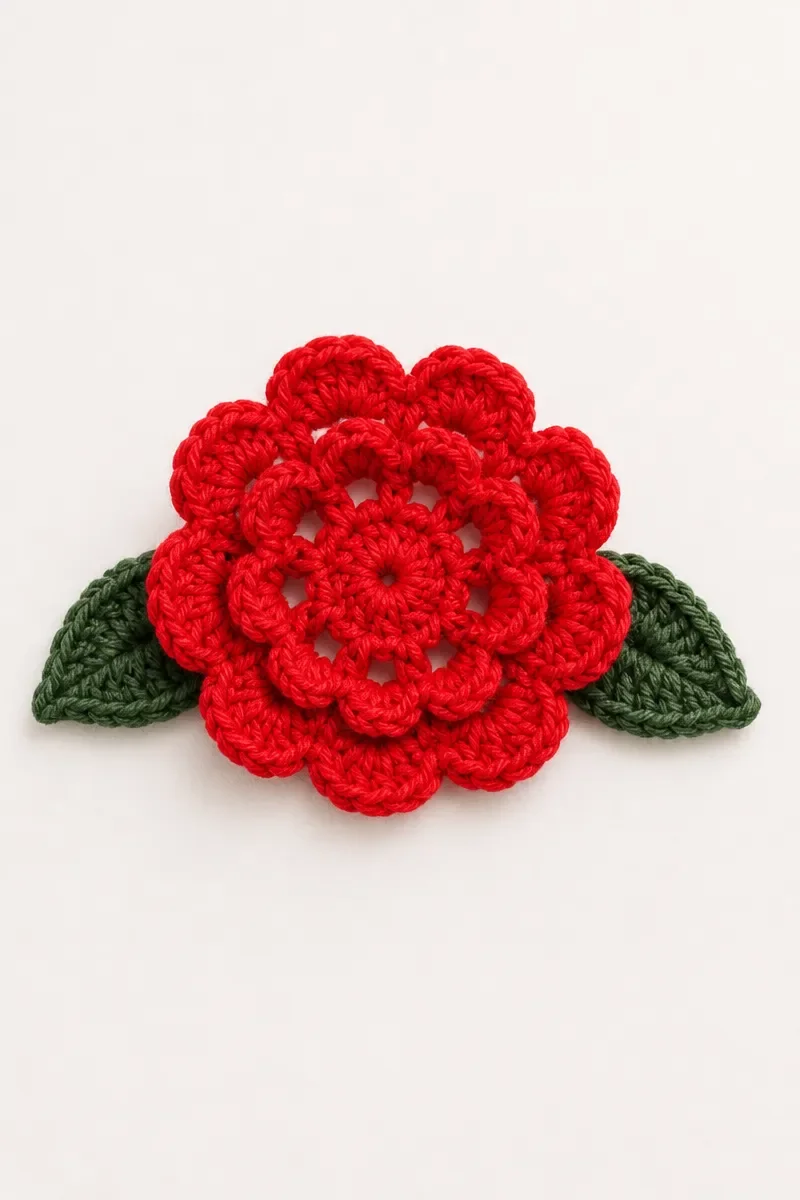
- Finished size: approximately 2.5 inches in diameter
Red Crochet Carnation Flower With Leaves Instructions
Color key: Red = bright classic red; Pine Green = deep dark green.
-
Abbreviations: ch = chain; dc = double crochet; hdc = half double crochet; rpt = repeat; RS = right side; sc = single crochet; sl st = slip stitch.
-
Notes: Base of ch means work in the first stitch. The flower is made in rounds without turning.
-
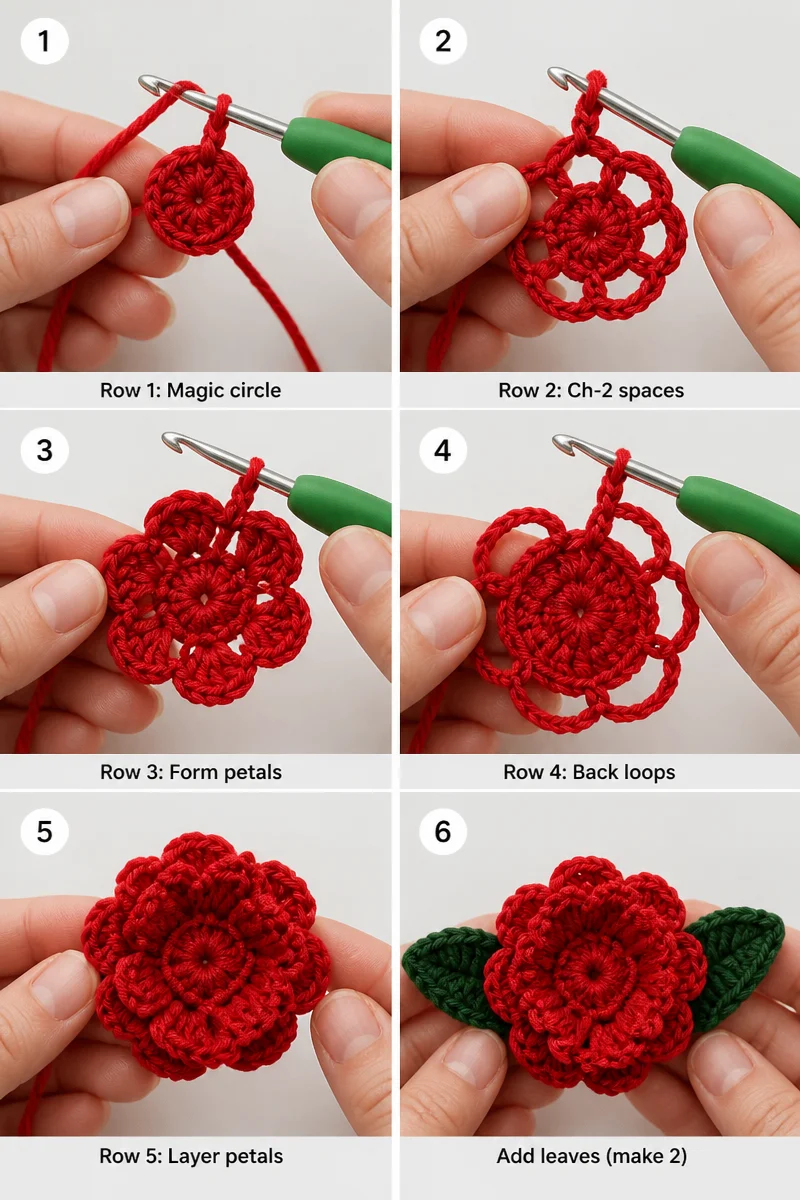
Row 1: Make a magic circle, ch 1, 8 sc into the circle, pull the loose thread to close the circle, sl st to the first sc at the beginning of the row.
-
Row 2: Ch 3, *sl st in the next sc, ch 2. Rpt from * to * to the end, sl st to the first of the ch 3. (8 ch-2 spaces)
-
Row 3: Ch 1, (sl st, ch 1, 2 dc, ch 1, sl st) in each ch-2 space to the end, sl st to the first ch 1. (8 petals)
-
Row 4: With the RS facing and working at the back of the petals, *ch 3, sl st in the sc of Row 1 underneath the next petal. Rpt from * to * to the end, ch 3, sl st in the first sl st. (8 ch-3 spaces)
-
Row 5: Ch 1, work (sl st, ch 3, 3 dc, ch 3, sl st) in each ch-3 space to the end, sl st to the first ch 1. Fasten off.
-
Leaves (make 2): Using Pine Green, ch 7. 1 sc in the second ch from the hook, 1 sc in the next ch, 1 hdc in each of the next 2 chs, 1 dc in the next ch, (4 dc, ch 2, 4 dc) in the last ch. Working on the opposite side of the starting chs, work 1 dc in the next ch, 1 hdc in each of the next 2 chs, 1 sc in each of the last 2 chs, sl st to the first sc. Fasten off.
-
Finishing: Weave in and trim off any loose ends. Attach the leaves.
Tips for a Crochet Carnation Success
Comfortable Setup
Sit where your back and shoulders can relax, and keep your elbows in a natural position. Good posture helps prevent your hands from carrying tension that belongs in your shoulders.
Choose lighting that makes the yarn easy to see without glare. A lamp placed near your work can help you distinguish loops and avoid leaning forward for a closer look.
Even Tension
Let the yarn glide through your fingers at a steady pace rather than pulling it after every movement. A relaxed hold makes it easier to keep the fabric consistent and reduces strain during a longer session.
If your hands feel tight, pause and loosen your grip before continuing. Consistency matters more than trying to make every loop extremely firm, and comfort supports careful work.
Keep Your Place
Use a notebook or tally sheet to record where you stop, especially if you expect to put your project aside. A short written note can make it easier to resume without relying on memory.
Keep your record clear and specific enough to be useful later. Mark completed portions as you go, and add a brief reminder when you pause in the middle of a section.
Check as You Go
Look over your work at natural stopping points and compare its general appearance with what you expect. Early attention can make small irregularities easier to correct than noticing them only at the end.
Check that the fabric lies comfortably and that your loops remain consistent. If something appears off, pause to inspect the recent work before carrying on, rather than allowing a small issue to build.
Common Mistakes to Avoid
Skipping a Swatch
It is tempting to begin without testing how a yarn and hook behave together. However, individual tension and fiber differences can change the feel and proportions of crocheted fabric, even when the yarn label suggests a suitable pairing.
Make a small gauge swatch when the finished dimensions matter or when you are using an unfamiliar yarn. It gives you an early chance to adjust your hook choice before investing more time in the project.
Pulling Too Tightly
Tight tension often comes from gripping the yarn or hook firmly, especially when someone is concentrating on accuracy. This can make loops difficult to work into and may leave the fabric stiff or uneven.
Try holding the yarn lightly and letting the hook move naturally. If the work feels difficult to manipulate, pause, relax your hands, and check whether your tension has become too tight.
Miscounting
It is easy to lose track when working on a repeating construction, particularly if you pause or become distracted. A missed or added stitch can affect the balance of the finished fabric.
Count deliberately at useful checkpoints instead of relying on memory. Place a temporary marker where it can help you identify your starting point, and keep a written tally if that suits your working style.
Short Yarn Ends
Leaving very short tails can make it difficult to secure loose ends neatly. Those ends may also work free with handling, leaving the fabric less tidy and secure over time.
Leave enough yarn to work comfortably with a yarn needle when securing ends. Handle the needle carefully and pass the tail through the fabric in more than one direction so it has a better chance of staying in place.
Changing Supplies Midway
Switching to a different yarn or hook during a project can alter the fabric’s texture, density, or overall dimensions. Even supplies that look similar can behave differently in the hand.
Try to use consistent supplies throughout a project. If a change becomes necessary, make a small test first and compare the result with your existing work before continuing.
Ways to Make It Your Own
- Choose a different color palette that suits the person who will receive the piece. A coordinated combination can feel calm, while contrasting tones can give a gift a livelier look.
- Try another yarn with the same weight if you prefer a different fiber or surface. Check how it feels in your hands and make sure it produces a comfortable fabric.
- Make a matching second project to create a coordinated set. Giving two related handmade pieces together can make a present feel more complete without requiring elaborate packaging.
- Include a handwritten note with the gift. A few personal sentences can explain why you chose the recipient and make the handmade gesture feel especially thoughtful.
- Present the finished piece in a small gift box or paper envelope. Neat, simple packaging protects it while giving your gift a polished and personal appearance.
Care and Washing Instructions
Washing: Follow the yarn label for suitable washing guidance, including water temperature and detergent recommendations. Handle crocheted work gently, and avoid rubbing or twisting it, since rough treatment can stretch the fabric or distort its surface.
Drying: Press excess water out gently between clean towels rather than wringing the work. Let it air dry on a clean, flat surface, and keep it away from direct heat until it is completely dry.
Storing: Keep the finished piece in a clean, dry place away from dust and crushing pressure. Store it in a small container or fabric pouch, and avoid placing heavy objects on top.
Frequently Asked Questions
Can I use a different yarn?
Yes, a different yarn can work if its weight and feel are suitable for the kind of project you want to make. Check the yarn label and consider whether its fiber will provide the texture and structure you prefer. Try a small swatch first so you can see how the fabric behaves with your hook.
How can I keep my work even?
Keep a comfortable grip and allow the yarn to move smoothly through your fingers. Consistent tension usually comes from a relaxed, repeatable hand position rather than pulling each loop tightly. Taking short pauses when your hands tire can help you notice changes before they affect more of the fabric.
How can I count reliably?
Count at natural checkpoints and keep track on paper if you tend to lose your place. A temporary marker can help identify a starting point when you need to pause. Make a habit of recording progress right away, rather than waiting until you return and trying to reconstruct it.
What if my finished work looks different?
Small differences can come from personal tension, yarn texture, or the way a piece settles after handling. Compare the overall proportions and fabric appearance before deciding whether anything needs attention. If you are unsure, check a swatch or ask another crocheter to look at the work with you.
How long should yarn tails be?
Leave enough yarn to thread comfortably through a yarn needle and secure the end within the fabric. The amount depends on the thickness and texture of your yarn, as well as how much room you have to weave it through. Avoid trimming an end until you are confident it is secure.
More Ideas to Try
If you enjoy making small handmade keepsakes, consider trying a crocheted brooch, a decorative bookmark, a simple gift topper, or a small seasonal ornament. Each offers a different way to explore texture and presentation while making something personal. Choose a project that suits the recipient or occasion, and use suitable yarn already in your collection when you want to make good use of leftovers.
Conclusion
Give this handmade project a try when you want to make a thoughtful keepsake with a personal touch. Enjoy the process at a comfortable pace, and take pride in making something by hand. Explore more crochet ideas on the blog whenever you are ready to find inspiration for your next creative project.