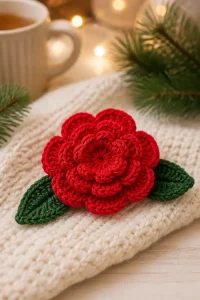
Scarlet Folded Crochet Rose Flower
Affiliate disclosure: This post may contain affiliate links. I may earn a small commission at no extra cost to you. See our Privacy Policy for details HERE.
- What Is a Crochet Rose?
- Why This Is a Great Choice for a Crochet Rose
- Before You Start
- Yarn and Hook Recommendations
- Materials
- Scarlet Folded Crochet Rose Flower Instructions
- Tips for Crochet Rose Success
- Common Mistakes to Avoid
- Ways to Make It Your Own
- Care and Washing Instructions
- Frequently Asked Questions
- More Ideas to Try
- Conclusion
The Scarlet Folded Crochet Rose Flower is a crochet flower project with a satisfying handmade finish. It offers a focused way to create something decorative with yarn and a hook, whether you are settling in for a quiet crafting session or looking for a small project to enjoy between larger makes.
This project can appeal to beginners building confidence as well as experienced makers who appreciate a compact, thoughtful craft. The finished flower can be given as a handmade gift or used as a decorative accent in a setting that suits your taste.
Making it offers practice in patience, careful attention, and bringing a handmade item to completion. It can also help you grow more comfortable following a crochet project from its opening work through its final touches.
What Is a Crochet Rose?
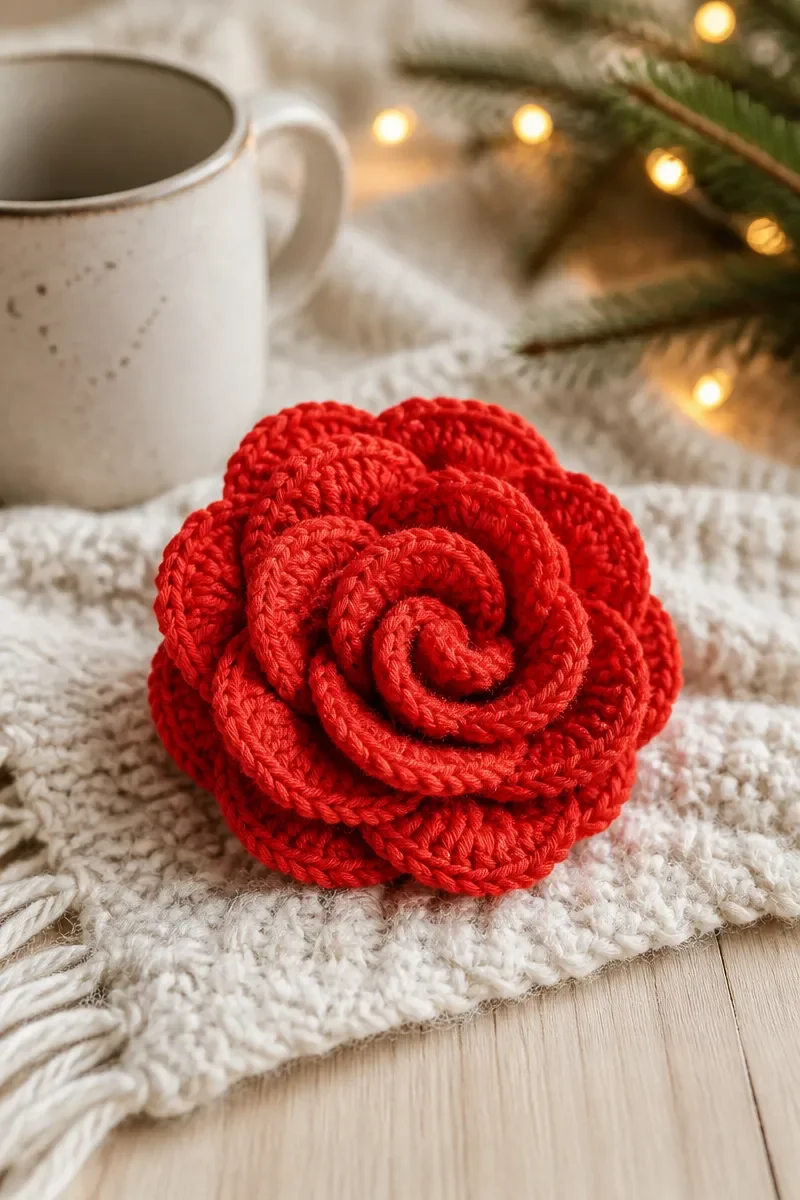
A crochet rose is a handmade flower created with yarn and a hook. Like other crocheted flowers, it brings a soft, crafted quality to floral decoration and can be appreciated on its own or included in a larger handmade arrangement.
Crochet flowers are appealing because they can express a familiar natural motif through handmade materials. They are generally light, easy to display, and adaptable to different settings, from a small personal space to a handmade gift presentation.
Makers enjoy floral crochet projects for their decorative character and the chance to explore how yarn can create a recognizable motif. A finished flower can suit many personal styles, and making one offers a contained creative project without requiring a large amount of space to work.
Why This Is a Great Choice for a Crochet Rose
-
A personal handmade touch: A crocheted flower feels thoughtful because it reflects time and care from its maker. It can bring a little warmth to a gift or a personal display without requiring an elaborate presentation.
-
A flexible creative project: Floral crochet offers room to express individual taste through material choices and the setting where the finished piece is displayed. The result can feel personal while remaining a familiar decorative motif.
-
A satisfying small make: A flower is a compact project to work on when you want a creative activity that does not take over your crafting space. It can also offer the satisfaction of completing a distinct handmade item.
-
A welcoming skill builder: Making decorative crochet can encourage attention to hand movement and steady progress. The manageable focus of a single project can help makers feel more at ease with their craft.
-
A thoughtful gift option: Handmade flowers can be given to friends, relatives, or anyone who appreciates a personal gesture. Their lasting crafted quality makes them a considerate choice for a small, meaningful present.
Before You Start
-
Make a gauge swatch with your chosen yarn and hook to see how your fabric behaves. This gives you a chance to notice whether the result feels too firm or too loose before committing.
-
Read the full project information before picking up your hook. Knowing what lies ahead can help you prepare your materials and understand how the work will progress from beginning to end.
-
Keep a notebook or tally sheet nearby for brief notes about your progress. A written record is especially useful if you pause for a while and want to resume with a clear sense of where you left off.
-
Wind your yarn before you begin and keep it organized where it can feed smoothly. A tidy supply reduces tangles and makes it easier to maintain a comfortable working rhythm.
Yarn and Hook Recommendations
-
Choose a fiber that suits the intended use. Cotton can work well for home decor or bags, while acrylic or a wool and acrylic blend can suit hats, scarves, or blankets.
-
A yarn weight you already enjoy handling can make the project feel more comfortable. Consider how the finished fabric should feel and whether a lighter or heavier yarn better matches its intended setting.
-
Smooth yarn makes it easier to see the construction as you work. A clear view of the fabric can help you notice uneven areas and keep your hands consistent.
-
Avoid yarn that is unusually fuzzy or heavily textured for a first attempt. Surface fibers can obscure the details, making it harder to see where the hook should go.
-
Choose a color with enough contrast against your work surface. Good visibility can reduce eye strain and help you distinguish the fabric while crocheting.
-
Select a hook that is appropriate for your yarn, then check how the fabric feels as you work. A comfortable hook and balanced fabric can support steady, relaxed crocheting.
Materials
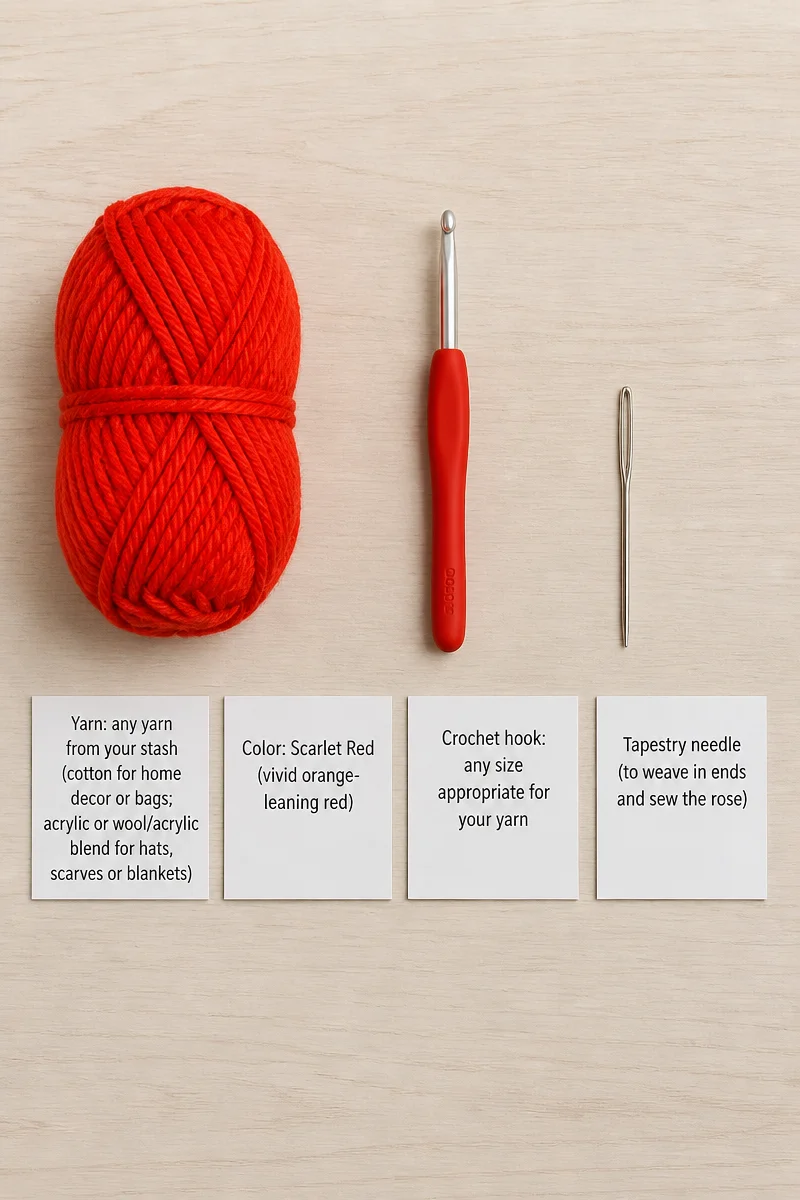
- Yarn: any yarn from your stash (cotton for home decor or bags; acrylic or wool/acrylic blend for hats, scarves or blankets)
- Color: Scarlet Red (vivid orange-leaning red)
- Crochet hook: any size appropriate for your yarn
- Tapestry needle (to weave in ends and sew the rose)
Scarlet Folded Crochet Rose Flower Instructions
Color key: Scarlet Red = vivid orange-leaning red.
Abbreviations: ch = chain; dc = double crochet; rep = repeat; sl st = slip stitch.
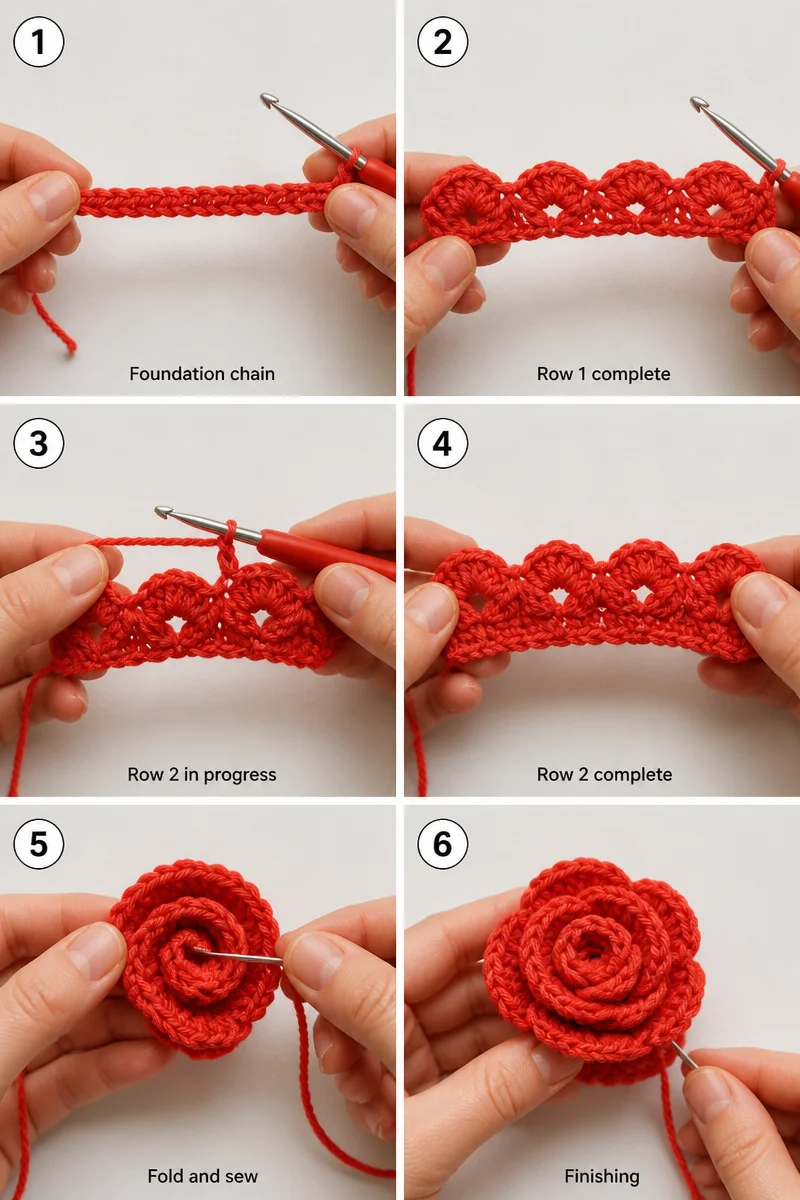
Notes: The pattern is worked in rows, back and forth. Row 1 is a setup row and Row 2 forms the petals. The work will curl at the end; this is as intended.
Notes: The turning chain is the initial ch 3 of Row 1, which are the 3 chains left when the first dc is made in the 4th ch from the hook.
Row 1: Ch 24, 2 dc in the 4th ch from the hook. *Ch 1, skip 1, 3 dc in the next ch. Rep from * across.
Row 2: *Ch 2, turn, dc in the first st, 2 dc in the next st, dc in the next st, ch 2, sl st in the next ch space. Rep from * across. At the end of the row, work the last dc and the last sl st in the 3rd ch of the turning chain.
Folding
Fold the base from the center and go around it to form the flower. Using the tapestry needle, sew the petals from the back, going through all the layers.
Finishing
Weave in the ends.
Tips for Crochet Rose Success
Comfortable Posture
Settle into a position that lets your shoulders rest and your elbows stay comfortable. If you notice yourself leaning forward or gripping tightly, pause and shift before discomfort builds.
Give your hands a short rest when they feel tired. Changing your position and gently relaxing your fingers can make it easier to return to crocheting with a comfortable grip.
Even Tension
Let the yarn move through your fingers without pulling it firmly. A relaxed hold gives your hook room to move and helps the fabric remain more consistent.
Pay attention to how the yarn feeds rather than trying to control every movement. If your hands begin to tense, loosen your grip and take a moment to reset.
Track Your Place
Use a small written note to record where you stop during a session. A clear marker in your notebook or tally sheet can help you resume without relying on memory.
Keep your notes concise and easy to scan. A consistent way of recording progress is more useful than a detailed account that takes attention away from your work.
Check as You Go
Pause occasionally to look over the fabric and see whether it appears consistent. Regular visual checks can help you notice a change in your hand tension before it affects more of the work.
Compare the overall feel of the fabric with what you want from the project. If it feels uncomfortable or noticeably unlike your earlier work, take a moment to assess your grip and yarn feed.
Common Mistakes to Avoid
Skipping the Swatch
A swatch can show how a yarn and hook behave together before you begin a larger piece of work. Without one, you may discover that the fabric feels denser or looser than you expected only after investing more time.
Make a small sample when you are unsure about your yarn choice or how it feels in your hands. This provides useful information about drape and density, and gives you a chance to settle on a comfortable way to work.
Pulling Too Tightly
Tight yarn control can make the hook difficult to move and can leave the fabric stiff. This often happens when a maker tries to force every loop into the same position by gripping the yarn too firmly.
Let the working yarn glide with gentle resistance rather than holding it in place. If your hook catches repeatedly, relax your hand and check whether your grip is restricting the yarn.
Miscounting Your Work
Losing track can happen when you pause mid-session, talk with someone, or become distracted. Small counting errors may then affect the balance of the fabric and make it harder to understand where you are.
Count with a steady method that suits you, such as marking each completed unit on a tally sheet. If you lose your place, stop and count calmly from an easy-to-recognize point instead of guessing.
Leaving Ends Too Short
Short yarn tails can be difficult to secure neatly and may work loose during handling. It is easy to underestimate how much yarn you need when cutting it without leaving room for later work.
Leave a practical length when ending a section, with enough yarn for your tapestry needle to handle comfortably. A generous tail is easier to manage than one that barely reaches your working area.
Changing Materials Midway
Switching yarn or hook while working can change the fabric’s feel and appearance. Even materials that seem similar may behave differently, so a change can make the finished work less consistent.
Choose the yarn and hook you plan to use before you begin, and keep them together for the duration of the project. If a replacement becomes necessary, compare its feel carefully before continuing.
Ways to Make It Your Own
- Choose a different color palette to suit your room, wardrobe, or recipient. A coordinated group of tones can make the handmade gift feel especially personal.
- Try a different yarn in the same weight if you want a new texture. Keep the yarn comfortable to handle and suitable for the way you plan to use the flower.
- Make a matching second project to create a set. Repeating the same overall look can give two handmade pieces a thoughtful connection.
- Give the flower with a handwritten note explaining why you chose it. A few sincere words can make a small handmade gift feel more meaningful.
- Present it in a simple gift box with tissue paper for a neat, considered display. Choose packaging that protects the handmade work and feels right for the occasion.
Care and Washing Instructions
Washing: Follow the yarn label for washing guidance, since fiber content affects the best care method. When the label permits washing, handle the crocheted fabric gently and avoid harsh treatment that could distort its surface.
Drying: Remove excess water carefully without twisting or wringing the work. Lay it on a clean, dry surface and allow it to dry fully before storing or displaying it.
Blocking: Gentle blocking can help a crocheted fabric settle into a more even appearance when the yarn label allows it. Use a light touch and avoid stretching the work beyond its natural shape.
Frequently Asked Questions
Can I use a different yarn?
Yes, you can choose another yarn from your stash if it suits the intended use. Consider how its fiber feels in your hands and whether you like the resulting fabric. A swatch can help you judge its behavior before you begin the full project.
How can I keep my work even?
Relax your yarn hand and let the yarn feed without a firm pull. Work at a comfortable pace so your hands can repeat a natural movement. If your fabric starts feeling different, pause and adjust your grip before continuing.
How can I keep track of my progress?
Write a short note on a tally sheet whenever you pause your work. Use one consistent way to record your place so you can read it easily later. If you feel uncertain, review your existing work carefully rather than relying on memory alone.
What if my finished work looks different than expected?
Differences in yarn, personal tension, and handling can affect the finished appearance. Look over the fabric and consider whether its texture and overall form seem suitable to you. If something feels wrong, identify the cause before deciding whether to adjust your approach next time.
How much yarn should I leave at the end?
Leave enough yarn to handle comfortably with your tapestry needle when you finish a section. A very short tail can be awkward to manage and secure. When uncertain, leave a little extra rather than cutting close to the work.
More Ideas to Try
If you enjoy floral and decorative crochet, consider trying a crochet leaf, a small crocheted bouquet, a simple flower garland, or a floral bookmark. Each offers a different way to explore handmade decoration and can make a thoughtful personal project or gift. Choose the kind of project that best suits your available time and interests.
Conclusion
Give the Scarlet Folded Crochet Rose Flower a try when you want a thoughtful handmade project to enjoy or share. Take pleasure in the care and creativity that come with making something by hand. Explore more crochet ideas on the blog whenever you are ready for another project.