Simple Striped Ripple Crochet Baby Blanket

Affiliate disclosure: This post may contain affiliate links. I may earn a small commission at no extra cost to you. See our Privacy Policy for details HERE.
- What Is a Ripple Blanket?
- Why This Is a Great Choice for a Baby Blanket
- Before You Start
- Yarn and Hook Recommendations
- Materials
- Simple Striped Ripple Crochet Baby Blanket Instructions
- Tips for Ripple Blanket Success
- Common Mistakes to Avoid
- Ways to Make It Your Own
- Care and Washing Instructions
- Frequently Asked Questions
- More Ideas to Try
- Conclusion
The Simple Striped Ripple Crochet Baby Blanket is a crochet blanket project for anyone who enjoys making a useful handmade item. Its clear, repeating structure offers a satisfying way to create a piece with a familiar, welcoming feel.
This project can be enjoyable for newer crocheters building confidence as well as experienced makers looking for a relaxing make. The finished blanket can be used at home or given as a thoughtful present for a new baby or growing family.
Working on a handmade gift encourages patience and care, while regular progress helps build confidence in your crochet. You can also practice keeping track of your work and enjoy the satisfaction of creating something useful for someone you care about.
What Is a Ripple Blanket?
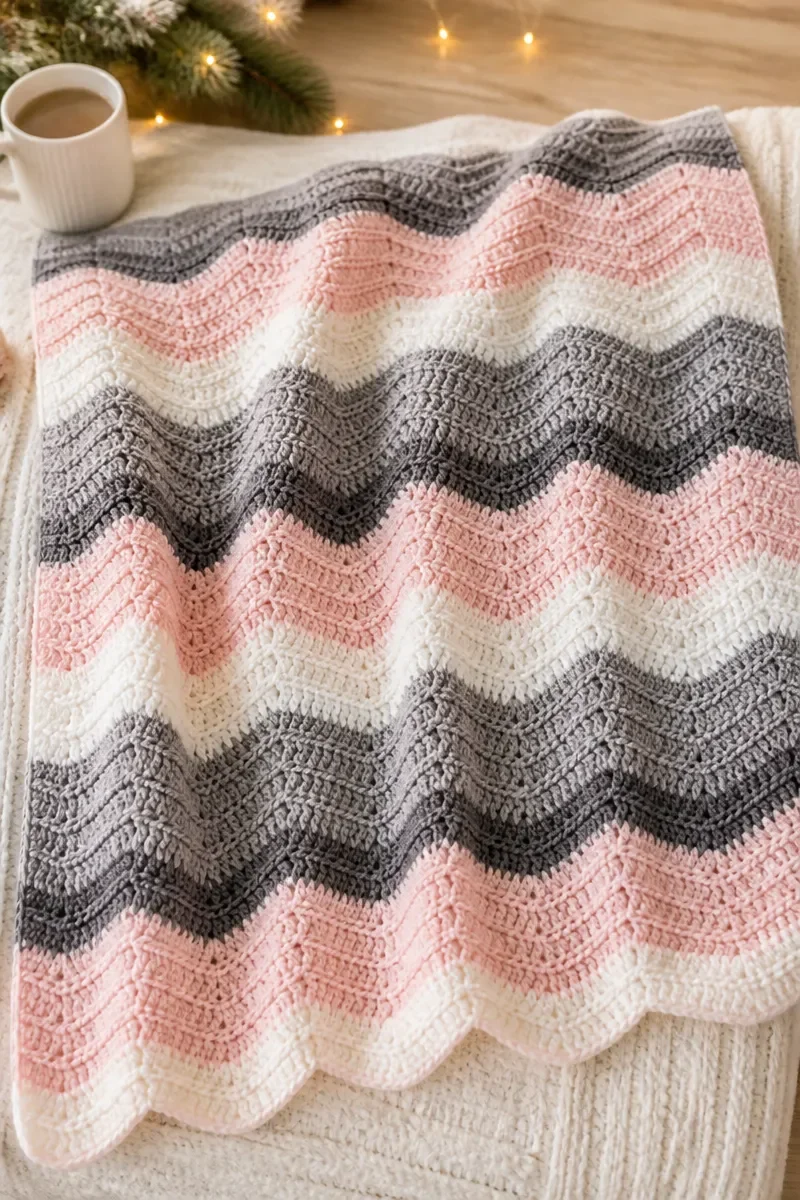
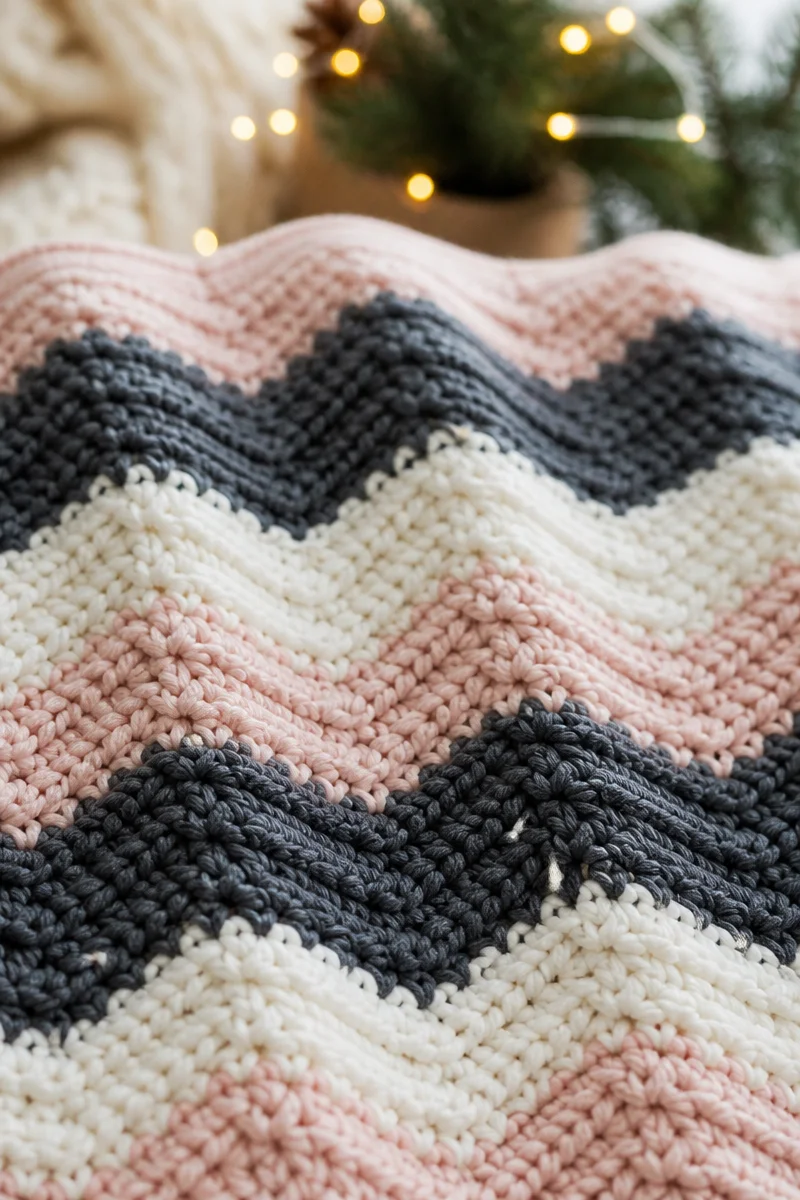
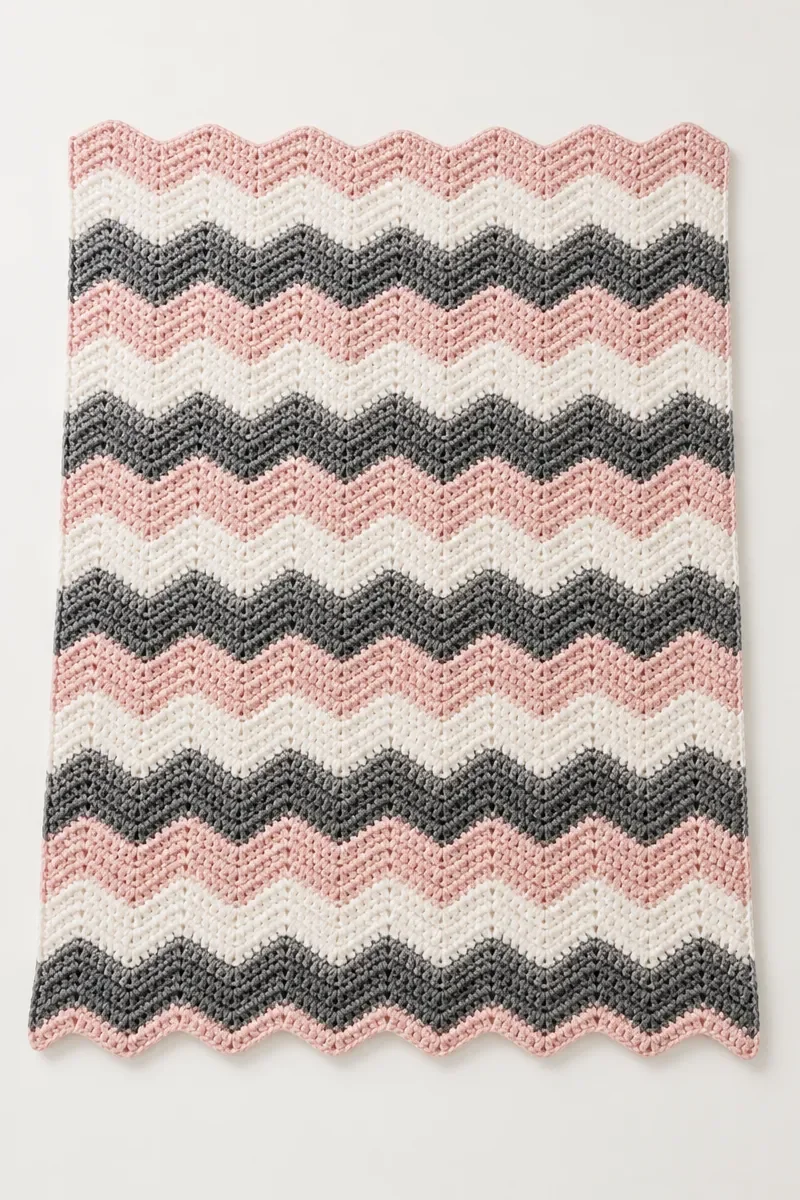
A ripple blanket is a crocheted blanket with a flowing rise-and-fall outline. The repeated peaks and valleys create a gently undulating surface that looks lively while still feeling orderly. The overall effect can be bold or subtle, depending on the yarn and the way its colors appear.
This type of blanket is usually made as a flat piece of fabric, with the repeated pattern creating its characteristic movement across the width. It can drape comfortably over a lap, a chair, or a bed, and it is often chosen for everyday use. Its flexible look suits many rooms and personal styles.
Crocheters enjoy ripple blankets because repetition makes it easier to settle into a steady rhythm once the pattern is familiar. The changing contours keep the fabric visually interesting without requiring added decorations. A handmade version also offers plenty of room for personal choices in yarn and color.
Why This Is a Great Choice for a Baby Blanket
- Useful gift: A handmade blanket is a practical, personal present for welcoming a new baby. Families can keep it close for quiet moments at home or pack it along when visiting relatives.
- Relaxing rhythm: Repeated pattern sections create a pleasant routine after you become familiar with the work. That steady pace can make a little time with yarn feel calming and rewarding.
- Personal style: Yarn choices can make the finished piece feel classic, playful, or understated. Selecting a palette that suits the recipient lets you tailor a useful gift without adding complicated details.
- Satisfying progress: A blanket grows visibly as you work, which can make it rewarding to return to over several sessions. Each session adds a little more toward a practical handmade present.
- Skills practice: Repeating a consistent design can help you grow more comfortable with careful counting and even tension. These habits are useful in many other crochet projects, too.
Before You Start
- Make a gauge swatch with the yarn and hook you plan to use. Measuring it before beginning helps you see whether your usual tension is close to the intended fabric.
- Read everything through before picking up your hook. Knowing the full order of the work can prevent surprises and help you understand what supplies or decisions matter.
- Keep a notebook or tally sheet nearby for brief notes about progress, yarn use, or anything you want to remember between sessions. A written record is easier to trust than memory alone.
- Organize your yarn and wind any loose skeins before you begin. Keeping the working yarn easy to reach can reduce tangles and make it more comfortable to settle into your project.
Yarn and Hook Recommendations
- Choose a soft fiber that feels pleasant against sensitive skin. Natural and synthetic fibers can both work well, so consider comfort, care needs, and the recipient’s preferences.
- Look for a yarn weight that produces a fabric with enough drape for a blanket. The label’s suggested hook range is a helpful starting point, though your tension also affects the result.
- Smooth yarn makes it easier to see where to place your hook and notice missed loops. Very textured yarn can hide details, so it may be less comfortable when you are learning a new construction.
- Select colors with enough contrast if you want the pattern’s movement to stand out clearly. A low-contrast palette gives a quieter appearance, while stronger differences make the fabric’s contours more noticeable.
- A self-striping or ombre yarn can create gradual color shifts without frequent yarn handling. Solid yarn is another useful option when you want the surface to look calm and consistent.
- Use the hook size that helps you achieve a flexible, even fabric. If your swatch feels unusually stiff or loose, try another size and measure again before starting the full project.
Materials
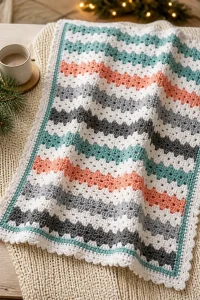
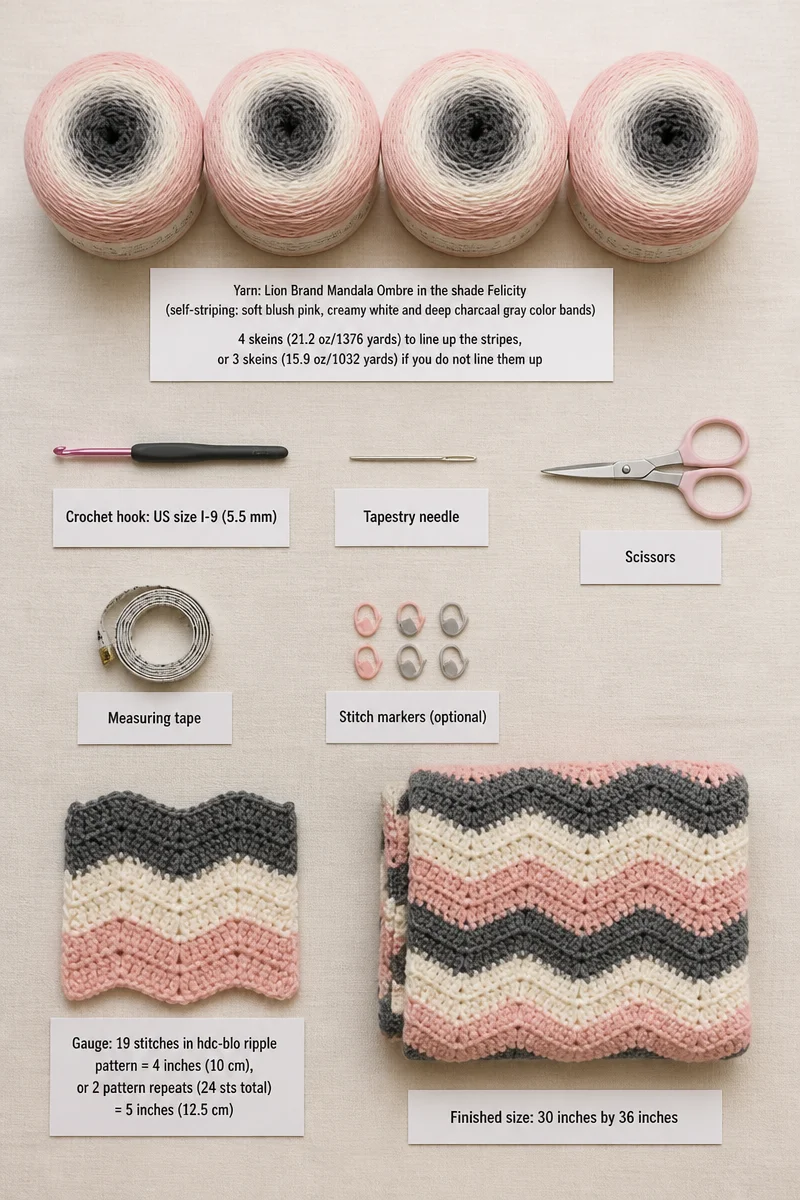
- Yarn: Lion Brand Mandala Ombre in the shade Felicity (self-striping: soft blush pink, creamy white and deep charcoal gray color bands)
- 4 skeins (21.2 oz/1376 yards) to line up the stripes, or 3 skeins (15.9 oz/1032 yards) if you do not line them up
- Crochet hook: US size I-9 (5.5 mm)
- Tapestry needle
- Scissors
- Measuring tape
- Stitch markers (optional)
- Gauge: 19 stitches in hdc-blo ripple pattern = 4 inches (10 cm), or 2 pattern repeats (24 sts total) = 5 inches (12.5 cm)
- Finished size: 30 inches by 36 inches
Simple Striped Ripple Crochet Baby Blanket Instructions
Color key
Felicity = self-striping yarn with soft blush pink, creamy white and deep charcoal gray color bands.
Abbreviations
ch(s) = chain(s); hdc = half double crochet; hdc-blo = half double crochet in the back loop only; hdc2tog = half double crochet 2 together; hdc2tog-blo = half double crochet 2 together in the back loop only; st(s) = stitch(es).
Invisible hdc2tog-blo
Yo and insert the hook in the back loop of the next st (3 loops on the hook). Do not yo; insert the hook through the back loop of the next st (4 loops on the hook). Yo and pull through the first 2 loops (3 loops on the hook). Yo and pull through all 3 loops (1 loop on the hook).
Notes
The blanket is worked in one piece, in rows. The turning ch-2 does not count as a st. All sts are worked in the back loop only, except the first and last increase of each row, which go under both loops. For stripes, use an ombre-type yarn, or change yarn colors every 3rd row. The stitch multiple is 12 + 2.
Blanket Body
-
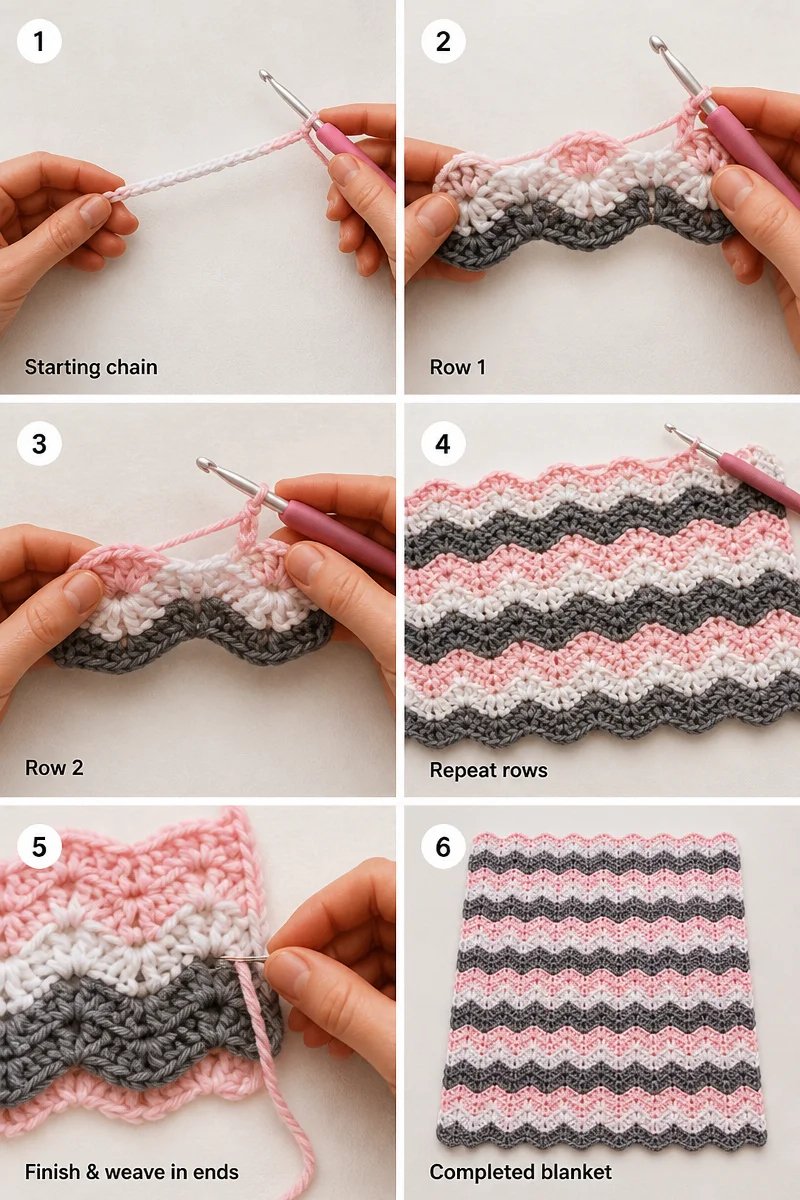
Starting chain: Ch 146.
-
Row 1: 2 hdc in the 3rd ch from the hook, 2 hdc in the next ch. Hdc2tog 4 times. *2 hdc in each of the next 4 chs, hdc2tog 4 times. Repeat from * across until the last 2 chs. 2 hdc in each of the last 2 chs. Turn. [144 sts]
-
Row 2: Ch 2 (does not count as a st). 2 hdc in the first st, 2 hdc-blo in the next st. Hdc2tog-blo 4 times. *2 hdc-blo in each of the next 4 sts, hdc2tog-blo 4 times. Repeat from * across until the last 2 sts. 2 hdc-blo in the second-to-last st, 2 hdc in the last st. Turn. [144 sts]
-
Repeat Row 2, changing colors every 3rd row.
-
Finishing: Fasten off and weave in the ends.
Tips for Ripple Blanket Success
Support your posture
Choose a chair that lets your back rest comfortably and your shoulders stay relaxed. Keep your work high enough to see without bending your neck for long periods, and pause when your hands begin to feel tired.
Good lighting helps you see the yarn and the small openings where your hook needs to go. A light source placed near your work can reduce eye strain and make it easier to distinguish the fabric’s details.
Keep tension steady
Let the yarn glide smoothly rather than pulling it firmly after every movement. A relaxed grip helps your loops remain consistent, and it can make longer crafting sessions more comfortable for your fingers.
If your hands tighten when you concentrate, briefly loosen your hold and reset your posture. Try to form each loop with a similar amount of slack, without forcing the fabric to match an imagined standard.
Track your place
Use a simple written tally to record where you stop. A small note beside your work can save time when you return after a break, especially if you are working on the project over several days.
Markers can also help you identify a location you want to find again. Place them carefully so they do not pull the fabric, and remove them when they are no longer useful.
Check your work
Pause now and then to look across the fabric for sudden changes in width or an unusual gap. Catching a small issue early usually makes it easier to understand what happened and decide whether to correct it.
Compare the overall look with a previous section, rather than judging one small area alone. If something seems different, check nearby loops and your recent count before moving on.
Common Mistakes to Avoid
Skipping the swatch
A swatch can reveal how your yarn and personal tension behave together. Skipping it may lead to fabric that feels denser or looser than you expected, even when your hook and yarn seem suitable.
Make a sample with the materials you intend to use, then measure it after it has settled. If the texture or dimensions are far from your goal, adjust your hook choice and test again before committing to the larger piece.
Pulling too tightly
Tight loops can make it difficult to insert the hook and draw yarn through comfortably. They may also create a firm fabric that does not drape as you intended, while adding strain to your hands.
Let each loop sit on the hook without squeezing it into place. If the fabric feels rigid, pause and relax your grip; consistent, comfortable movement matters more than forcing every loop to look small.
Miscounting work
Losing track of a count can happen when you pause mid-session, become distracted, or count the same area twice. Small differences can build over time and make later sections harder to align.
Count in manageable groups and mark your place on paper as you go. If a count seems off, return to the last point you know was correct and inspect the work slowly instead of guessing.
Leaving tails too short
Short yarn tails can be difficult to secure neatly and may work loose with handling. This often happens when a maker trims close before allowing enough length for careful weaving.
Leave a comfortable tail when joining or ending yarn, then use a tapestry needle to work it through nearby loops. Handle the fabric gently while securing the tail so it stays stable without puckering the surrounding area.
Changing yarn or hook midway
A different yarn can vary in thickness, stretch, and texture, while another hook may produce a different loop size. Switching without testing can create a noticeable change in the fabric and its overall feel.
If you need to replace a supply, make a small sample with the new materials first. Compare its drape and appearance with your existing work, and avoid making a change until you are comfortable with the difference.
Ways to Make It Your Own
- Choose a palette that reflects the recipient’s taste or fits the room where the blanket may be used. A thoughtful combination can make a familiar handmade gift feel especially personal.
- Pick a different yarn in the same weight if you prefer another fiber or texture. Check its care label and make a sample to see how it feels in your hands.
- Create a coordinated set by making a matching second project, such as a small lap blanket for a favorite chair. Similar yarn choices can make the pieces feel connected without being identical.
- Include a handwritten note with the gift. A few warm words about who made it and why you chose it can give the present a personal touch.
- Present the blanket in a reusable fabric bag or a simple gift box. Add a small card with care details from the yarn label so the recipient can look after it confidently.
Care and Washing Instructions
Washing: Follow the yarn label for water temperature, detergent, and machine or hand-washing guidance. When the label recommends gentle handling, avoid vigorous agitation and wash the blanket with items that will not snag its loops.
Drying: Use the drying method recommended on the yarn label. If air drying is appropriate, support the fabric so its weight does not stretch it, and keep it away from direct heat that could affect the fibers.
Blocking: Gentle blocking can help the fabric lie evenly if its edges or surface look uneven after washing. Use a method suited to the fiber, shape the blanket without pulling it, and let it dry fully before folding.
Frequently Asked Questions
Can I use a different yarn?
Yes, another yarn can work if it creates a fabric you enjoy and is suitable for the intended use. Check the label for care guidance, and consider fiber feel before choosing. Make a small sample first, since yarn thickness and stretch can change the fabric’s drape and appearance.
How can I keep my stitches even?
Aim for a relaxed grip and let each loop form without pulling the yarn sharply. Consistency usually improves when your hands move at a comfortable, repeatable pace. If the fabric begins to feel tight, pause, stretch your fingers gently, and continue with a lighter hold.
What is a reliable way to count?
Count in small groups and record your progress on a notebook page or tally sheet. Marking a stopping point can help you resume without recounting everything from the beginning. If a total seems incorrect, check the nearest section carefully before deciding whether to undo any work.
What if the finished fabric looks different than expected?
First consider whether the yarn, lighting, and the way the fabric is resting affect what you see. Compare a broad area rather than judging one small spot, and check whether the texture feels comfortable. If you still dislike the result, use the experience to guide a future yarn choice.
How long should yarn tails be?
Leave enough yarn to thread through a tapestry needle and weave securely into the surrounding fabric. A tail that is too short can be difficult to handle and may not stay in place. Trim only after weaving, and avoid cutting so close that the end slips out.
More Ideas to Try
If you enjoy making useful handmade pieces, consider exploring a stroller blanket, a lap blanket, a cushion cover, or a simple shawl. Each offers a different way to practice working with yarn and creating fabric for everyday use. Choose a project that suits your interests, available supplies, and the person who will enjoy the finished piece.
Conclusion
Set aside a comfortable place to crochet and enjoy making a thoughtful handmade gift at your own pace. The Simple Striped Ripple Crochet Baby Blanket can become a useful keepsake made with care for someone special. When you are ready for another creative project, explore more crochet ideas on the blog and find a new make that inspires you.