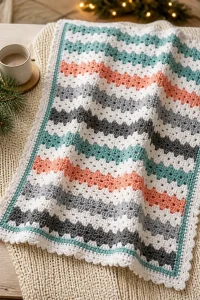
V-Stitch Ripple Crochet Baby Blanket

Affiliate disclosure: This post may contain affiliate links. I may earn a small commission at no extra cost to you. See our Privacy Policy for details HERE.
- What Is a Baby Blanket?
- Why This Is a Great Choice for a Baby Blanket
- Before You Start
- Yarn and Hook Recommendations
- Materials
- V-Stitch Ripple Crochet Baby Blanket Instructions
- Tips for Baby Blanket Success
- Common Mistakes to Avoid
- Ways to Make It Your Own
- Care and Washing Instructions
- Frequently Asked Questions
- More Ideas to Try
- Conclusion
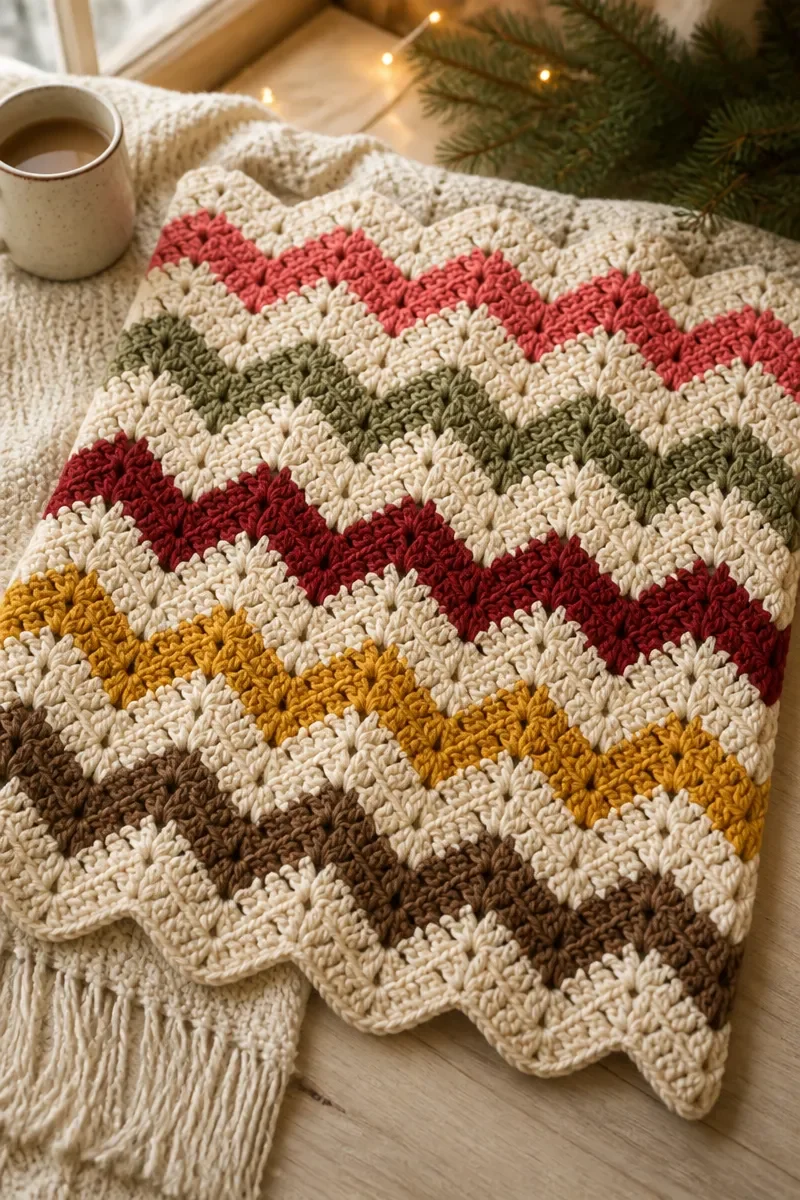
The V-Stitch Ripple Crochet Baby Blanket is a crochet project for making a handmade blanket. It offers a welcoming way to create something useful, personal, and made with care.
This project can appeal to beginners who want a clear, steady activity and to experienced makers looking for a comforting make. The finished blanket can be enjoyed at home or given as a thoughtful gift to a baby or family.
Making a handmade project encourages patience and attention, while giving you space to settle into a creative routine. Completing it can also build confidence, strengthen your care with materials, and bring the satisfaction of sharing a useful gift.
What Is a Baby Blanket?
A baby blanket is a soft textile made to provide a comfortable layer for a baby’s everyday surroundings. It may be kept at home, carried along on family outings, or saved as a treasured keepsake. Since it is both useful and personal, it is a popular choice for handmade gifts.
Baby blankets come in many styles, from smooth and understated to richly textured. Their appearance depends on the maker’s choices, but the goal is often a fabric that feels gentle and looks welcoming. A crocheted version has the added warmth of being made by hand, with each section reflecting time and attention.
People enjoy making baby blankets because they combine a practical purpose with room for creativity. The project can be worked at a comfortable pace, and the finished piece can hold special meaning for its recipient. It is also a thoughtful way to mark a new arrival or celebrate a growing family.
Why This Is a Great Choice for a Baby Blanket
-
Useful purpose: A baby blanket is made to be used in everyday family life, making it a thoughtful handmade choice. Its practical role can give each part of the making process a clear sense of purpose.
-
Personal meaning: Handmade gifts can carry affection in a way that feels distinctive. A blanket can become a keepsake connected with the person who made it and the family who receives it.
-
Room for creativity: Makers can enjoy choosing materials and deciding how the finished gift will suit its recipient. Creative choices make the process feel personal without taking away from the blanket’s everyday purpose.
-
Comforting routine: Repeated crochet work can make it easier to settle into a relaxed making rhythm. Returning to a familiar project can feel calming after a busy day or during a quiet break.
-
A rewarding finish: Completing a substantial handmade gift offers a satisfying sense of progress. The finished piece can remind you of the care and attention that went into making something for another person.
Before You Start
- Make a small gauge swatch if you want to see how your yarn and hook work together. This can help you judge the fabric’s feel before committing to the full project.
- Read through the complete project information before you begin, so you understand the overall plan and can prepare the supplies and workspace you need.
- Keep a notebook or tally sheet nearby for recording progress, noting questions, and marking where you pause. A written record can make it easier to resume with confidence.
- Wind and organize your yarn before starting, keeping each ball easy to reach and untangled. A tidy workspace helps you focus on the crocheting instead of sorting supplies.
Yarn and Hook Recommendations
- Choose a fiber that feels pleasant to handle and suits the intended use. Acrylic is often appreciated for its accessible care, while natural fibers can have a different feel and drape.
- Match the yarn weight to the fabric you want to make. A medium-weight yarn gives a substantial feel, while lighter yarns create a thinner fabric and heavier yarns feel bulkier.
- Prefer smooth yarn when you want to see your work clearly. Highly textured or fuzzy yarn can make individual loops harder to distinguish, especially while learning an unfamiliar stitch pattern.
- Think about color visibility before choosing yarn. Clear contrast can help you see the structure of your work, while close shades may create a softer, more blended appearance.
- Use a hook size that works comfortably with your yarn and produces fabric you like. A different hook can affect both the fabric’s density and how easily the hook moves.
- Keep the yarn and hook combination consistent throughout the project. Changing either partway through can alter the fabric’s feel and appearance, so try alternatives on a swatch first.
Materials
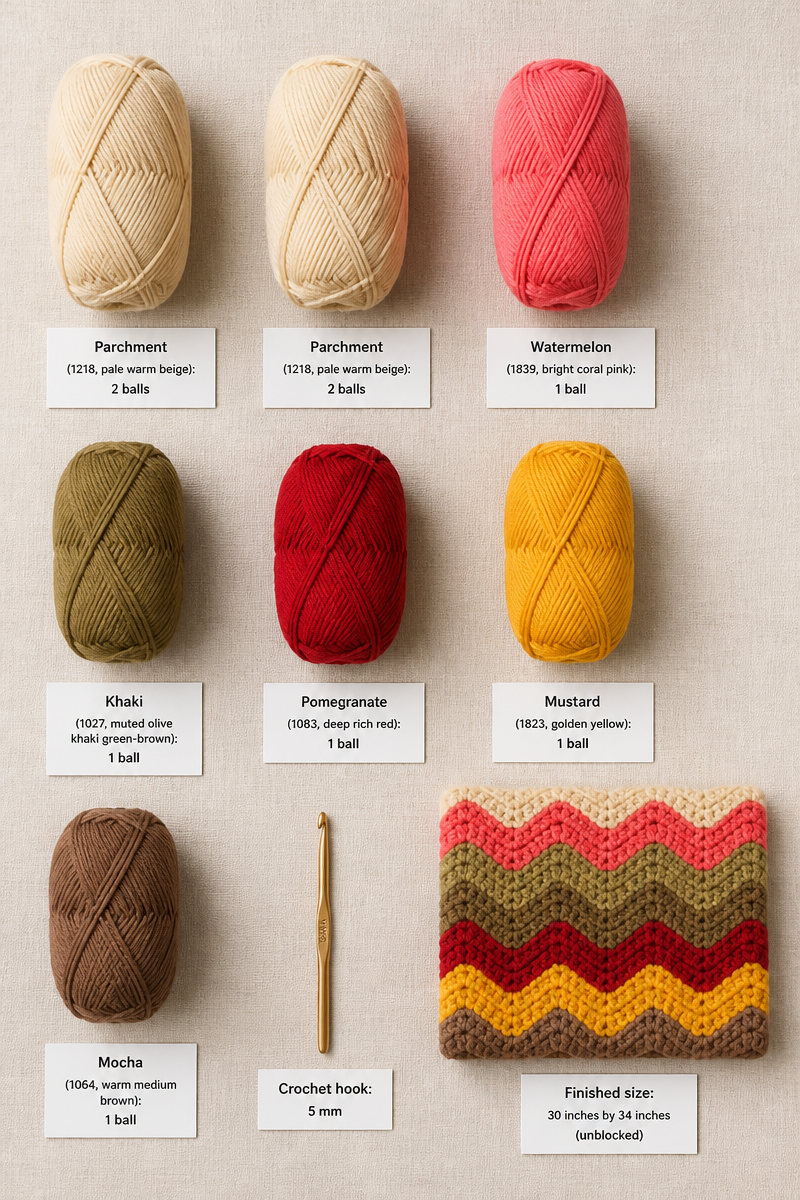
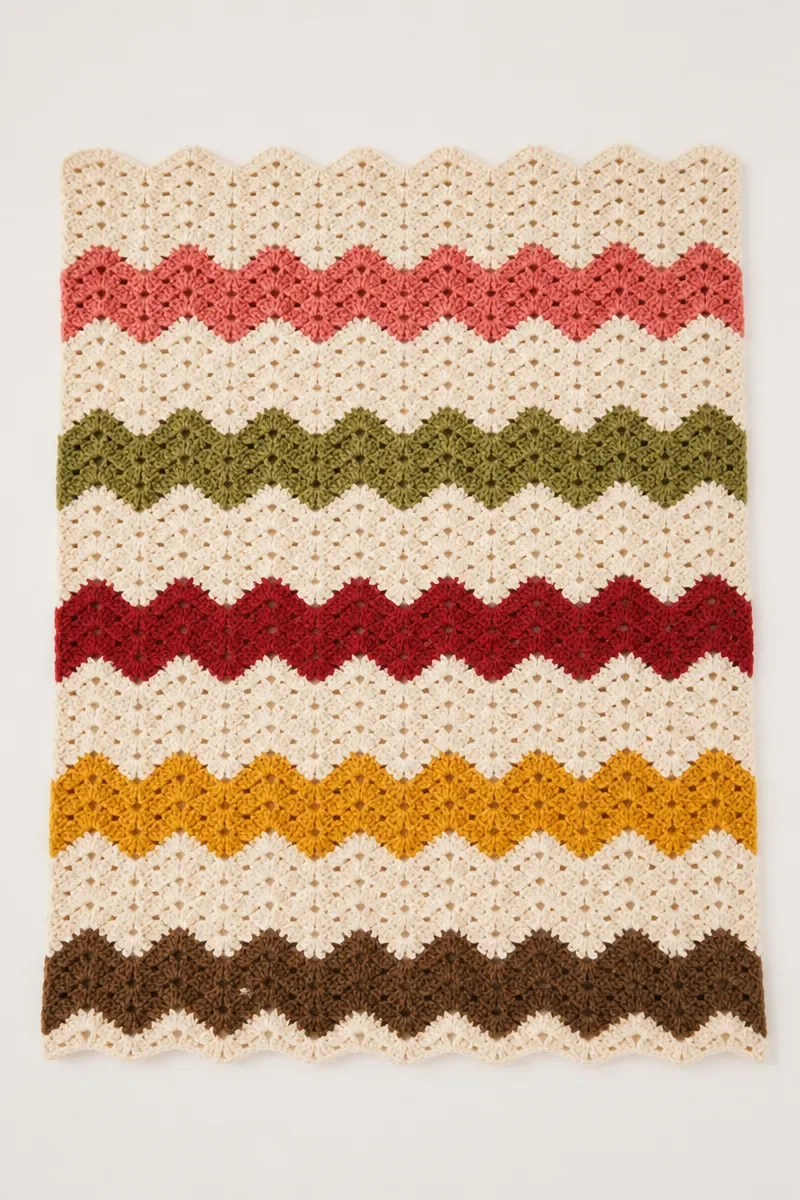
- Yarn: Stylecraft Special Aran (100% acrylic, 196 m/214 yds, 100 g)
- Parchment (1218, pale warm beige): 2 balls
- Watermelon (1839, bright coral pink): 1 ball
- Khaki (1027, muted olive khaki green-brown): 1 ball
- Pomegranate (1083, deep rich red): 1 ball
- Mustard (1823, golden yellow): 1 ball
- Mocha (1064, warm medium brown): 1 ball
- Crochet hook: 5 mm
- Gauge: not important
- Finished size: 30 inches by 34 inches (unblocked)
V-Stitch Ripple Crochet Baby Blanket Instructions
Color key: Parchment = pale warm beige; Watermelon = bright coral pink; Khaki = muted olive khaki green-brown; Pomegranate = deep rich red; Mustard = golden yellow; Mocha = warm medium brown.
Abbreviations: beg = beginning; ch = chain; dc = double crochet; dc2tog = double crochet 2 together; MC = main color; CC = contrast color; rep = repeat; sp = space; st = stitch; V-st = V-stitch; yo = yarn over.
V-stitch
(1 dc, ch 1, 1 dc) in the space or stitch indicated.
Dc2tog
Over 2 chains or stitches, yo, insert the hook into the chain or chain space specified, yo and pull up a loop (3 loops on the hook). Yo and pull through 2 loops (2 loops on the hook). Yo, insert the hook into the next ch or ch sp specified, yo and pull up a loop (4 loops on the hook). Yo and pull through 2 loops (3 loops on the hook). Yo and pull through all 3 loops.
Notes
Ch 2 at the beginning of a row counts as an incomplete dc and is part of the first dc2tog. The stitch multiple is 14 ch (+3) for the foundation row. Each multiple is about 2.75 inches wide in worsted weight yarn with a 5 mm hook; 11 multiples plus 3 extra chains make a blanket about 30 inches wide. For a baby blanket about 22 inches wide, use 8 repeats (14 x 8 = 112, plus 3 = a starting chain of 115). For a lap blanket about 36 inches wide, use 13 repeats (14 x 13 = 182, plus 3 = a starting chain of 185). To check your size, chain 31 and work a swatch of 2 pattern repeats for about 6 rows. Work the last yo at the end of the row with the next color for a neat color change. The blanket does not need a border. If you make a different size, your yardage will vary.
Color sequence
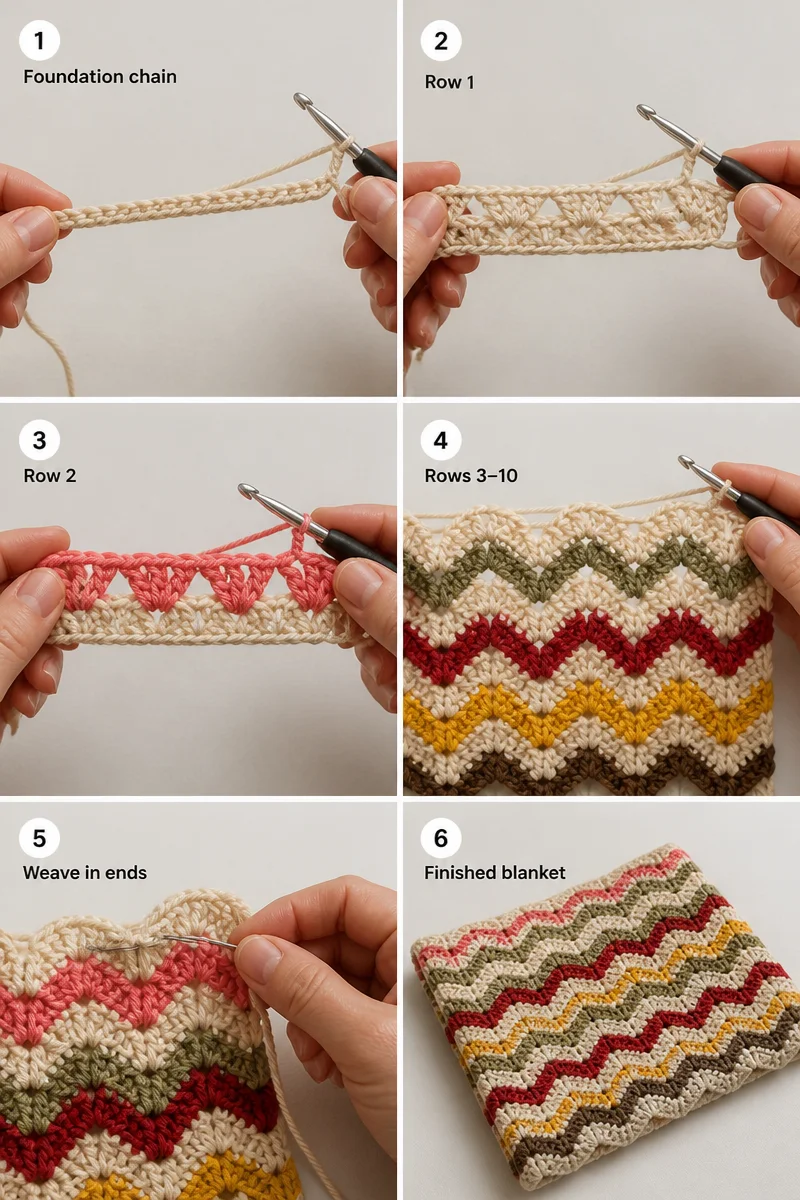
Parchment is the main color on every other row. Contrast colors, in order: Row 1 Parchment, Row 2 Watermelon, Row 3 Parchment, Row 4 Khaki, Row 5 Parchment, Row 6 Pomegranate, Row 7 Parchment, Row 8 Mustard, Row 9 Parchment, Row 10 Mocha. Repeat this sequence until the blanket is the size you want.
Blanket Body
- Ch 157.
- Row 1: 1 dc in the 4th ch from the hook (counts as 1 dc2tog). Skip 2 chs, V-st in the next ch, skip 2 chs, (V-st, ch 1, V-st) in the next ch, skip 2 chs, V-st in the next ch, skip 2 chs,* dc2tog over (next ch, skip 1 ch, next ch). Repeat from * across, ending the last repeat at **. Dc2tog over the last 2 chs. Turn.
- Row 2: Ch 2, 1 dc in the ch-1 sp of the next V-st (counts as 1 dc2tog). V-st in the ch-1 sp of the next V-st, (V-st, ch 1, V-st) in the next ch-1 sp, V-st in the ch-1 sp of the next V-st,* dc2tog over (ch-1 sp of the next V-st, skip the dc2tog, ch-1 sp of the next V-st). Repeat from * across, ending the last repeat at **. Dc2tog over (ch-1 sp of the last V-st, top of the beginning dc2tog). Turn.
- Rows 3-47: Repeat Row 2, changing colors as described above. Use the main color (Parchment) on every other row and the contrast colors in sequence. The sample blanket has 47 rows in total.
- Weave in all ends.
Tips for Baby Blanket Success
Comfortable Posture
Choose a chair that supports your back, and let your shoulders rest rather than lifting them as you work. Keep your wrists in a relaxed position, since a tense grip can make a pleasant hobby uncomfortable.
Good lighting helps you see the yarn and the work without leaning forward. Adjust the light so it falls across your hands, and take a short pause when your eyes feel tired.
Even Tension
Try to keep your grip gentle and consistent as you draw yarn through loops. If your hand tightens when you concentrate, loosen your hold before continuing; a relaxed movement can help the fabric stay more even.
Let the yarn feed smoothly rather than pulling hard after every stitch. Pause occasionally to let any twist unwind, which can make handling more comfortable and reduce uneven tension.
Track Your Place
Use a written tally to mark completed sections, especially when you set the work aside between sessions. A reliable note is easier to trust than trying to remember where you stopped.
Keep your place with a consistent habit, such as marking the last completed section before taking a break. This small routine can help you return without repeatedly recounting earlier work.
Check as You Go
Look over your work regularly for missed loops, unexpected gaps, or changes in fabric width. Spotting a small issue early can make it simpler to correct than waiting until much later.
Lay the fabric down now and then to see whether it sits evenly. If something looks unusual, pause and inspect the recent work before continuing, rather than adding more fabric over a possible mistake.
Common Mistakes to Avoid
Skipping a Swatch
It can be tempting to start the main project right away, especially when the yarn looks familiar. But different yarns and hooks can produce different fabric, so a small test helps you understand how your materials behave together.
Use a swatch to assess the fabric’s feel and appearance before settling into longer work. If the result seems too dense or too loose for your preference, adjust your hook choice and test again before proceeding.
Pulling Too Tightly
Tight tension often comes from gripping the yarn or hook too firmly, or from trying to make every loop look identical. This can make the hook harder to move and may leave the fabric stiff.
Keep your hands relaxed and let the yarn flow at a steady pace. If the work begins to feel difficult to handle, pause, loosen your grip, and continue with a comfortable motion.
Losing Count
A distraction can make it easy to lose track of where you are, especially during a long session. Guessing may lead to uneven edges or sections that do not align with the rest of the work.
Count at regular intervals and write down your progress in a notebook or tally sheet. If you become unsure, calmly recount from a reliable point rather than making an unverified adjustment.
Leaving Short Ends
Short yarn tails can be difficult to secure neatly and may work loose with handling. This mistake can happen when a maker cuts yarn close to the fabric without leaving enough length to weave in securely.
Leave a generous tail when ending a yarn section, and weave it into the fabric with care. Tucking it through several nearby loops helps keep the end discreet and secure.
Changing Materials Midway
Switching to a different yarn or hook during a project can change how the fabric looks and feels. Even materials described in similar terms can vary in thickness, texture, or how they move through the hook.
Whenever possible, use the same yarn and hook throughout. If a replacement is necessary, compare it with the original on a swatch and check whether the difference is noticeable before continuing.
Ways to Make It Your Own
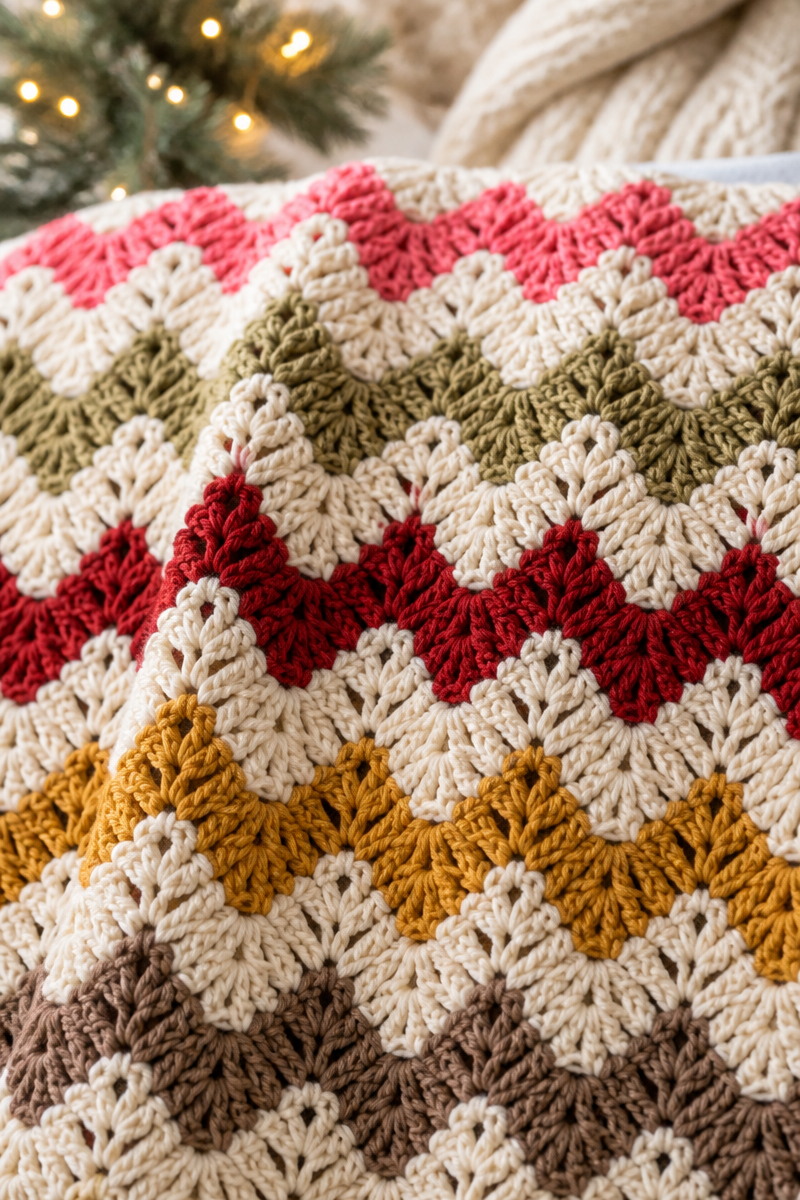
- Choose a palette: Select a different group of colors to suit the recipient or home. A quiet, coordinated palette can feel calm, while vivid contrasts can make the gift feel lively.
- Try another yarn: Choose a different yarn in the same weight if you prefer another fiber or texture. A smooth yarn can make the fabric clear, while a softly textured option adds a distinct feel.
- Make a companion: Create a matching second project, such as a small cushion cover, to give as a coordinated set. Using related materials can make both handmade pieces feel connected.
- Add a personal note: Include a handwritten card with a warm message for the recipient. A few sincere words can explain why you made the gift and make the moment more memorable.
- Present it thoughtfully: Wrap the finished gift in reusable fabric or place it in a keepsake box. A personal presentation gives the recipient another small detail to enjoy.
Care and Washing Instructions
Washing: Follow the yarn label for washing temperature, detergent, and any other care directions. If you are unsure how the fabric will respond, test a small area first and handle the blanket gently during cleaning.
Drying: Support the blanket while it is wet, since water can make crochet fabric heavier. Lay it flat on a clean, dry surface and arrange it neatly, then allow it to dry fully before storing or using it.
Blocking: Gentle blocking can help a flat crocheted fabric settle into an even shape. Use a suitable method for the fiber, avoid stretching it hard, and let it dry completely before moving it.
Frequently Asked Questions
Can I use a different yarn?
Yes, another yarn can work if it is suitable for the kind of fabric you want. Check how its fiber, texture, and weight feel together. A small swatch lets you assess the result before committing your supplies.
How can I keep my work even?
Keep your hands relaxed and let the yarn move smoothly as you crochet. Try to use a similar amount of tension throughout your work. Pausing to rest can help prevent your grip from tightening when you feel tired.
What is a reliable way to count?
Use a notebook or tally sheet to record completed sections as you go. Count at regular intervals instead of relying on memory alone. If you lose your place, return to a point you can identify and count forward carefully.
What if the finished fabric looks different than expected?
First, consider whether the fabric’s appearance changes when it is laid flat and gently arranged. Compare your swatch with the larger work to see whether the difference comes from handling or materials. If needed, make a small adjustment before continuing.
How long should yarn tails be?
Leave enough yarn to weave each tail securely through nearby loops without straining it. A tail that is too short can be hard to manage neatly. If you are unsure, leave extra length and trim it after securing.
More Ideas to Try
If you enjoy making useful handmade gifts, consider exploring a cushion cover, a table runner, a market bag, or a cozy scarf. Each offers a different way to practice crochet and make something suited to daily life. You could also choose a project that uses yarn already in your collection, helping you turn leftover supplies into a thoughtful gift or a small addition to your home.
Conclusion
Give the V-Stitch Ripple Crochet Baby Blanket a try when you are ready to make a thoughtful handmade gift. Take pleasure in choosing your materials, settling into a comfortable creative routine, and completing something made with care. When you are ready for another project, explore more crochet ideas on the blog and find a new way to enjoy making by hand.