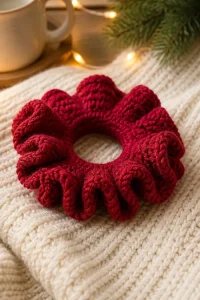
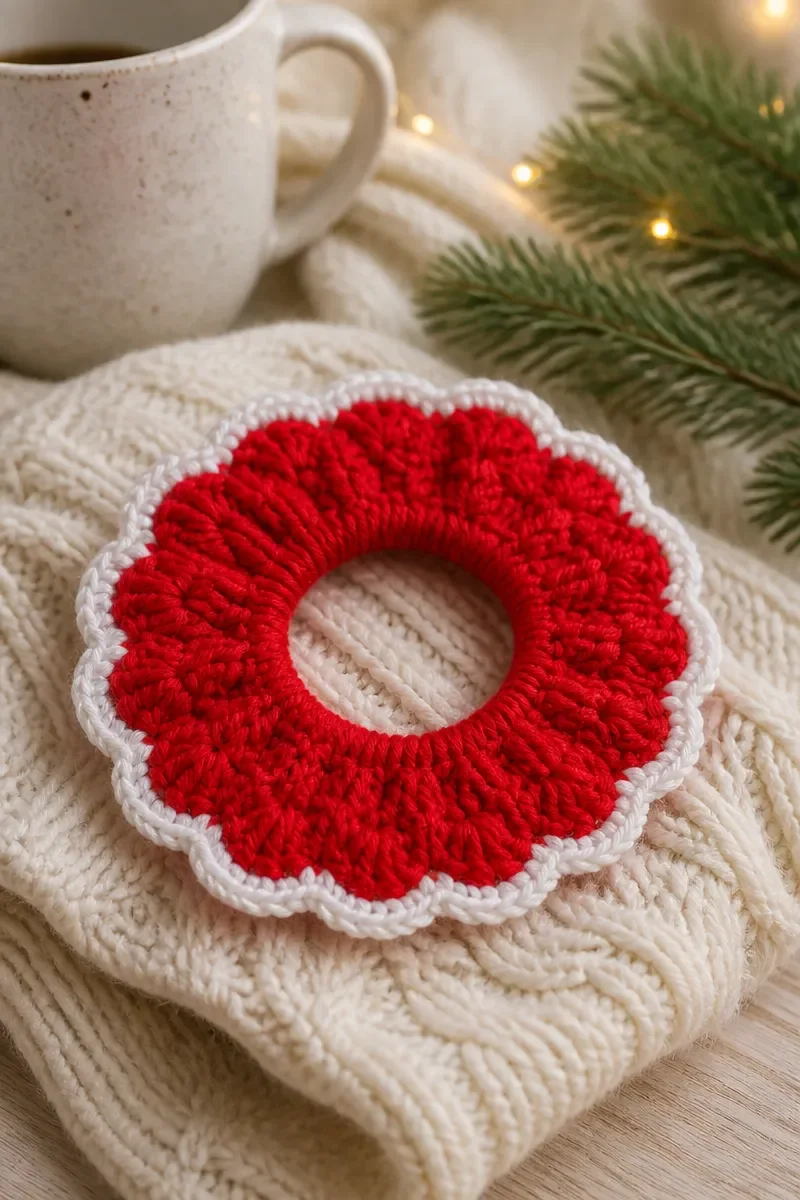
Red and White Crochet Christmas Scrunchie
Affiliate disclosure: This post may contain affiliate links. I may earn a small commission at no extra cost to you. See our Privacy Policy for details HERE.
- What Is a Scrunchie?
- Why This Is a Great Choice for a Scrunchie
- Before You Start
- Yarn and Hook Recommendations
- Materials
- Red and White Crochet Christmas Scrunchie Instructions
- Tips for Scrunchie Success
- Common Mistakes to Avoid
- Ways to Make It Your Own
- Care and Washing Instructions
- Frequently Asked Questions
- More Ideas to Try
- Conclusion
The Red and White Crochet Christmas Scrunchie is a handmade crochet project for adding a personal touch to a seasonal accessory. It offers a focused way to enjoy making something useful with yarn and to bring a little handmade charm to everyday routines.
This project may appeal to crocheters who enjoy practical crafts, thoughtful presents, and small handmade items. The finished piece can be enjoyed personally or shared as a seasonal gift for someone who appreciates useful, handcrafted accessories.
Working on a project like this offers a chance to practice patience and careful attention. It can also help build confidence with crochet, encourage thoughtful finishing, and make the experience of giving a handmade gift feel especially satisfying.
What Is a Scrunchie?
A scrunchie is a fabric accessory used to gather hair. Its gathered, softly ruffled appearance gives it a relaxed look, while its flexible construction lets it adapt to different everyday styles.
Crocheted versions bring a handmade texture to a familiar accessory. They can range from understated to expressive, depending on the yarn and overall finish, so makers can create an item that suits personal taste or a particular occasion.
People enjoy making scrunchies because they are useful, easy to personalize, and suitable for gift giving. A small project can also be a satisfying way to make something practical without taking on a large undertaking.
Why This Is a Great Choice for a Scrunchie
- Useful handmade gift: A scrunchie is an everyday accessory, which makes it a thoughtful present for someone who enjoys handmade items. Its practical purpose can make a small crocheted gift feel personal and considered.
- Personal style: Yarn choices offer plenty of ways to create an accessory that suits different tastes. A maker can think about the recipient’s wardrobe and preferences while keeping the project’s familiar, wearable purpose in mind.
- Manageable project: A compact accessory can feel approachable when you want to make something by hand without planning a large item. It also gives you a clear opportunity to focus on steady, careful work.
- Creative practice: Small projects let you pay attention to the quality of your crocheting and the overall appearance of your work. That focused practice can support confidence and encourage you to explore other handmade ideas.
- Easy to share: A handmade accessory is simple to include with a larger present or give as a small standalone gift. Thoughtful wrapping and a personal message can make the gesture feel even more meaningful.
Before You Start
- Make a gauge swatch to see how your yarn and hook behave together. A sample can help you notice whether your fabric feels too firm or too loose before you begin.
- Read through the project details before picking up your hook. Knowing the overall sequence helps you prepare mentally and notice any unfamiliar abbreviations or transitions.
- Keep a notebook or tally sheet nearby for tracking your place and recording observations. A short note can make it easier to resume after a break without relying on memory.
- Wind your yarn into a comfortable working ball before beginning. Keep the strands tidy and within reach so they feed smoothly as you work.
Yarn and Hook Recommendations
- Choose a fiber that feels comfortable against skin, especially for an item worn close to the body. Smooth cotton or a soft acrylic can be pleasant to handle and may be easier to care for.
- Match the yarn weight to the look and feel you want. A medium-light yarn can offer a balance between visible texture and a flexible fabric, while heavier yarn may create a denser result.
- Look for yarn with a smooth, even surface if you want to see your stitches clearly. Highly textured or fuzzy fibers can make individual loops harder to identify, especially when you are learning.
- Consider how well the yarn’s surface shows the details of your work. Clear stitch definition can help you see where to place your hook and notice irregularities while they are still easy to address.
- Pick colors with enough contrast if you want the fabric’s texture to stand out. Subtle combinations can create a quieter look, while stronger contrast makes changes in tone more noticeable.
- Select a hook that works comfortably with your yarn and desired fabric. A swatch can help you judge whether the fabric feels flexible enough while still holding its form.
Materials
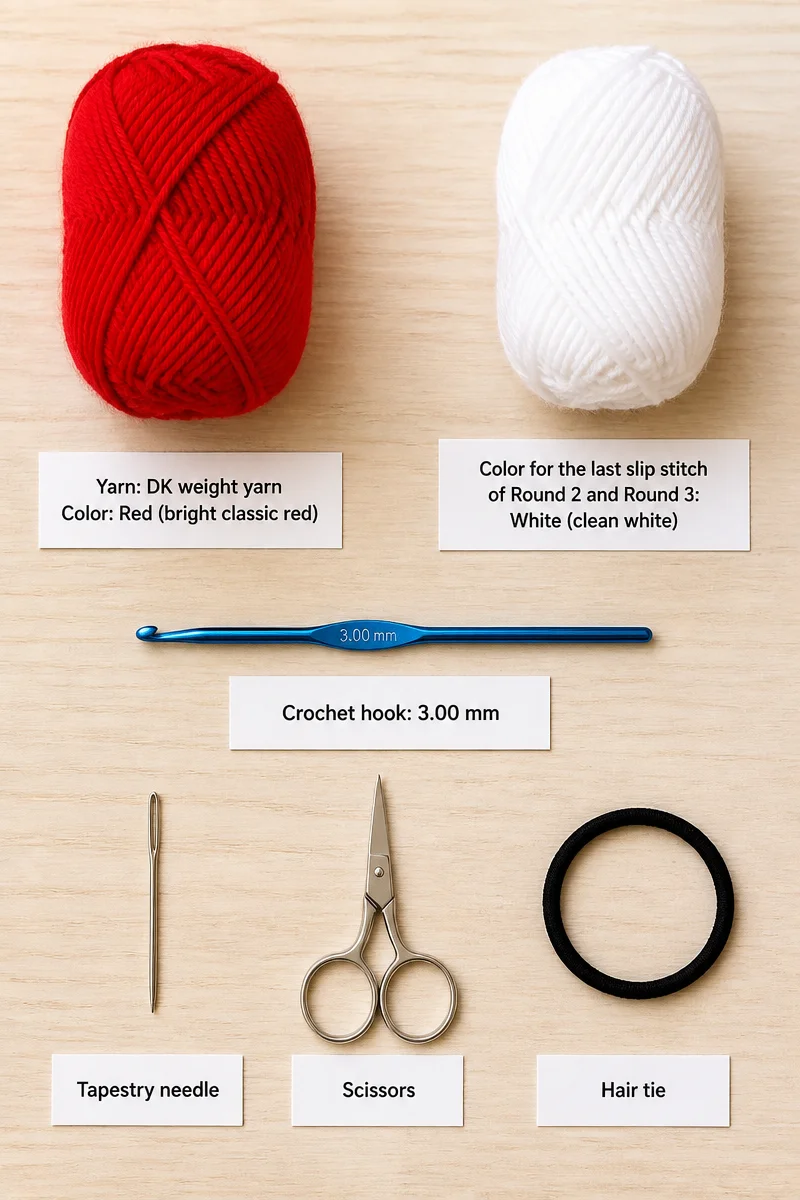
- Yarn: DK weight yarn
- Color: Red (bright classic red)
- Color for the last slip stitch of Round 2 and Round 3: White (clean white)
- Crochet hook: 3.00 mm
- Tapestry needle
- Scissors
- Hair tie
Red and White Crochet Christmas Scrunchie Instructions
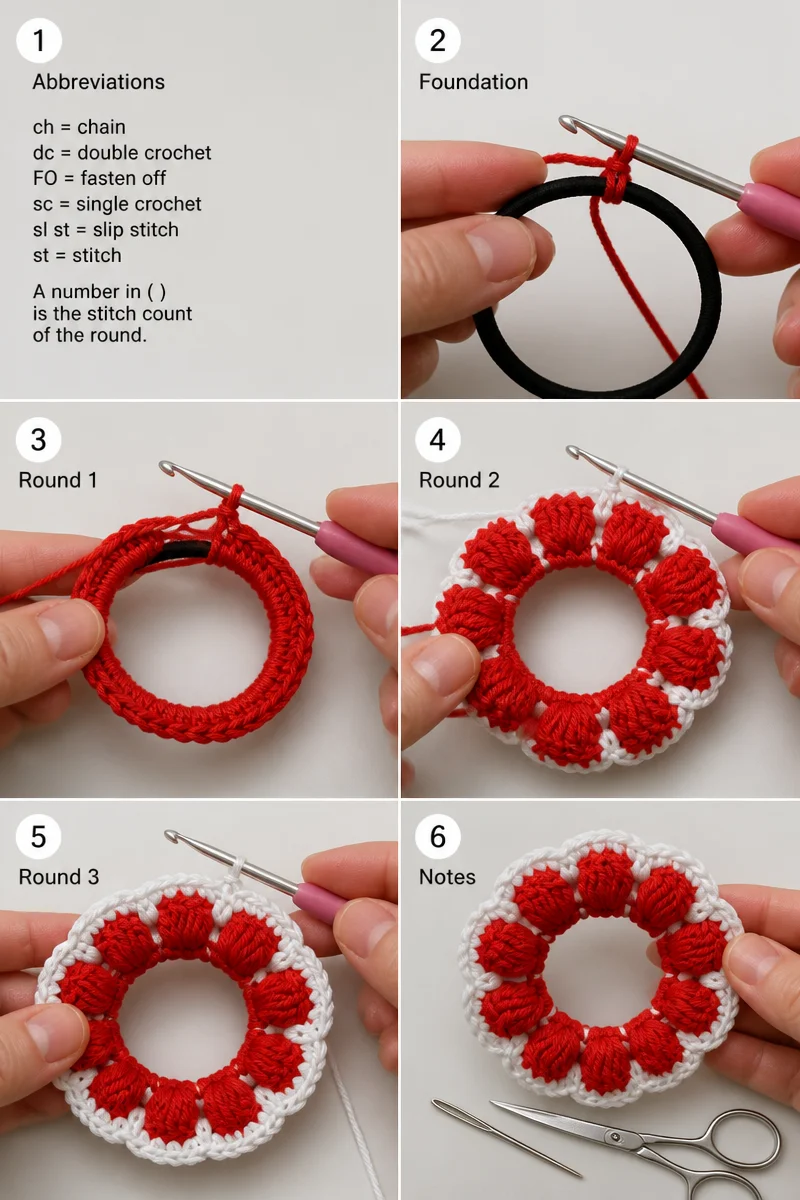
Color key: Red = bright classic red; White = clean white.
-
Abbreviations: ch = chain; dc = double crochet; FO = fasten off; sc = single crochet; sl st = slip stitch; st = stitch. A number in ( ) is the stitch count of the round.
-
Foundation: Make a slip knot with Red and sl st onto the hair tie.
-
Round 1: 42 sc around the hair tie. Sl st into the first sc. (42)
-
Round 2: Ch 2. 4 dc in the same st. Sl st into the next st. 5 dc in the next st, sl st in the next st. Repeat from * to * around. On the last sl st, change to White.
-
Round 3: Sc in each dc, sl st into each sl st of the previous round. Repeat from * to * around. FO.
-
Notes: Work 3 dc instead of 5 dc in each shell of Round 2 for a less bulky look.
Tips for Scrunchie Success
Comfortable Setup
Sit where your shoulders can relax and your arms can rest naturally. A comfortable position helps you avoid unnecessary strain and makes it easier to keep your hands steady throughout a crafting session.
Use bright, even lighting so you can see the yarn and the fabric clearly. If shadows fall across your work, adjust your seat or light source rather than leaning forward for long periods.
Steady Tension
Let the yarn slide smoothly through your fingers instead of gripping it tightly. A relaxed hold can help your loops remain more consistent and keep your hands from tiring as you work.
Pause if the fabric begins to feel rigid or your fingers start to tense. Taking a moment to reset your grip can help you return to a comfortable rhythm without forcing the yarn.
Track Your Place
Use a small tally on paper each time you complete a clearly defined portion of the work. This gives you a reliable record if you need to set the project down before it is complete.
When you return, compare your latest note with the fabric before continuing. A brief visual check can help you reconnect with your progress and prevent accidental duplication.
Check As You Go
Look over your work regularly for openings, uneven areas, or places where the fabric appears noticeably different. Spotting a concern early usually makes it easier to understand what happened.
Handle the fabric gently while inspecting it, and avoid stretching it out of shape. A calm check helps you judge the texture accurately and decide whether your work is progressing evenly.
Common Mistakes to Avoid
Skipping a Swatch
Starting without testing your yarn and hook can lead to a fabric that feels different from what you expected. Yarn labels and personal tension both affect how a project turns out.
Work a small sample first and examine how it feels in your hands. If it is too stiff or too loose, adjust your approach before investing more time in the project.
Pulling Too Tight
Tight tension often happens when a crocheter grips the yarn or hook firmly out of concern that the fabric will look untidy. The result can be difficult to work into and uncomfortable to handle.
Let each loop form naturally around the hook, and keep your hand relaxed. If the fabric feels rigid, pause and loosen your grip before continuing with a more comfortable rhythm.
Losing Track of Counts
Miscounting can happen when you work while distracted or when neighboring stitches are difficult to distinguish. Even a small counting error can make the fabric look uneven or throw off later work.
Count at natural stopping points and use a written tally to record progress. If you notice a discrepancy, check the nearby stitches carefully rather than adding extra stitches without identifying the cause.
Leaving Short Tails
Short yarn tails can be hard to secure neatly and may come loose with handling. It is easy to underestimate how much yarn is needed when cutting off a working strand.
Leave enough length to weave the tail through the fabric securely with your tapestry needle. Work it through several nearby paths and avoid cutting it close until it feels stable.
Changing Materials Midway
Switching yarn or hook partway through can alter the fabric’s thickness, texture, and overall consistency. Even materials described similarly may behave differently once they are worked together.
If a change becomes necessary, test the replacement on a sample before continuing. Comparing the two fabrics can help you decide whether the difference is acceptable for your intended result.
Ways to Make It Your Own
- Try a different palette that suits your personal style or the person receiving the gift. A coordinated combination can feel polished, while a playful mix brings a more expressive mood.
- Choose another yarn in the same weight for a different texture or feel. Consider how its softness and surface will suit the person who will use the finished accessory.
- Make a matching second project to create a coordinated set. Similar materials and a shared design approach can make the pair feel thoughtful without requiring identical presentation.
- Include a handwritten note that explains why you chose to make the gift. A warm personal message can add meaning and help the recipient appreciate the time behind it.
- Present the finished item in a small gift bag with tissue paper. Simple packaging keeps the handmade gift neat and makes it feel ready to share on a special occasion.
Care and Washing Instructions
Washing: Check the yarn label for care guidance before washing. Follow its recommendations for water temperature, cleaning products, and handling, since fiber content can affect how yarn responds to washing.
Drying: Press out excess water gently with a clean towel rather than twisting the fabric. Let it air dry in a suitable place, and keep it away from direct heat that could affect the fibers.
Blocking: Gentle blocking may help even out crocheted fabric if it looks uneven. Use a light touch and avoid stretching the piece more than needed to encourage a tidy appearance.
Frequently Asked Questions
Can I use a different yarn?
You can use another yarn if it is suitable for a comfortable accessory and works well with your hook. Keep in mind that fiber and texture can affect the finished fabric. Make a small sample first so you can assess its softness, flexibility, and appearance before continuing with the project.
How can I keep my work even?
Relax your hands and allow the yarn to move smoothly through your fingers. Try to maintain a consistent working rhythm instead of tightening each loop individually. If your fabric begins to feel stiff, pause briefly, reset your grip, and continue with a lighter touch.
What is a reliable way to count?
Count completed portions at natural stopping points and record your progress on paper. This makes it easier to resume after interruptions and reduces reliance on memory. If your tally and fabric seem inconsistent, inspect the nearby stitches closely before proceeding further.
What if the finished piece looks different?
Small differences in tension, fiber, and personal technique can affect the appearance of handmade work. Compare the overall fabric with what you hoped to make, and consider whether it feels comfortable and looks tidy. If something seems wrong, review your work carefully before deciding whether to make an adjustment.
How long should yarn tails be?
Leave a generous tail so you have enough yarn to secure it neatly with a tapestry needle. The amount needed can vary with your finishing method and the fabric’s thickness. Weave the tail through several nearby paths, then check that it feels secure before trimming.
More Ideas to Try
If you enjoy making practical handmade accessories, you could also try a small coin purse, a bookmark, a headband, or a reusable gift pouch. These projects offer different ways to explore texture and personal style while creating useful items to keep or share. Choose an idea that suits your interests and the kind of handmade gift you would enjoy giving.
Conclusion
Give the Red and White Crochet Christmas Scrunchie a try if you would enjoy making a personal, useful handmade accessory. Take your time, enjoy the process, and let each part of the work build your confidence. When you are ready for another project, explore more crochet ideas on the blog.