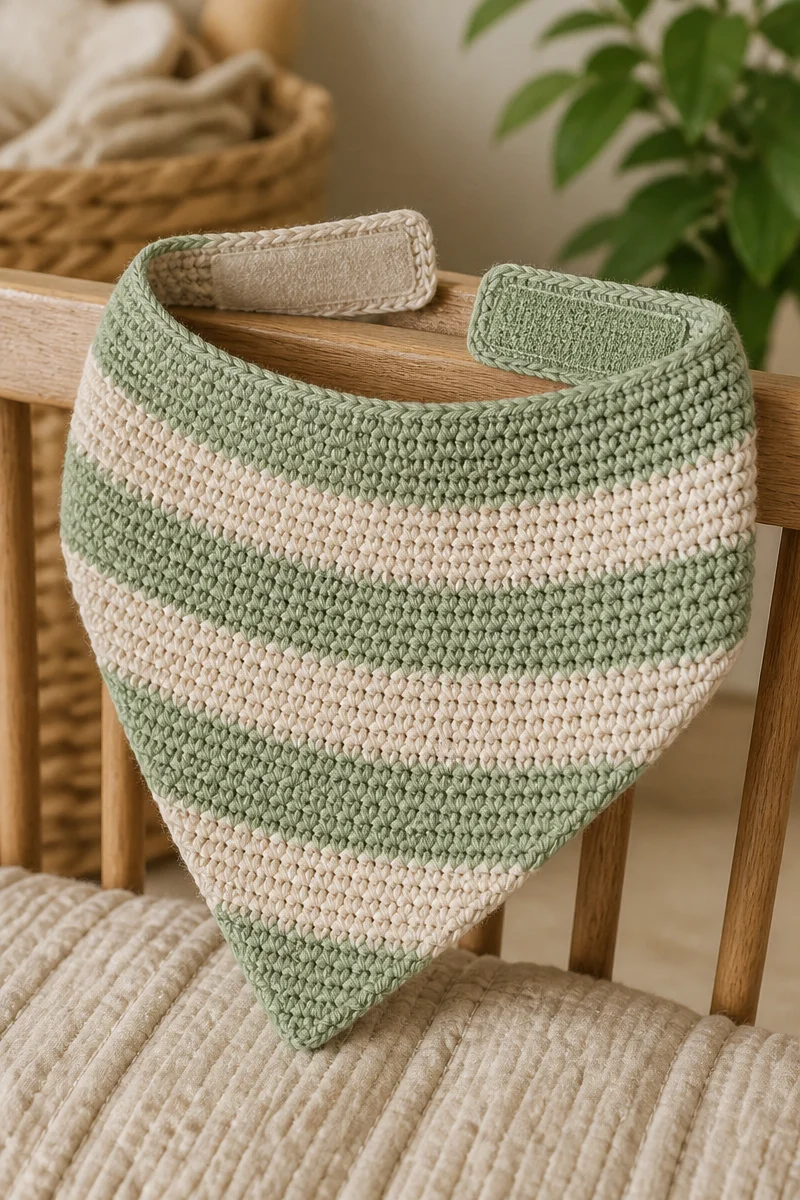
Crochet Sage Neutral Baby Bandana Bib

Affiliate disclosure: This post may contain affiliate links. I may earn a small commission at no extra cost to you. See our Privacy Policy for details HERE.
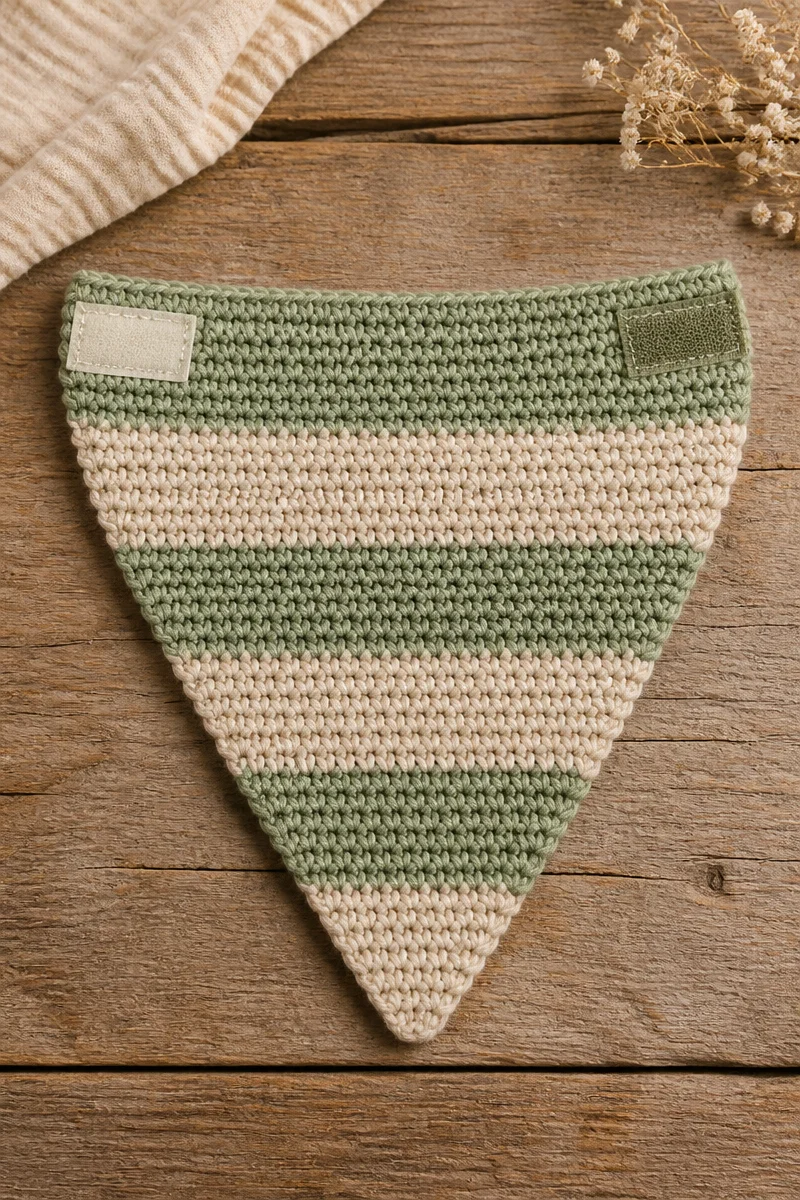
A sage neutral baby bandana bib is one of my favorite small crochet projects. It is useful, quick to make, and easy to personalize. The soft sage shade also pairs well with a range of baby outfits, so the finished bib can feel both practical and special.
A crocheted bandana bib usually has a triangular shape, a textured fabric, and ties or fasteners at the neck. It can suit a confident beginner who knows basic stitches and wants to practice shaping. Since the bib rests against a baby’s skin, the yarn choice and finished fabric matter just as much as the color.
In this guide, we’ll look at the common stitch and shaping used for a crochet baby bandana bib. You’ll also find yarn and hook tips, advice for keeping your edges neat, and care guidance. Along the way, we’ll cover a few mistakes to avoid so your sage neutral bib is comfortable and useful.
What Is the Single Crochet Stitch?
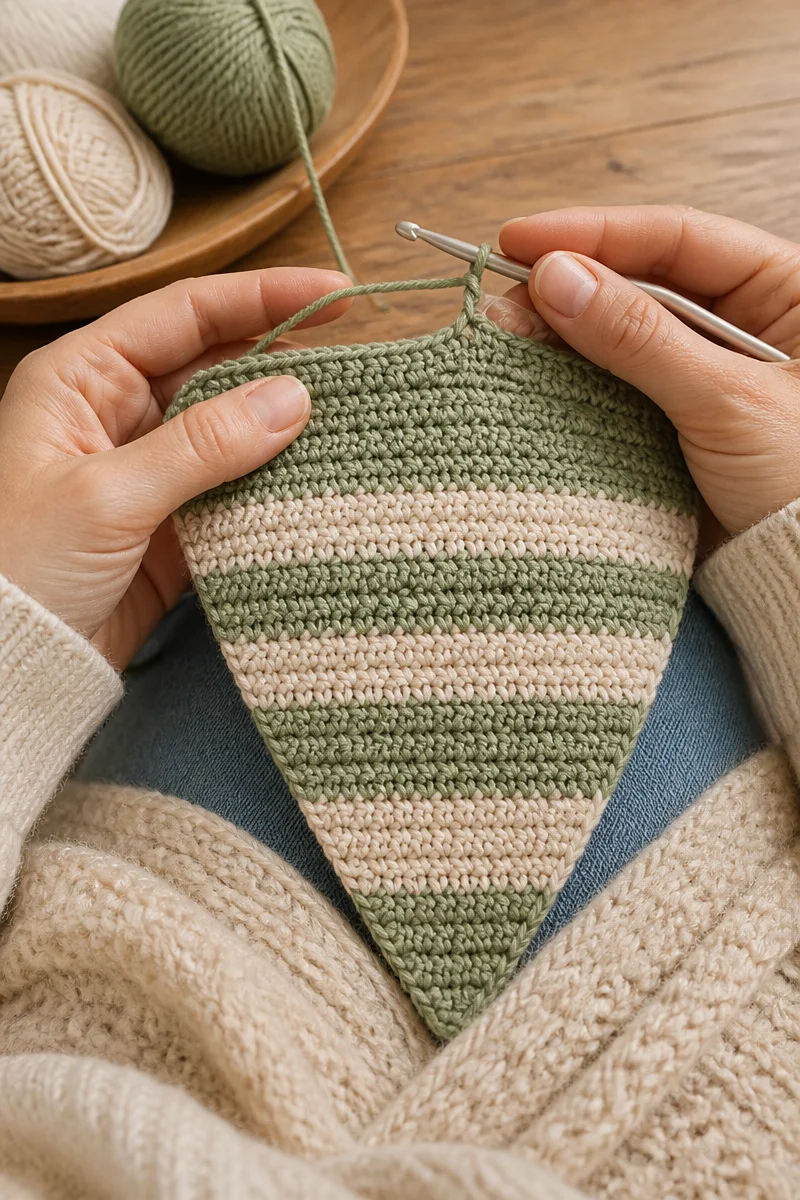
The single crochet stitch is a compact, basic crochet stitch that creates a firm, even fabric. To make one, insert the hook into a stitch, yarn over, and pull up a loop. Then yarn over again and pull through both loops on the hook.
For a bandana bib, crocheters often work single crochet in rows and increase stitches near the edges to create a triangle. The fabric looks neat and has a little texture, while its close stitches help it hold its shape. However, single crochet can feel dense, so a relaxed tension and a suitable hook help keep the bib comfortable.
Why This Is a Great Choice for Baby Bandana Bibs
- It holds its shape: Single crochet makes a stable fabric that suits the triangular bib shape.
- It is beginner friendly: The stitch uses a simple motion, so it is a good way to practice even rows and basic increases.
- It makes tidy edges: With careful counting, the sides can look clean and well defined.
- It works well in a neutral palette: A plain stitch lets a sage shade stand out without a busy texture.
- It is easy to personalize: You can add a contrasting border, change the triangle size, or use a different closure style.
Yarn and Hook Recommendations
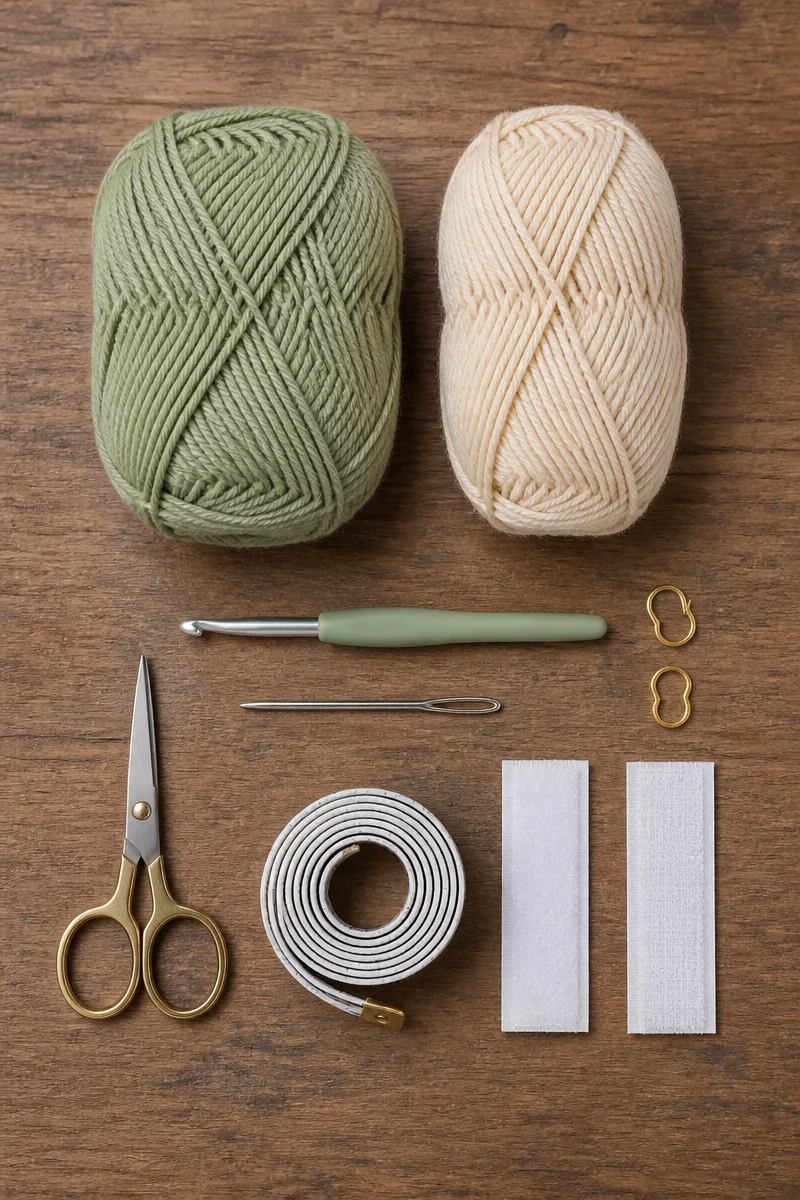
- Choose a smooth, washable yarn: A soft cotton or cotton blend is a popular choice for a bib that may need frequent laundering.
- Check the yarn label: Look for care instructions and fiber information, especially if you want a machine-washable finished bib.
- Consider sport or DK weight: These lighter yarns can make a bib that feels less bulky than one made with thick yarn.
- Use a hook that suits your yarn: Start with the hook size listed on the yarn label, then adjust if your stitches feel too tight or too loose.
- Make a small test swatch: A swatch helps you check the fabric’s feel, stitch size, and drape before shaping the bib.
- Pick a gentle shade: Sage, cream, taupe, and other soft neutrals are easy to pair with baby clothes. Choose a yarn that stays comfortable against skin.
Tips for Single Crochet Success
First, keep your tension relaxed and steady. If you pull each loop too tightly, the fabric may feel stiff and become difficult to work into. If your stitches are too loose, the bib may stretch more than you want. A small swatch helps you find a comfortable middle ground.
Next, count your stitches at the end of each row, especially when you make increases to shape the triangle. Use a stitch marker at the edges if it helps you see where each row begins and ends. Also, read the shaping directions before you start, so you know where the increases belong. Take your time, and pause when you need to. Even rows make a noticeable difference in the finished bib.
Common Mistakes to Avoid
One common issue is changing tension as you work. This can make one side of the triangle longer or the fabric look uneven. Instead, check your work every few rows and adjust your grip if the stitches begin to tighten.
It is also easy to miss an increase or add one in the wrong place. As a result, the bib may lean to one side or form an uneven triangle. Count each row and mark the edge stitches until the shaping feels familiar.
Another pitfall is choosing yarn that feels scratchy, heavy, or difficult to wash. A bib sits close to a baby’s skin and often needs cleaning, so check the yarn’s texture and care label before you begin. When possible, wash and dry your swatch to see how the fiber behaves.
Finally, avoid making the fabric too stiff. A dense stitch can be useful for shape, but overly tight tension may make the bib uncomfortable. Try a larger hook for your swatch if the fabric feels rigid, and check that any ties or fasteners are secure and suitable for the intended use.
Care and Washing Instructions
Washing: Follow the yarn label first. Many cotton and cotton-blend yarns can be machine washed, but a gentle cycle and mild detergent can help protect the stitches. If you are unsure, hand wash the bib in cool or lukewarm water.
Drying: Gently press out extra water without twisting the bib. Then lay it flat on a clean towel and reshape the triangle as it dries. Avoid high heat unless the yarn label specifically allows it.
Blocking: Light blocking can help even the edges and smooth the shape. However, single crochet usually holds its form well, so heavy blocking is not often needed. Always use a method that suits the yarn fiber.
More Ideas to Try
If you enjoy making a crochet baby bandana bib, try a half double crochet version for a softer, taller stitch, or add a simple single crochet border in cream. You could also explore a small cotton washcloth, a matching baby hat, or a textured bib made with moss stitch. Each project offers a fresh way to use soft yarn and calm, neutral colors.
Conclusion
A sage neutral baby bandana bib is a practical project that combines simple shaping with a classic single crochet fabric. Choose a soft, washable yarn, keep your tension even, and count your stitches as you form the triangle. Then, care for the finished bib according to the yarn label so it stays looking its best.
Ready to try one? Pick a sage yarn, make a small swatch, and enjoy the steady rhythm of single crochet. When your bib is finished, share your color choices and project ideas, or explore more beginner-friendly crochet guides on the blog.