Crochet Cardinal Baby Stuffed Toy

Affiliate disclosure: This post may contain affiliate links. I may earn a small commission at no extra cost to you. See our Privacy Policy for details HERE.
A crochet cardinal baby stuffed toy makes a sweet handmade gift, and it brings a bright pop of color to a nursery or playroom. I love how a few simple shapes and stitches can become a cheerful little bird with a personality of its own. It can also be a thoughtful keepsake for a baby shower or a special family gift.
This project is a small amigurumi toy, which means it is crocheted in three dimensions, usually in joined or continuous rounds. The fabric is firm and close-knit, helping the toy hold its shape. While the basic stitches are beginner-friendly, shaping, color changes, and securely attaching parts may take a little practice.
In this guide, you will learn how amigurumi works, why it suits a baby-friendly cardinal toy, and how to choose yarn and a hook. You will also find practical tips, common mistakes to avoid, and care advice. Because a toy for a baby needs special attention, safety comes first throughout the project.
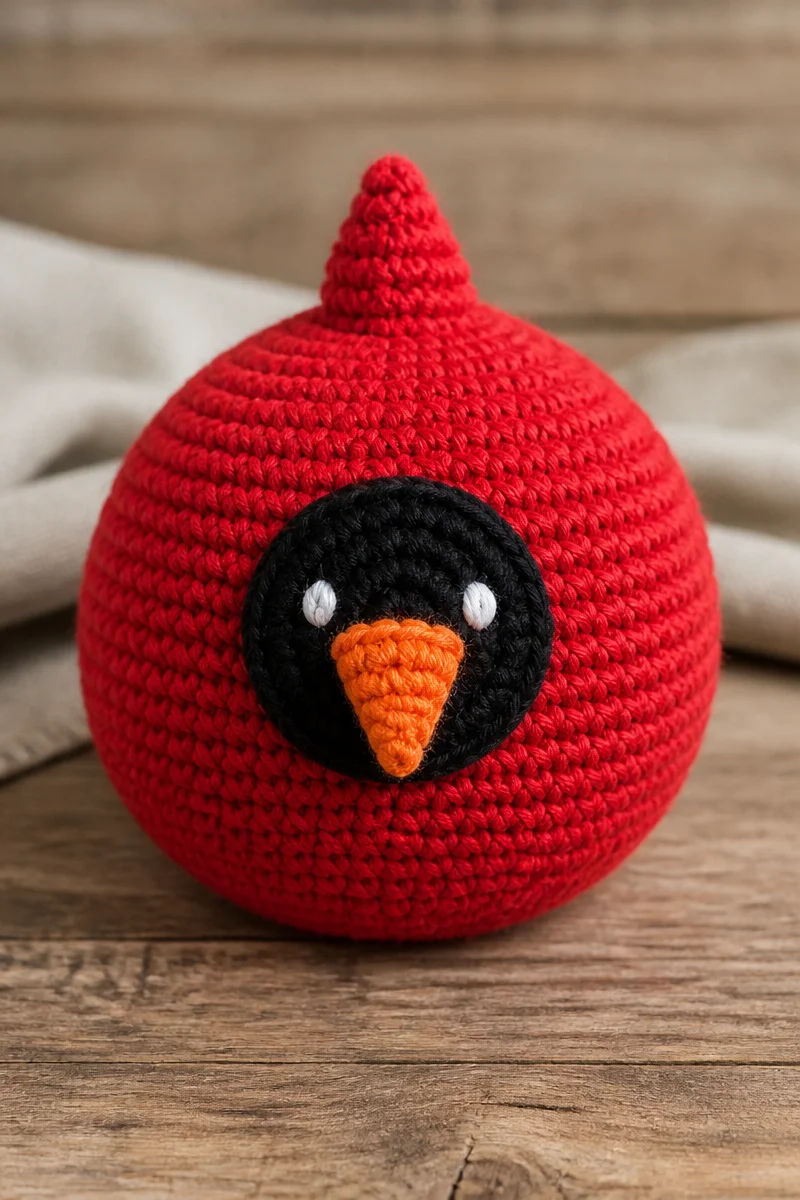
What Is the Amigurumi Technique?
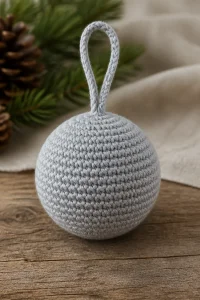
Amigurumi is the crochet technique used to make small stuffed toys and figures. Instead of working flat rows, you crochet in rounds to build a three-dimensional form. For a cardinal, separate shapes can form the body, head, wings, beak, and crest.
Most amigurumi uses single crochet stitches worked close together. The tight fabric helps keep the stuffing inside and gives the toy a smooth, firm shape. Increases add stitches to widen a section, while decreases bring stitches together to narrow it.
Crocheters enjoy amigurumi because it turns basic stitches into playful objects. A cardinal’s red body, dark face details, and pointed crest make it easy to recognize, even when the design uses simple shapes. However, any toy intended for a baby should use securely attached features and materials suited to the child’s age. Embroidered eyes are often a safer choice than small plastic parts.
Why This Is a Great Choice for a Baby Stuffed Toy
- A firm fabric helps contain the stuffing. Close single crochet stitches leave fewer gaps than a loose fabric, provided you keep even tension.
- Small shapes are easy to customize. You can adjust the cardinal’s color, size, wings, or crest to suit your preferred design.
- The project is portable. Since amigurumi is often made in small pieces, it is easy to bring along for a few rounds of crochet.
- It offers practice with useful skills. You can build confidence with working in rounds, increasing, decreasing, and sewing pieces together.
- It makes a personal handmade gift. A crocheted cardinal can mark a special occasion or add a handmade touch to a nursery, as long as the finished toy is safe for its intended use.
Yarn and Hook Recommendations
- Choose a smooth worsted-weight yarn if you want a sturdy, easy-to-see fabric. This weight is widely available and makes stitches easier to count.
- Try DK-weight yarn for a smaller, lighter bird. Use the hook size recommended by your pattern, then check that the stitches form a firm fabric.
- Use a smooth acrylic yarn for easy care and a broad choice of colors. Check the yarn label for washing guidance before you begin.
- Consider cotton yarn for a crisp stitch definition. Cotton can feel less stretchy than acrylic, so check your tension as you work.
- Pick a hook smaller than you would use for a loose, draping fabric. Amigurumi often needs a smaller hook to help prevent stuffing from showing through. Follow the pattern’s guidance and adjust if you see gaps.
- Select a soft, washable stuffing and colorfast yarn. A toy may need regular cleaning, so materials that can tolerate gentle washing are practical. Keep all small details firmly secured, or embroider them instead.
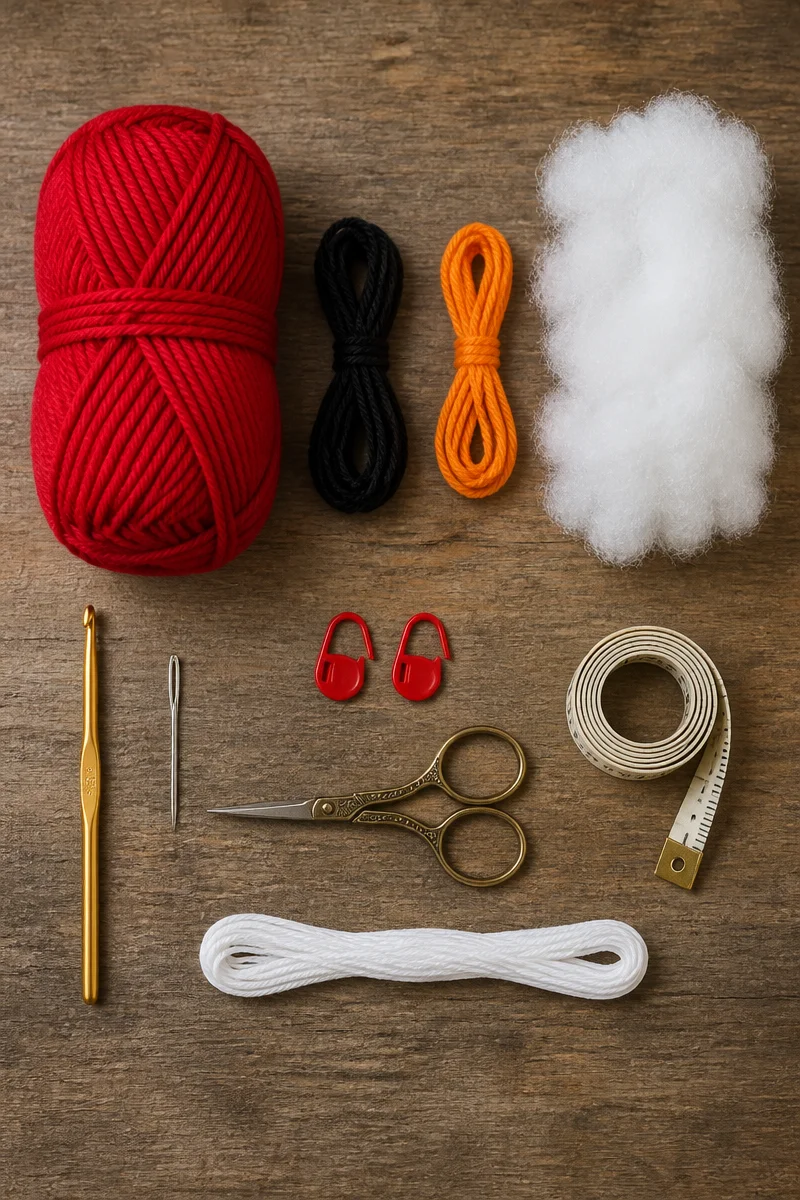
Tips for Amigurumi Success
First, use a stitch marker to mark the first stitch of each round. Since many amigurumi designs are worked in a spiral, the end of one round may not look like a clear stopping point. Move the marker as you go, and count your stitches regularly. Also, keep your tension steady so the body stays firm without making your hands uncomfortable.
Next, follow the pattern’s shaping carefully. Increases and decreases control the cardinal’s curves, so even a small counting error can change the shape. Add stuffing gradually as you close the body, and spread it evenly with your fingers or a blunt tool. Finally, pause to check the placement of wings, beak, and crest before sewing them in place. For a baby’s toy, embroidered details and secure seams matter more than decorative extras.
Common Mistakes to Avoid
A loose hook-and-yarn combination can leave gaps that show the stuffing. If that happens, try a smaller hook, but avoid pulling each stitch so tightly that your hands ache or the fabric becomes difficult to work. A firm, even fabric is the goal.
Miscounting rounds can make the body uneven or shift the placement of a feature. Therefore, use a stitch marker and check the stitch count at the end of each round. If your cardinal starts to look wider or narrower than expected, pause and review the last few rounds before continuing.
Uneven stuffing can leave bumps or soft spots in the finished toy. Add small amounts at a time, especially near narrow areas such as the neck or tail. Then shape the toy gently as you work, rather than waiting until the opening is almost closed.
Finally, do not assume that every small toy is safe for every baby. Avoid loose parts, long cords, and detachable decorations. Use embroidered features when possible, secure all seams firmly, and follow current toy-safety guidance for the child’s age and intended use.
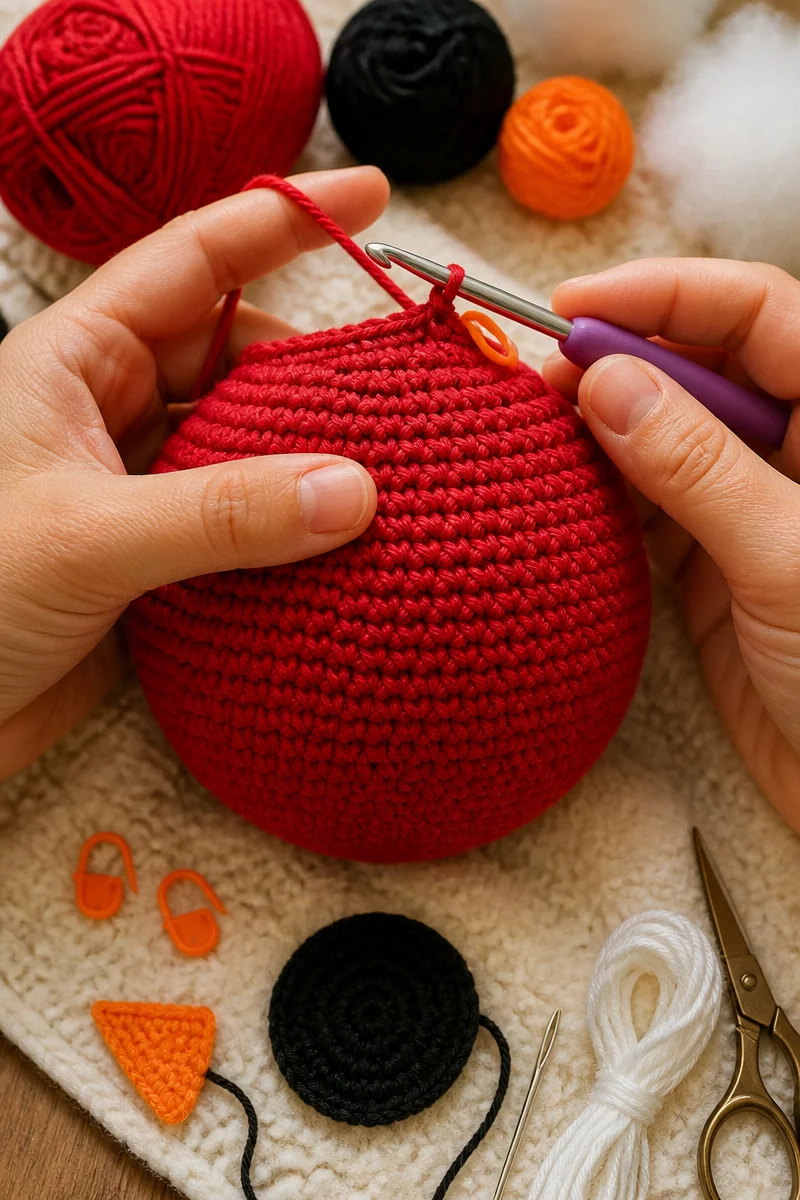
Care and Washing Instructions
Washing: Check the yarn and stuffing labels first. Many acrylic toys can be hand-washed or machine-washed on a gentle cycle inside a laundry bag, but yarn care instructions vary. For a baby’s toy, use a mild detergent and rinse it well. If the toy has delicate parts or uncertain materials, hand-washing is the gentler option.
Drying: Press out extra water with a clean towel instead of wringing the toy. Then reshape it and let it air-dry fully. Laying it flat helps the body keep its shape, and thorough drying helps prevent damp spots inside the stuffing.
Blocking: A stuffed amigurumi toy usually does not need blocking. Instead, shape the toy by hand while it is damp, and let it dry completely. Keep heat away from the yarn unless its care label says heat is safe.
More Ideas to Try
Once you have enjoyed making a cardinal, try another amigurumi bird, such as a chick, owl, or robin. You could also explore color changes, embroidered details, or other small stuffed animals. For a different kind of crochet practice, a simple granny square or a single crochet dishcloth can help you build stitch control without shaping a three-dimensional form.
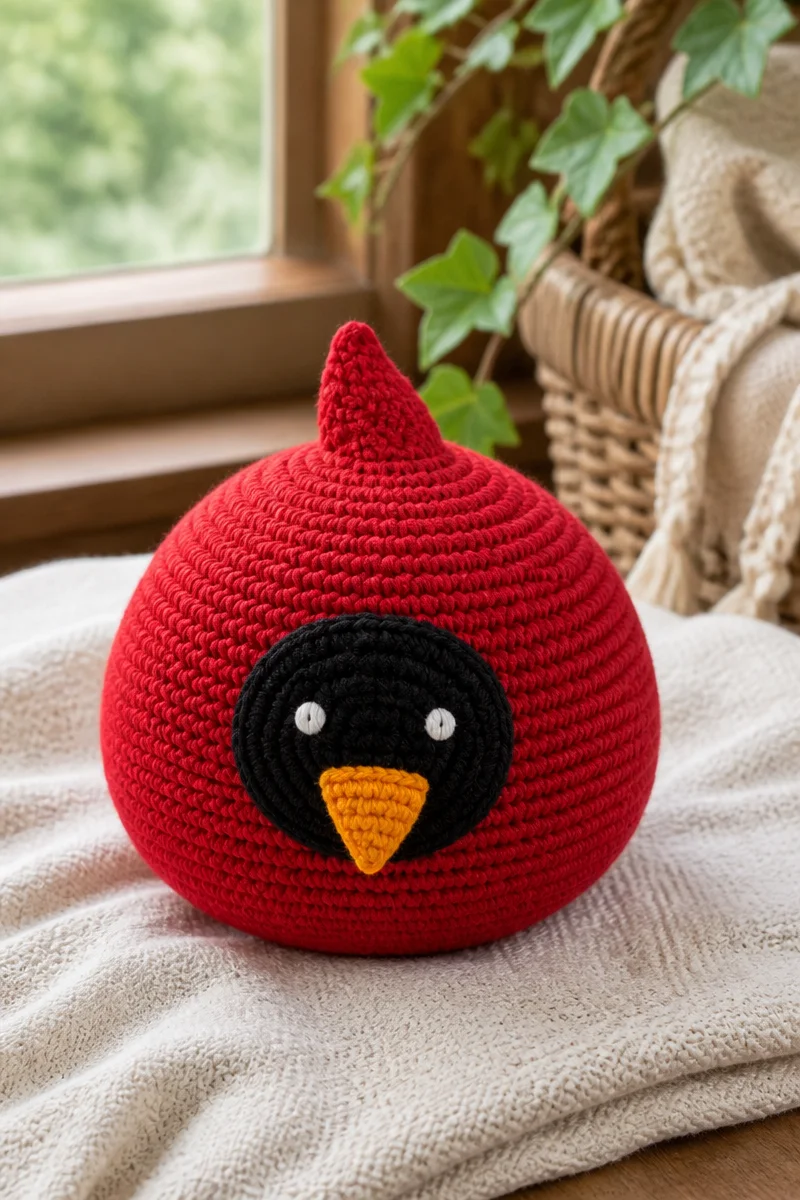
Conclusion
A crochet cardinal baby stuffed toy brings together simple stitches, careful shaping, and a bright, familiar design. With smooth yarn, a suitably small hook, steady stitch counts, and secure details, you can create a charming keepsake while practicing amigurumi skills. Most of all, make the toy with its intended use in mind, especially when a baby will handle it.
Gather your yarn, choose a cardinal design, and give the project a try. When you finish, share what you learned or explore another crochet toy guide on the blog.