Bunny Lovey Crochet Baby Security Blanket

Affiliate disclosure: This post may contain affiliate links. I may earn a small commission at no extra cost to you. See our Privacy Policy for details HERE.
- What Is a Security Blanket?
- Why This Is a Great Choice for a Security Blanket
- Before You Start
- Yarn and Hook Recommendations
- Materials
- Bunny Lovey Crochet Baby Security Blanket Instructions
- Tips for Security Blanket Success
- Common Mistakes to Avoid
- Ways to Make It Your Own
- Care and Washing Instructions
- Frequently Asked Questions
- More Ideas to Try
- Conclusion
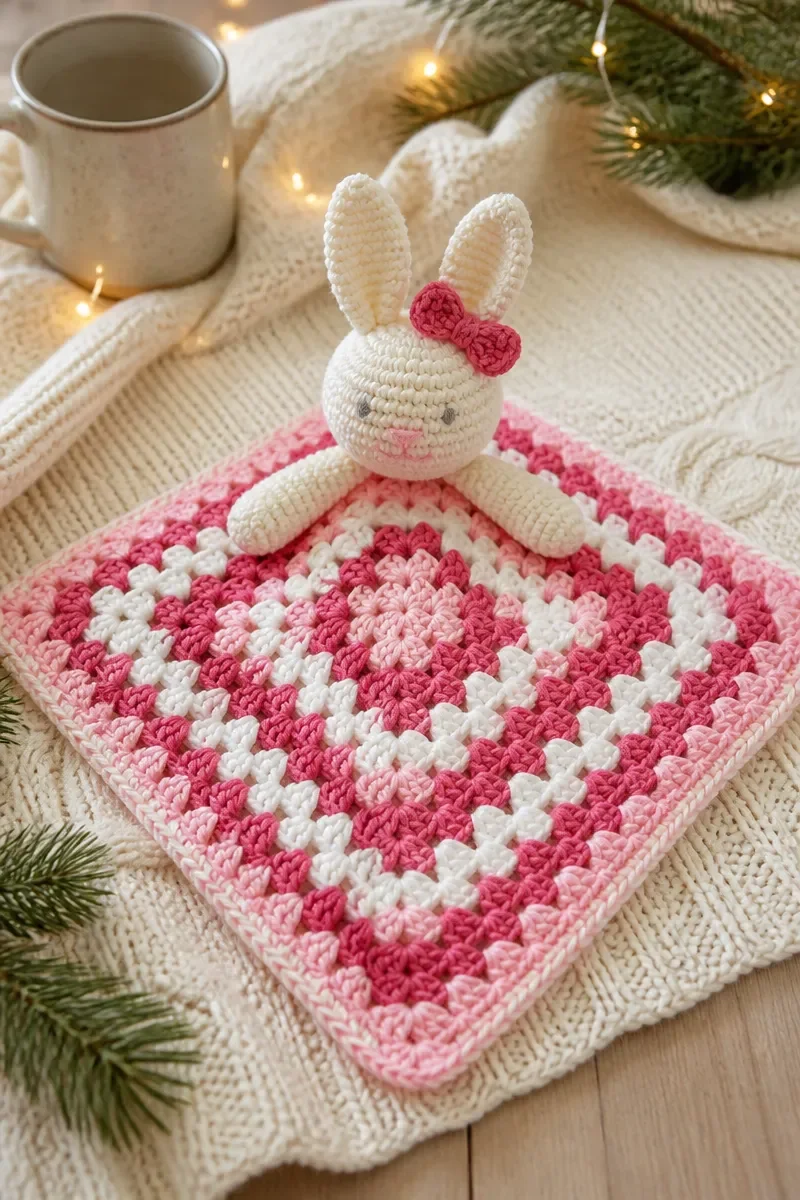
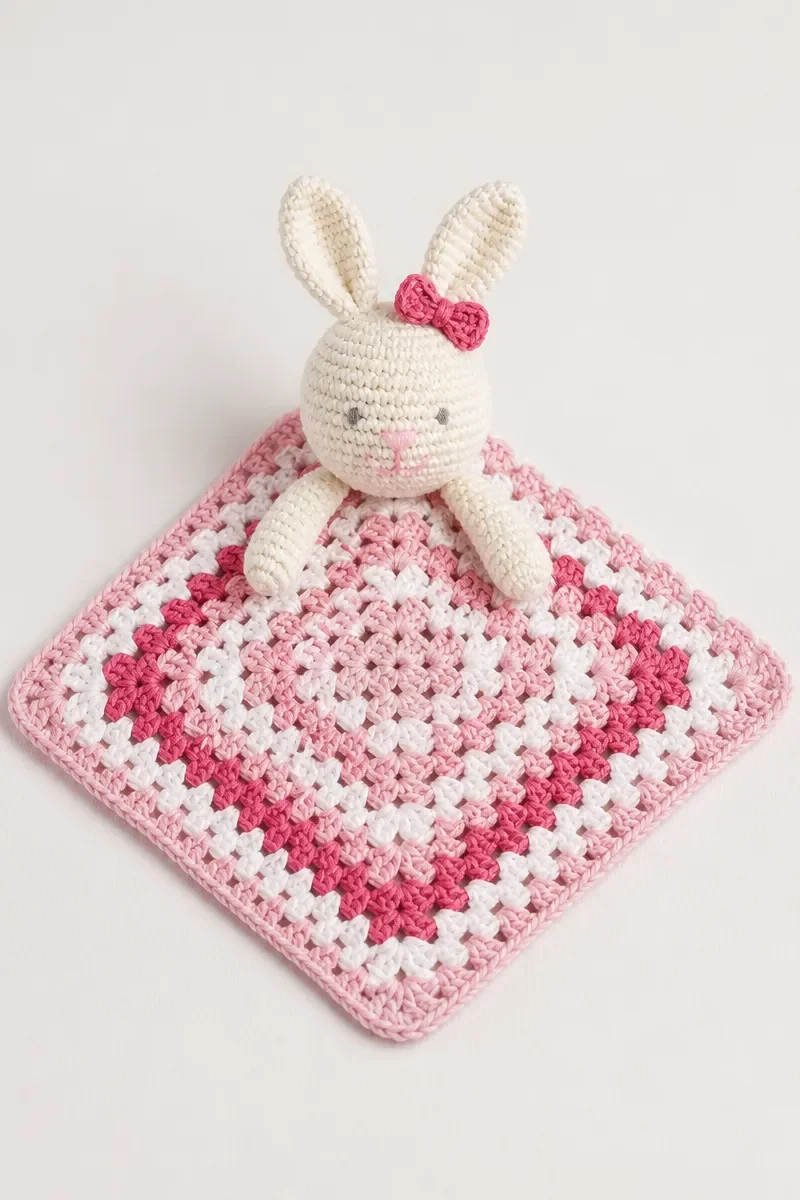
Bunny Lovey Crochet Baby Security Blanket is a crochet baby security blanket project with a handmade character and a cozy, comforting purpose. It brings together a soft crocheted keepsake and a familiar companion, making it a thoughtful project for someone who enjoys creating useful gifts.
This project may appeal to makers preparing for a new baby, celebrating a family milestone, or crafting something personal for a loved one. The finished blanket can be given as a handmade present or kept as a special item for everyday comfort.
Working on a project from beginning to end offers a chance to practice patience, accuracy, and careful finishing. It can also build confidence in making a complete handmade gift and encourage a more relaxed, rewarding crochet routine.
What Is a Security Blanket?
A security blanket is a small, comforting textile that a child can hold close. It is often designed to feel soft and familiar, making it a personal item that can accompany quiet moments at home or when traveling.
These blankets may include a friendly character or a distinctive decorative element, giving the item a recognizable personality. Their compact, easy-to-hold form makes them different from larger bed blankets and well suited to small hands.
Makers enjoy security blankets because they combine practical fabric with the warmth of a handmade gift. They can be customized for a recipient, kept as a meaningful keepsake, or made to mark a special occasion without requiring a large household project.
Why This Is a Great Choice for a Security Blanket
-
Personal meaning: A handmade security blanket can mark a new beginning or family celebration. Its thoughtful character makes it feel individual, while the maker’s time and care add a personal touch that store-bought gifts cannot offer.
-
Manageable scope: This type of project brings several crochet skills into one satisfying piece without demanding an enormous amount of fabric. It can suit makers who like working toward a clear, complete result at a comfortable pace.
-
Gift appeal: A security blanket is both a practical textile and a keepsake. It can be made for a baby shower, welcome-home celebration, or another meaningful event, with presentation tailored to the recipient and their family.
-
Creative focus: Working on a small, personal gift encourages attention to neat construction and thoughtful finishing. Makers can enjoy making steady progress while giving a familiar kind of present a distinctive handmade identity.
-
Lasting enjoyment: A finished project can become part of a child’s everyday surroundings and a reminder of the person who made it. The process also gives makers a chance to create with care and celebrate their craft.
Before You Start
-
Make a gauge swatch using your chosen yarn and hook. Compare its fabric and measurements with your aim, since a small difference in tension can affect the finished dimensions and overall feel.
-
Read through the complete project before beginning. This helps you understand how the work is organized, notice any unfamiliar abbreviations, and prepare for transitions without needing to pause repeatedly to gather context.
-
Keep a notebook or tally sheet nearby. Record your place, note any personal adjustments, and mark completed sections so you can return to your work confidently after a break.
-
Wind your yarn and keep it organized before you begin. Separate each ball so strands do not tangle, and place the yarn you are using where it can feed smoothly without catching.
Yarn and Hook Recommendations
-
Choose a fiber that feels comfortable against sensitive skin and suits regular handling. A soft acrylic or a washable blend can be practical for a baby gift, while a smooth surface makes the fabric pleasant to touch.
-
A medium yarn weight can create fabric with enough substance to feel cozy without becoming cumbersome. Check the yarn label for care information, since ease of washing matters when choosing a gift intended for frequent use.
-
Smooth yarn makes it easier to see individual loops and spot uneven work. Highly textured fibers can hide details, so they may be less comfortable for makers who want to monitor stitch placement as they go.
-
Consider how clearly the yarn shows the work. Solid, even shades usually make stitch definition easy to inspect, while strong visual variation can disguise small inconsistencies and make counting more demanding.
-
Match the hook to the yarn and the fabric you want to create. A hook that is too small can make the fabric stiff, while a larger one may produce a looser, more open result.
-
If you substitute yarn, make a swatch and check how it feels, looks, and measures before committing. Even yarns with the same weight can differ in drape, thickness, and texture, changing the finished appearance.
Materials
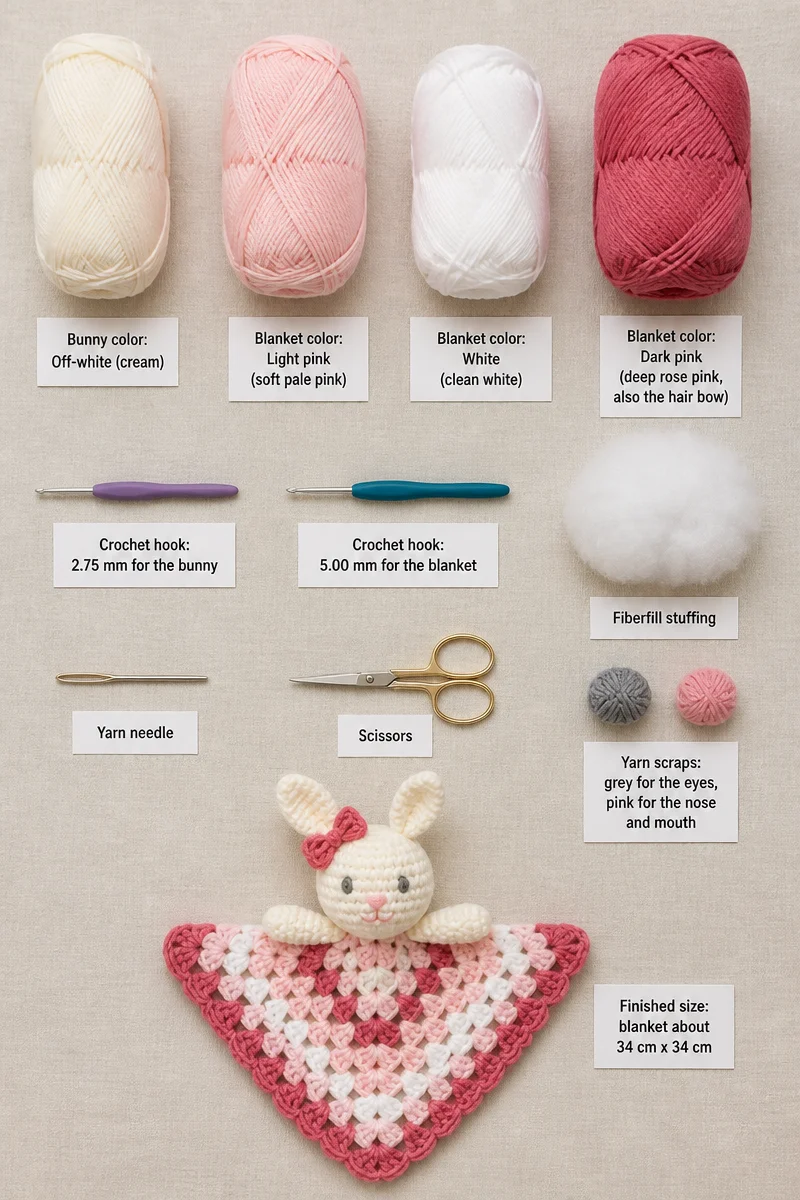
- Yarn: worsted weight 4 (Caron Simply Soft, Red Heart Soft, Vanna’s Choice or Lion Brand Heartland all work)
- Bunny color: Off-white (cream)
- Blanket color: Light pink (soft pale pink)
- Blanket color: White (clean white)
- Blanket color: Dark pink (deep rose pink, also the hair bow)
- Crochet hook: 2.75 mm for the bunny
- Crochet hook: 5.00 mm for the blanket
- Fiberfill stuffing
- Yarn needle
- Scissors
- Yarn scraps: grey for the eyes, pink for the nose and mouth
- Finished size: blanket about 34 cm x 34 cm
Bunny Lovey Crochet Baby Security Blanket Instructions
Color key: Off-white (cream) = soft warm cream for the bunny; Light pink = soft pale pink; White = clean white; Dark pink = deep rose pink, also the hair bow.
Abbreviations: MR = magic ring; ch = chain; sc = single crochet; dc = double crochet; tr = triple crochet; sl st = slip stitch; inc = increase (2 sc in the same st); dec = decrease (sc 2 sts together); BLO = back loops only; R = round; st(s) = stitch(es).
Notes
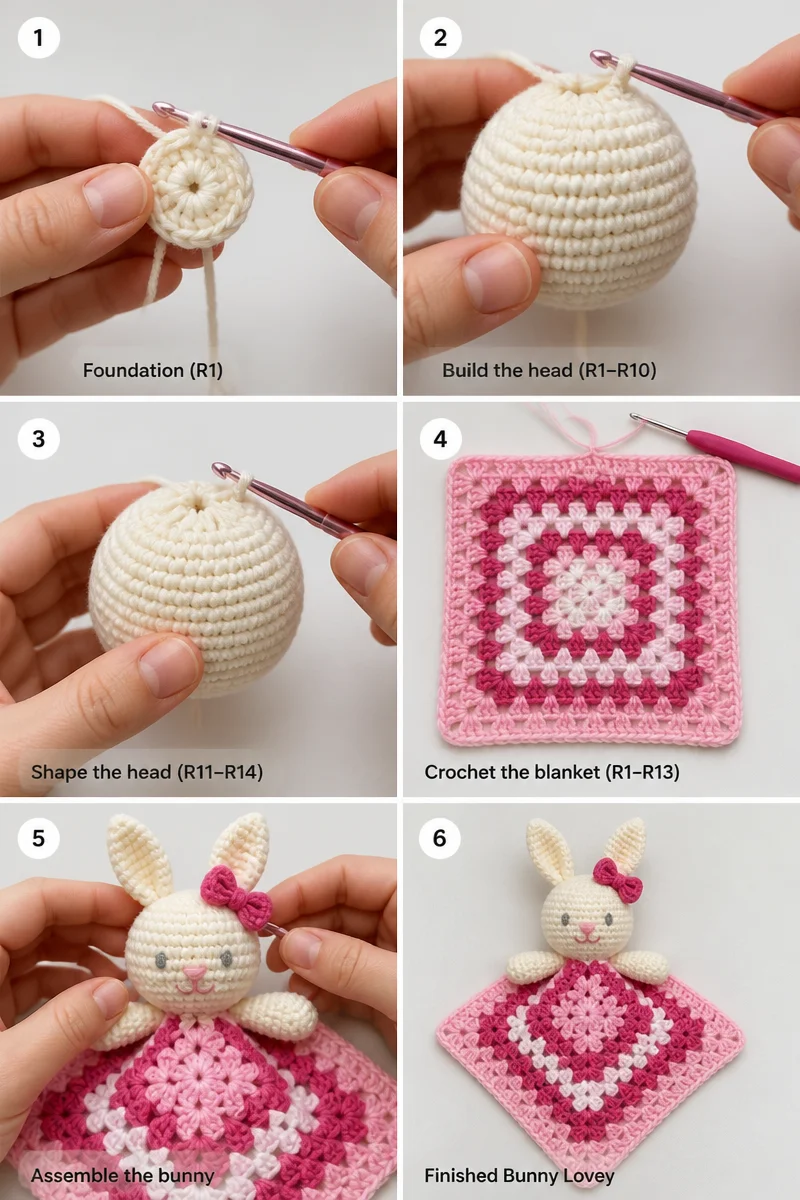
The whole bunny is worked in the back loops only for added texture. You may work in both loops if you prefer.
Bunny head
- R1: With the bunny color, 6 sc in a MR. (6 sts)
- R2: Inc around. (12 sts)
- R3: (Sc, inc) x 6. (18 sts)
- R4: (Sc 2, inc) x 6. (24 sts)
- R5: (Sc 3, inc) x 6. (30 sts)
- R6-R10: Sc around. (30 sts)
- R11: (Sc 3, dec) x 6. (24 sts)
- R12: (Sc 2, dec) x 6. (18 sts)
- R13: (Sc, dec) x 6. (12 sts)
- R14: Dec around. (6 sts) Fasten off with a long tail for sewing to the blanket. Stuff the head, taking care not to stretch the stitches.
Ears (make 2)
- R1: With the bunny color, 6 sc in a MR. (6 sts)
- R2: Inc around. (12 sts)
- R3: (Sc 3, inc) x 3. (15 sts)
- R4-R8: Sc around. (15 sts) Fasten off with a long tail for attaching to the head. Do not stuff the ears.
Arms (make 2)
- R1: With the bunny color, 6 sc in a MR. (6 sts)
- R2-R10: Sc around. (6 sts) Fasten off with a long tail for attaching to the body. Stuff the arms, taking care not to stretch the stitches.
Hair bow
- With dark pink, ch 10.
- Tr in the 5th ch from the hook, then tr in the next 4 ch. Ch 3 and sl st in the last ch. Fasten off with a long tail, weave it to the middle of the bow, then pinch the middle together and wrap the tail around it.
Blanket
Round joins
At the end of each round, ch 1 and sl st to the top of the ch 3, then sl st in the next 2 sts to reach the next ch-1 space.
- R1: With light pink, in a MR, ch 3 (this is the first dc) and work 2 dc into the MR. (Ch 1, 3 dc into the MR) x 3. Join.
- R2: Ch 3. In the ch-1 space, work 2 dc, ch 1, 3 dc. (Ch 1, skip the 3 dc. In the next ch-1 space, work 3 dc, ch 1, 3 dc) x 3. Join.
- R3: Ch 3. In the ch-1 space, work 2 dc, ch 1, 3 dc. (Ch 1, skip the next 3 dc, 3 dc in the next ch-1 space. Ch 1. In the corner ch-1 space, work 3 dc, ch 1, 3 dc) x 3. Join. Switch to white.
- R4: Ch 3. In the ch-1 space, work 2 dc, ch 1, 3 dc. (Ch 1, skip the next 3 dc, 3 dc in the next ch-1 space. Ch 1, skip the next 3 dc, 3 dc in the next ch-1 space. Ch 1. In the corner ch-1 space, work 3 dc, ch 1, 3 dc) x 3. Join.
- Rounds 5-12: Continue the same way, adding one more group of 3 dc between the corners each round, using this color order: R5-6 dark pink; R7-8 light pink; R9 white; R10-11 dark pink; R12 light pink.
- Round 13 (edging): With light pink, ch 3 and work a dc in each st around, working 3 dc in each of the four corner ch-1 spaces. Fasten off and weave in the ends.
Finishing
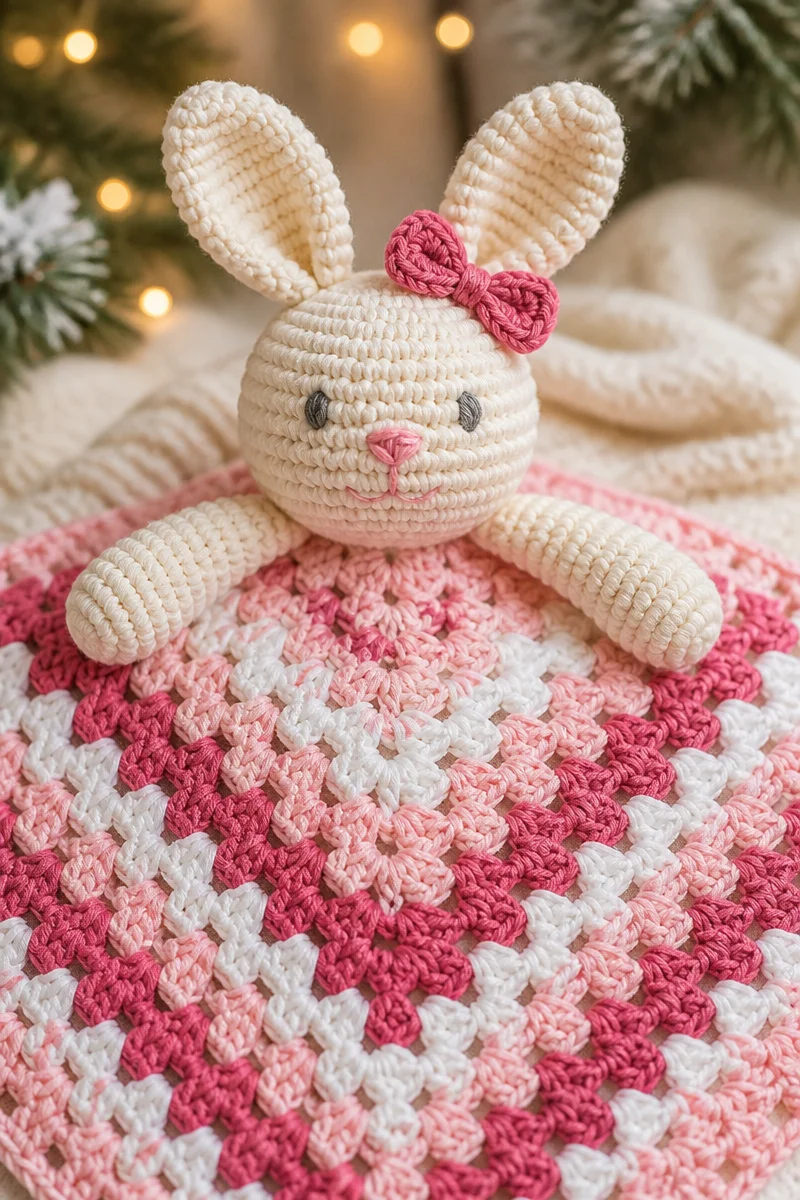
- Use yarn scraps and a yarn needle to sew the bunny’s face: grey for the eyes, pink for the nose and mouth.
- Pinch the bottom of each ear to make a fold, then sew the ears to the head with their tails.
- Sew the arms to the bottom of the head with their tails.
- Sew the head to the middle of the blanket with the head’s tail.
- Sew the bow in front of one ear with its tail.
Tips for Security Blanket Success
Posture and lighting
Settle into a comfortable chair with your shoulders relaxed and your arms supported. A suitable working position can help limit strain during a longer session, and adjusting your seat is better than reaching awkwardly for your yarn.
Use bright, even light near your work so you can see the loops clearly. If shadows fall across your hands, shift the lamp or your position rather than leaning forward and making your neck uncomfortable.
Even tension
Let the yarn travel smoothly through your fingers without gripping it hard. If your hand starts to feel tight, pause and relax your hold before continuing; a relaxed grip can make your fabric more consistent.
Keep your movements steady instead of trying to make every stitch identical by force. Small natural differences are normal, and a balanced, comfortable rhythm often produces a more even result than constant tension adjustments.
Track your place
Use a tally sheet to mark completed sections as you work. A written record is especially useful when you crochet in short sessions, since it can bring you back to the right place without guesswork.
If you are interrupted, note the last action you completed before setting your work down. Make a small, clear note rather than relying on memory, which can be unreliable after time away.
Check your work
Pause occasionally to look over the fabric in good light. Notice whether the edges lie smoothly and whether the overall shape remains balanced, then make a correction while the relevant area is still easy to reach.
Compare your work with your own earlier progress, not someone else’s project. Personal tension and yarn behavior vary, so a small difference in appearance may be harmless if the fabric remains neat and consistent.
Common Mistakes to Avoid
Skipping the swatch
It can be tempting to begin immediately, especially when the yarn and hook seem familiar. Yet small differences in personal tension or yarn texture can affect the fabric’s density and finished measurements.
Make a swatch before starting and assess both its feel and dimensions. If the result differs from your goal, adjust your hook choice or handling before creating a larger piece.
Pulling yarn too tight
Tight tension often develops when someone grips the yarn firmly or tries to make every loop look uniform. The fabric may become stiff, and it can be harder to insert the hook comfortably.
Let the yarn feed with a light, steady hold. If your hands feel tense or the work resists the hook, pause, loosen your grip, and continue at a more comfortable pace.
Miscounting stitches
Losing track of stitches can happen when the work is set aside or when several actions look alike. An unnoticed count difference may gradually affect the shape and make later sections more difficult to manage.
Count at regular points that feel natural to you, and record the result on a tally sheet. If the count seems wrong, inspect the most recent work before continuing so you can locate the discrepancy.
Leaving ends too short
A short yarn tail can be awkward to thread and may not leave enough length for secure weaving. It is easy to underestimate how much yarn is needed while focusing on the work itself.
Leave a generous tail whenever you finish a section that will need sewing or weaving. A little extra length is easier to manage than a tail that disappears before it can be secured.
Changing yarn or hook midway
Switching supplies partway through can alter the fabric’s thickness, drape, or tension. Even materials with the same weight may behave differently, so the change can be visible across adjoining areas.
Try to use consistent yarn and hook choices throughout. If a replacement is necessary, compare it with your original materials and make a small swatch first to see how closely the fabric matches.
Ways to Make It Your Own
- Choose a different palette that suits the recipient or the occasion. A coordinated group of gentle or bold shades can make the gift feel personal without changing the character of the project.
- Select another yarn of the same weight if its texture and care needs suit the intended use. A smooth, soft option can create a familiar feel while reflecting your own preferences.
- Make a matching second project for a coordinated gift set. A related handmade item can make a welcome present feel especially considered while giving you another chance to enjoy the same kind of crafting.
- Include a handwritten note with the gift. A few sincere words about why you made it can add warmth and preserve a personal message for the family.
- Present the gift in a reusable fabric bag or a simple gift box. Thoughtful wrapping makes the handmade item feel ready to give and creates a tidy way to carry it.
Care and Washing Instructions
Washing: Follow the yarn label for washing guidance, including water temperature and suitable cleaning products. If the label recommends gentle handling, use a suitable wash setting and avoid rough treatment that could distort the fabric.
Drying: Support the project as you remove excess water, and avoid twisting or wringing it. Lay it flat on a clean, dry surface, reshape it gently, and let it dry fully before storing.
Storing: Keep the project clean and completely dry before putting it away. Store it in a breathable container or drawer, away from dampness and direct sunlight, and avoid placing heavy items on top.
Frequently Asked Questions
Can I use a different yarn?
Yes, another yarn can work if its weight and texture are suitable for a soft, comfortable gift. Check the label for care guidance and make a swatch to compare the fabric. Keep your yarn choice consistent so the finished piece has an even appearance throughout.
How can I keep my stitches even?
Use a relaxed grip and let the yarn feed smoothly through your fingers. Try to maintain a steady rhythm rather than tightening each loop to match its neighbor. If your hands become uncomfortable, pause briefly and return with a lighter hold.
What helps me count reliably?
Count at a regular stopping point and record your place immediately on a tally sheet. Clear notes are especially useful after an interruption or when you work in several short sessions. If a count seems off, check the most recent section before moving on.
What if my finished project looks different?
First consider whether the difference comes from your personal tension, yarn texture, or lighting while you worked. Compare the fabric’s overall balance and feel rather than expecting every handmade piece to look identical. If it remains neat and comfortable, small variations are part of handmade work.
How long should yarn tails be?
Leave enough yarn to thread a yarn needle and work the tail securely into the fabric. Tails needed for sewing should have extra length for comfortable handling. When uncertain, leave a little more rather than cutting too close.
More Ideas to Try
If you enjoy making thoughtful handmade gifts, consider a soft comfort doll, a small nursery pillow, a fabric picture book, or a keepsake pouch. Each offers a different way to practice careful crochet and create something personal for a child or family. Choosing a project with a useful purpose can make your next creative session feel just as rewarding.
Conclusion
Give this project a try when you want to make a personal gift with care and a gentle, handmade feel. Take your time, enjoy the process, and let each finished piece reflect your own attention and creativity. When you are ready for another idea, explore more crochet projects on the blog and find something new to make for yourself or someone you love.