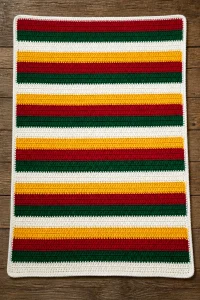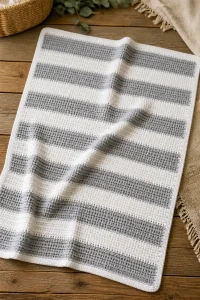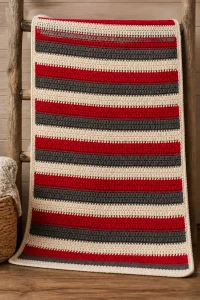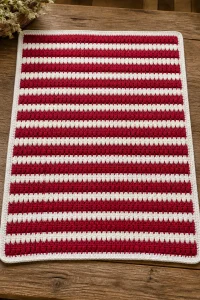
Easy Striped Crochet Baby Blanket
Affiliate disclosure: This post may contain affiliate links. I may earn a small commission at no extra cost to you. See our Privacy Policy for details HERE.
- What Is a Crochet Baby Blanket?
- Why This Is a Great Choice for a Baby Blanket
- Before You Start
- Yarn and Hook Recommendations
- Materials
- Easy Striped Crochet Baby Blanket Instructions
- Tips for a Baby Blanket Success
- Common Mistakes to Avoid
- Ways to Make It Your Own
- Care and Washing Instructions
- Frequently Asked Questions
- More Ideas to Try
- Conclusion
Easy Striped Crochet Baby Blanket is a cozy crochet blanket project with a welcoming, handmade feel. It offers a satisfying way to create something useful while enjoying the steady rhythm of working yarn into fabric.
This project may appeal to newer crocheters building confidence as well as experienced makers seeking a relaxing handmade gift. The finished blanket can be kept for everyday comfort or given to welcome a new baby, with a personal touch that makes the gift feel special.
Making a blanket encourages patience and care over a larger piece of work. It also offers practice with steady progress and thoughtful finishing, so the maker can enjoy both the process and the satisfaction of giving something made by hand.
What Is a Crochet Baby Blanket?
A crochet baby blanket is a soft textile made to offer comfort and warmth in a baby’s daily surroundings. Its flexible fabric can be folded, draped, or tucked away when it is not in use, making it a practical handmade item as well as a keepsake.
Blankets can have many different looks, from quiet and understated to bright and playful. Their broad, flat surface makes them a natural place to explore texture and visual rhythm while keeping the overall form familiar and useful.
People enjoy making baby blankets because the project has a clear purpose and can carry personal meaning. A handmade blanket can mark a new arrival, celebrate a family milestone, or become a treasured item that is kept long after it is first given.
Why This Is a Great Choice for a Baby Blanket
-
Thoughtful present: A handmade blanket can mark a new arrival with care and attention. It is useful for families and can feel more personal than a gift chosen without the recipient in mind.
-
Relaxing process: Repetitive crochet work can create a peaceful rhythm during a quiet evening. A project that grows gradually gives makers a chance to settle into their craft without needing constant decisions.
-
Personal touch: Handmade work carries the choices and effort of the person who made it. That meaning can make a practical household item feel memorable to the recipient.
-
Useful practice: A larger project gives makers room to build confidence with steady, repeated work. The experience can support patience and help make later crochet projects feel more familiar.
-
Flexible use: A baby blanket can be kept close at home, brought along for visits, or saved as a keepsake. Its everyday usefulness makes it a welcome gift for many families.
Before You Start
-
Make a gauge swatch if you want to see how your yarn and hook behave together. It can help you judge fabric density and notice whether your tension feels comfortable.
-
Read through the project details before picking up your hook. Becoming familiar with the overall flow can help you prepare calmly and recognize where you may want to pause.
-
Keep a notebook or tally sheet handy to record your place. A brief note can make it easier to return to your work after a break without relying on memory.
-
Organize your yarn and wind any loose skeins before beginning. Keeping the supply manageable helps prevent tangles and makes it easier to settle into a comfortable working space.
Yarn and Hook Recommendations
-
Choose a fiber that feels pleasant against skin and suits the care needs of the recipient. Acrylic is often convenient to wash, while wool and cotton have different textures and handling qualities.
-
Match the yarn weight to the type of fabric you want. A medium-weight yarn can make a balanced, substantial fabric, while a lighter yarn generally creates a more delicate feel.
-
Look for smooth yarn when you want to see your work clearly. Highly textured or fuzzy fibers can make individual loops harder to distinguish, especially while you are learning.
-
Consider how strongly the yarn color shows the surface texture. A solid, mid-value shade often makes the fabric easier to inspect than a busy or highly variegated yarn.
-
Select a hook that works comfortably with your yarn and the fabric you prefer. The recommended size on a yarn label is a useful starting point, not a rule that suits every crocheter.
-
Keep yarn and hook choices consistent throughout the project. Switching between different fibers or tools can change the fabric’s feel and appearance, so test alternatives before committing to a larger piece.
Materials
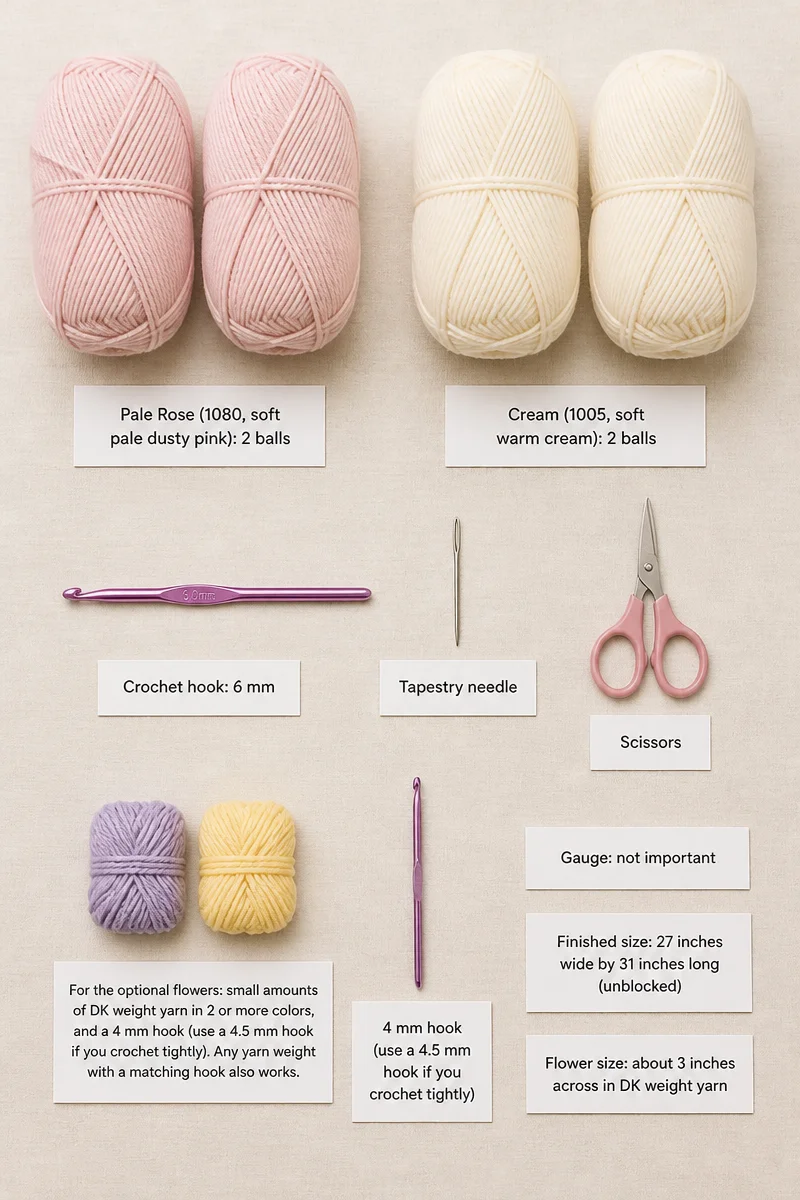
- Yarn: Stylecraft Special Aran (100% acrylic, 196 m/214 yds, 100 g), or about 800 m of any worsted weight/aran yarn
- Pale Rose (1080, soft pale dusty pink): 2 balls
- Cream (1005, soft warm cream): 2 balls
- Crochet hook: 6 mm
- Tapestry needle
- Scissors
- For the optional flowers: small amounts of DK weight yarn in 2 or more colors, and a 4 mm hook (use a 4.5 mm hook if you crochet tightly). Any yarn weight with a matching hook also works.
- Gauge: not important
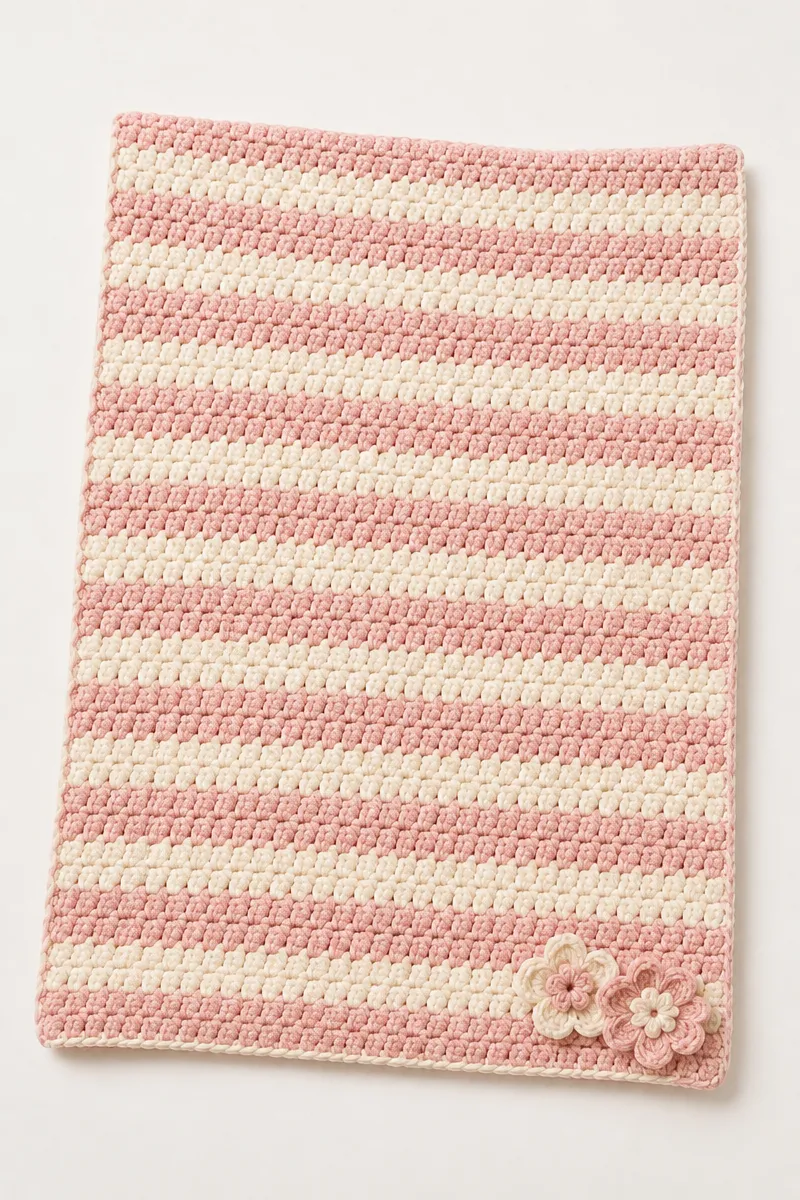
- Finished size: 27 inches wide by 31 inches long (unblocked)
- Flower size: about 3 inches across in DK weight yarn
Easy Striped Crochet Baby Blanket Instructions
Color key: Pale Rose = soft pale dusty pink; Cream = soft warm cream.
Abbreviations: beg = beginning; ch = chain; dc = double crochet; rep = repeat; sc = single crochet; sl st = slip stitch; sp = space; st = stitch; t-ch = turning chain.
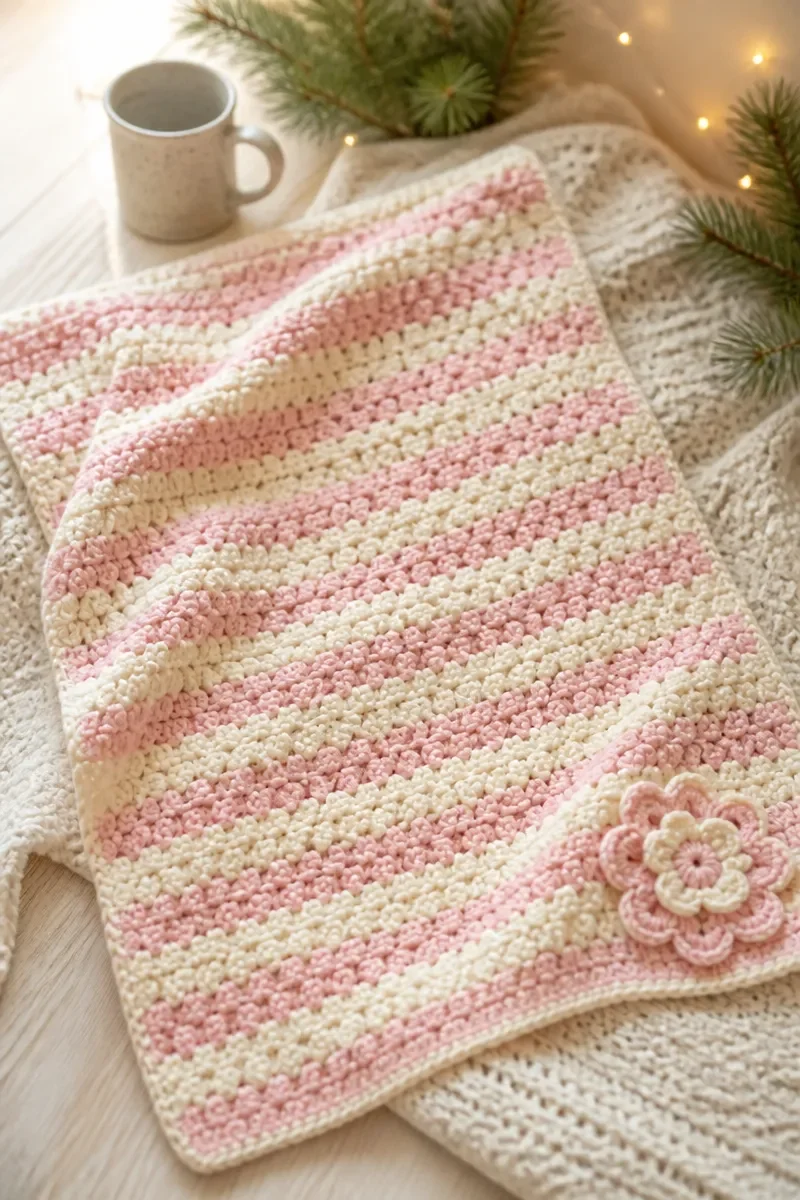
Notes: Ch 1 at the beginning of a row counts as 1 sc. Instructions make the blanket in the photo; for a smaller or larger blanket, start with a shorter or longer chain. The stitch multiple is 2 chs (+1), plus 2 chs for the foundation row. The stripes are 2 rows of each color. Work the last yarn over of the row with the new color for a neat color change. You can carry the unused yarn up the side or cut it every 2nd row. The blanket does not need a border, but you can add 1 or 2 rounds of sc around all sides.
Blanket Body
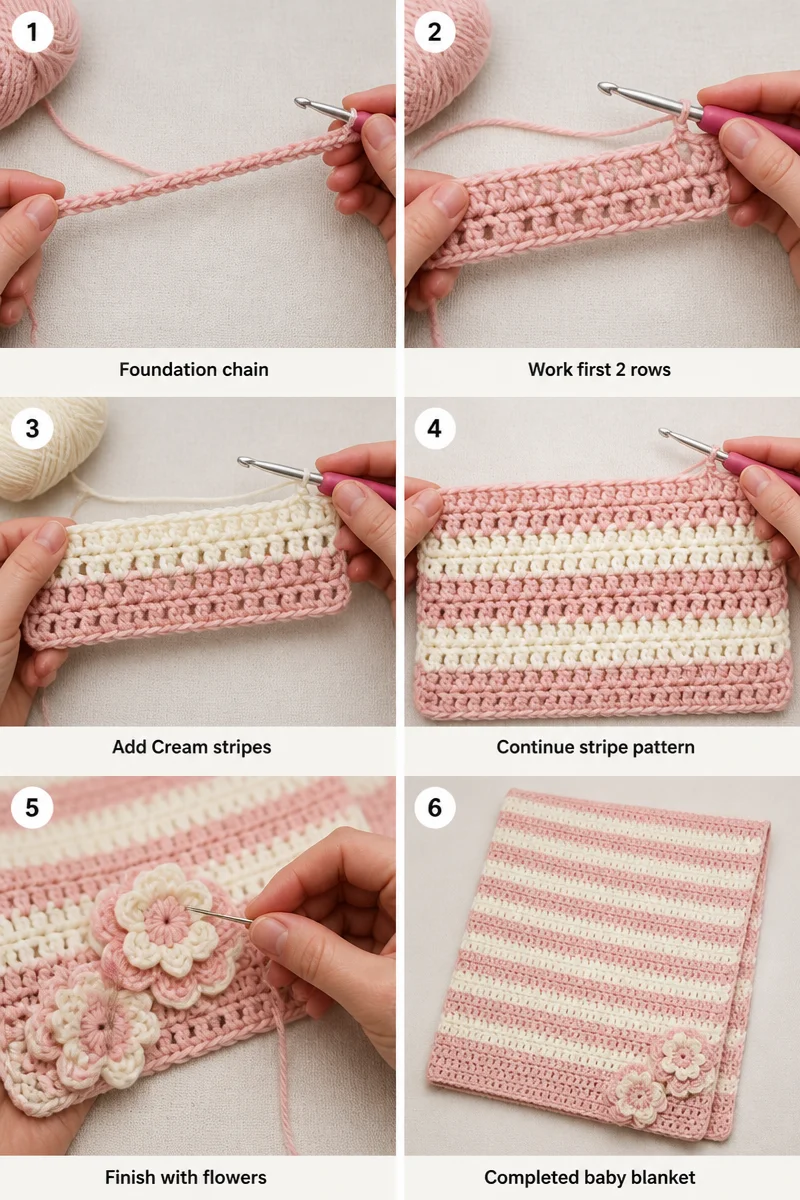
- With Pale Rose, ch 83.
- Row 1: Dc in the 3rd ch from the hook (counts as 1 sc and 1 dc). *Skip the next ch, (1 sc, 1 dc) in the next ch. Repeat from * across to the last 2 chs, skip the next ch, 1 sc in the last ch. Turn.
- Row 2: Ch 1 (counts as 1 sc here and throughout), 1 dc in the first st. *Skip the next dc, (1 sc, 1 dc) in the next sc. Repeat from * across to the last 2 sts, skip the next dc, 1 sc in the t-ch. Turn. Fasten off.
- Row 3: With Cream, ch 1, 1 dc in the first st. *Skip the next dc, (1 sc, 1 dc) in the next sc. Repeat from * across to the last 2 sts, skip the next dc, 1 sc in the t-ch. Turn.
- Row 4: Ch 1, 1 dc in the first st. *Skip the next dc, (1 sc, 1 dc) in the next sc. Repeat from * across to the last 2 sts, skip the next dc, 1 sc in the t-ch. Turn. Fasten off.
- Row 5: With Pale Rose, ch 1, 1 dc in the first st. *Skip the next dc, (1 sc, 1 dc) in the next sc. Repeat from * across to the last 2 sts, skip the next dc, 1 sc in the t-ch. Turn.
- Row 6: Ch 1, 1 dc in the first st. *Skip the next dc, (1 sc, 1 dc) in the next sc. Repeat from * across to the last 2 sts, skip the next dc, 1 sc in the t-ch. Turn. Fasten off.
- Repeat Rows 3-6 for a total of 90 rows, or until you reach the length you want.
- Weave in any ends and block if you like.
Optional Crochet Flowers
- With the first color, ch 4 and join with a sl st in the 1st ch to form a ring.
- Round 1: Ch 1 (does not count as a st), work 14 sc into the ring, and join with a sl st to the first sc. Fasten off.
- Round 2: With the next color, join in any sc, ch 2, 1 dc in the same st. [1 dc, ch 2, sl st] in the next st. *Sl st in the next st, ch 2, 1 dc in the same st, [1 dc, ch 2, sl st] in the next st. Repeat from * 6 times. [7 petals]
- Hold the petals forward so you can see your work, with the right side of the flower facing you. You will now work behind Round 2.
- Round 3: Working behind Round 2, sl st in the sp between 2 petals (insert the hook into 2 loops to make a stable base). Ch 3. *Sl st in the sp between the next 2 petals, ch 3. Repeat from * 6 times, then sl st to the first sl st. [7 ch-3 loop sps]
- Round 4: Sl st in the first ch-3 sp. (Ch 2, 3 dc, ch 2, sl st) in the same sp. Then work (sl st, ch 2, 3 dc, ch 2, sl st) in each ch-3 sp around. Fasten off and weave in all ends. [7 petals]
- Finishing: Stitch the flowers carefully to a corner of the blanket.
Tips for a Baby Blanket Success
Comfortable Setup
Sit in a position that supports your back and shoulders, with your arms relaxed rather than lifted. Good lighting helps you see the yarn clearly and reduces the urge to lean close to your work.
Arrange your seating so that your hands can move freely. Taking a short pause when you feel stiffness can help you return with more comfortable, controlled movements.
Even Tension
Let the yarn feed smoothly instead of gripping it tightly. A firm hold can make loops small and difficult to work into, while a relaxed hold helps the fabric stay flexible.
Notice how the working yarn moves across your fingers and adjust gently if it catches. Consistent tension comes from a comfortable rhythm, not from pulling every loop as firmly as possible.
Track Your Place
Use a tally sheet to record completed sections as you work. Making a mark at a natural stopping point can prevent confusion when you set the project aside.
If you prefer a notebook, write a short note about where you paused and what comes next. Keep the record clear enough that you can understand it after time away.
Check as You Go
Pause occasionally to look over the fabric for missed loops, uneven edges, or changes in tension. Finding a small issue early usually makes it easier to decide whether it needs attention.
Compare the developing work with your own earlier sections. A little variation is normal in handmade fabric, but noticing a sudden change can help you correct your grip or working habits.
Common Mistakes to Avoid
Skipping a Swatch
It can be tempting to start working immediately, especially when the yarn and hook seem like a good match. Without a swatch, however, you may not know whether your fabric feels too dense or too loose for its intended use.
Make a small test piece when fabric feel matters, then assess it in good light and handle it gently. This gives you a chance to adjust your approach before investing time in a much larger piece.
Pulling Too Tight
Tight tension often comes from holding the yarn firmly or trying to make every loop look identical. The result can be stiff fabric and a hook that is difficult to move through the work.
Let each loop rest comfortably on the hook rather than tightening it after every movement. If your hands feel strained, pause and loosen your grip before continuing.
Miscounting
Losing count can happen when attention shifts during a long stretch of repetitive work. It may also be harder to notice if you do not have a consistent way to keep track.
Count at natural pauses and use a tally sheet or notebook to record progress. If you find a discrepancy, examine the nearby work calmly instead of continuing and hoping it will resolve itself.
Short Yarn Tails
Leaving very little yarn when ending a strand can make it difficult to secure the loose end neatly. A short tail may also slip free more easily during later use.
Leave enough length to handle comfortably when joining or ending yarn. Take care when weaving loose ends into the fabric so they remain secure without creating a bulky patch.
Changing Materials Midway
Substituting yarn or a hook after the project is underway can alter the way the fabric feels and sits. Even similar-looking supplies may behave differently when worked together.
If you need to make a change, test the replacement on a small sample first. Keeping the same materials throughout is the simplest way to maintain a consistent result.
Ways to Make It Your Own
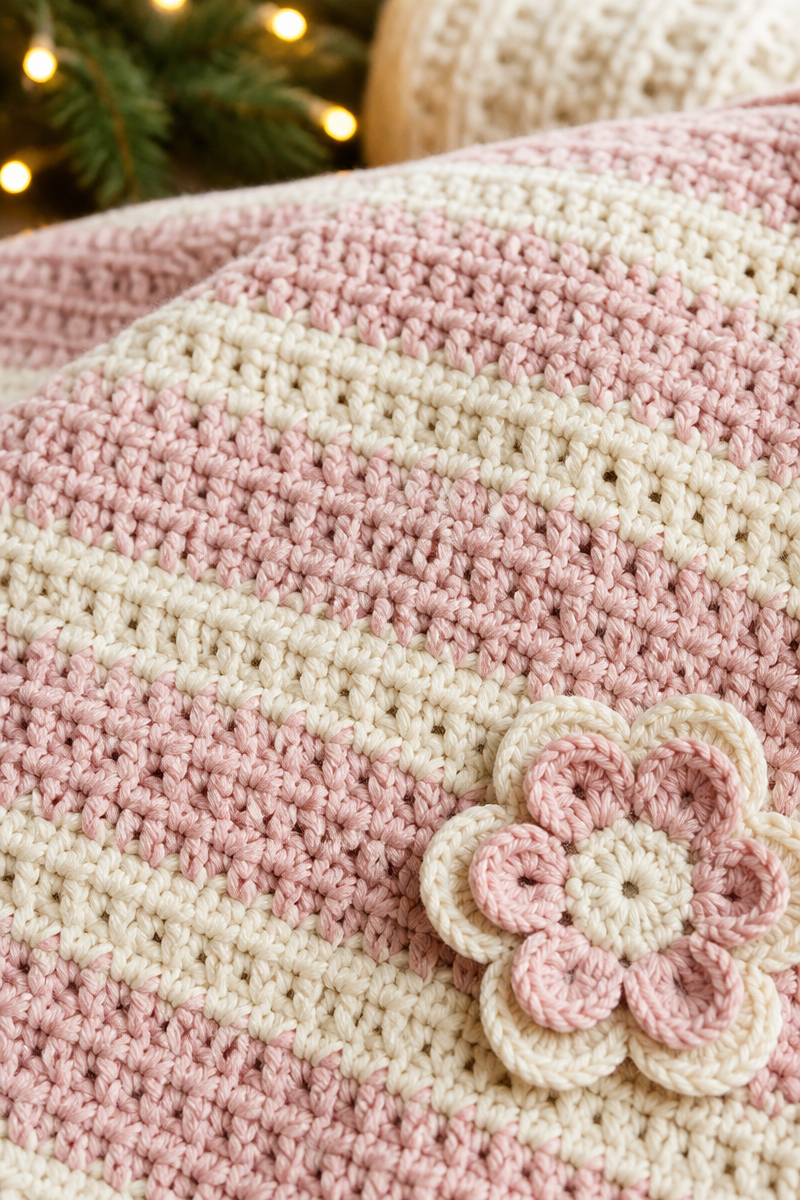
- Choose a palette that reflects the recipient’s taste or the room where the blanket will be used. A coordinated set of shades can feel calm, while a lively mix brings a more playful mood.
- Try another yarn of the same weight if its texture and care needs suit your purpose. A smooth alternative can give the fabric a different hand while keeping the project’s overall character familiar.
- Make a matching second project to create a thoughtful set for a new household. Related handmade pieces can share a general palette or mood without needing to look identical.
- Include a handwritten note with the gift, sharing who made it and why you chose to give it. A few sincere words can make a useful present feel especially personal.
- Present the blanket in a reusable gift bag or a simple box tied with ribbon. Thoughtful packaging can make the moment of giving feel warm without taking attention away from the handmade work.
Care and Washing Instructions
Washing: Follow the yarn label for suitable washing methods and water temperature. If the label permits machine washing, use a gentle setting and avoid mixing the blanket with items that may snag or shed heavily.
Drying: Support the fabric while moving it from the wash, since wet crochet can stretch under its own weight. Lay it flat on a clean, dry surface and reshape it gently as it dries.
Blocking: Gentle blocking can help the fabric settle into a more even shape if it looks uneven after washing. Use a method suitable for the yarn fiber, and avoid pulling the edges too firmly.
Frequently Asked Questions
Can I use a different yarn?
Yes, another yarn can work if it suits the intended feel and care needs. Check its label for useful handling information before beginning. Remember that a different fiber may make the fabric feel softer, firmer, or more textured.
How can I keep my work even?
Use a relaxed grip and let the yarn move smoothly through your fingers. Pause when your hands become tired, since fatigue can affect control. Over time, a comfortable working rhythm helps your movements become more consistent.
What is a reliable way to count?
Record your progress on a tally sheet or in a notebook each time you pause. Count carefully at a natural stopping point. If you lose your place, use the fabric and your notes together to find it again.
What if the finished work looks different?
Handmade crochet can vary slightly because each person handles yarn differently. Check whether the overall fabric feels suitable and whether the variation is consistent. If something looks unexpectedly uneven, inspect the nearby work before making any changes.
How long should yarn tails be?
Leave enough yarn to handle comfortably when securing loose ends. Very short tails can be awkward to work with and may be harder to secure neatly. A little extra length offers room to weave them into the fabric carefully.
More Ideas to Try
If you enjoy making useful crochet pieces, consider exploring a cushion cover, a table runner, a market bag, or a soft scarf. Each offers a different way to practice planning and enjoy handmade fabric. You could also choose a small household project when you want a manageable change of pace.
Conclusion
Give Easy Striped Crochet Baby Blanket a try when you want to make a useful handmade gift or add a personal touch to your home. Enjoy the steady progress and the satisfaction of creating something with care. Explore more crochet ideas on the blog whenever you are ready for another project.