Crochet Sapphire Blue Hair Bandana

Affiliate disclosure: This post may contain affiliate links. I may earn a small commission at no extra cost to you. See our Privacy Policy for details HERE.
A Crochet Sapphire Blue Hair Bandana is a lovely way to add color and handmade charm to an everyday outfit. I especially like this project because it is small, useful, and easy to personalize. A rich sapphire shade feels bold, yet the simple triangular shape keeps the look relaxed and wearable.
The bandana is usually made as a crochet triangle, often worked from the point upward or from the top edge down. It can have a smooth, open, or textured surface, depending on the stitch you choose. Most versions use basic crochet stitches, so the project can suit a newer crocheter as well as someone looking for a quick, satisfying make.
In this guide, you will learn how the crochet triangle technique shapes a hair bandana and what makes it comfortable to wear. You will also find yarn and hook suggestions, tips for keeping the edges neat, and common mistakes to avoid. Since this is an educational guide rather than a fixed pattern, you can use the advice to adapt the bandana to your preferred yarn, fit, and style.
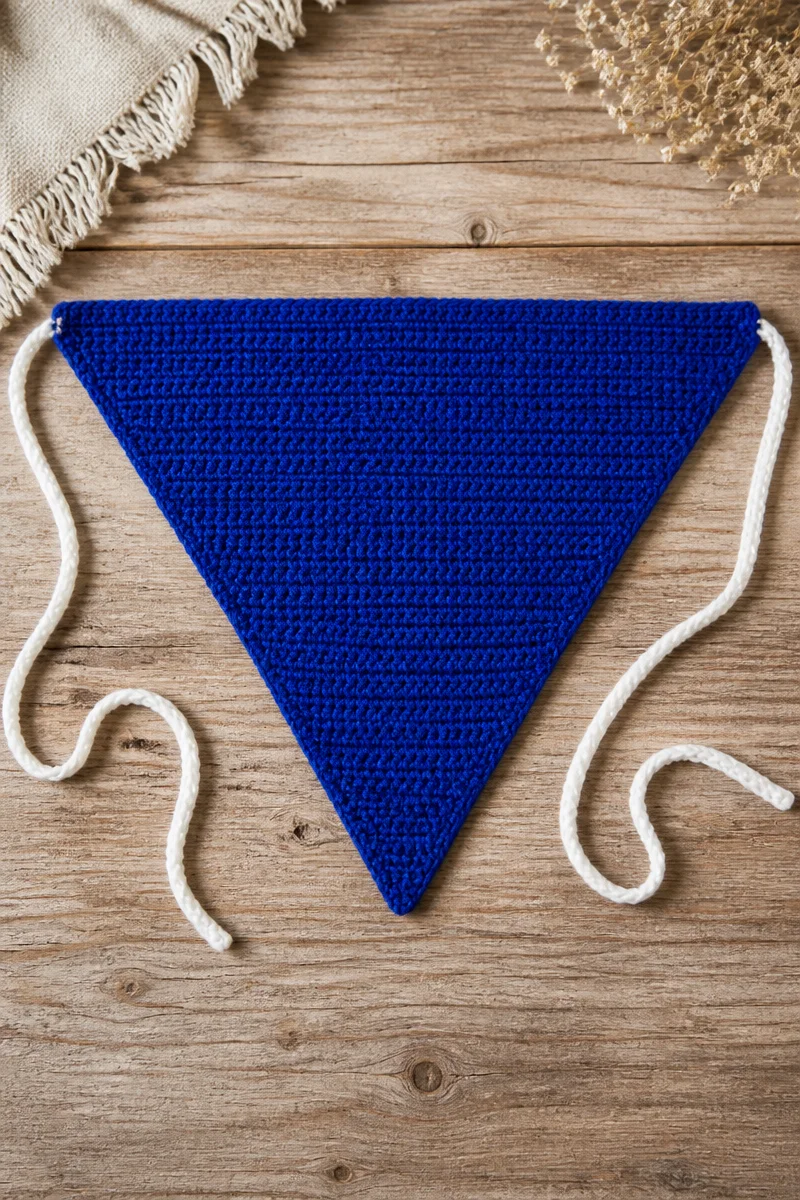
What Is the Crochet Triangle Technique?
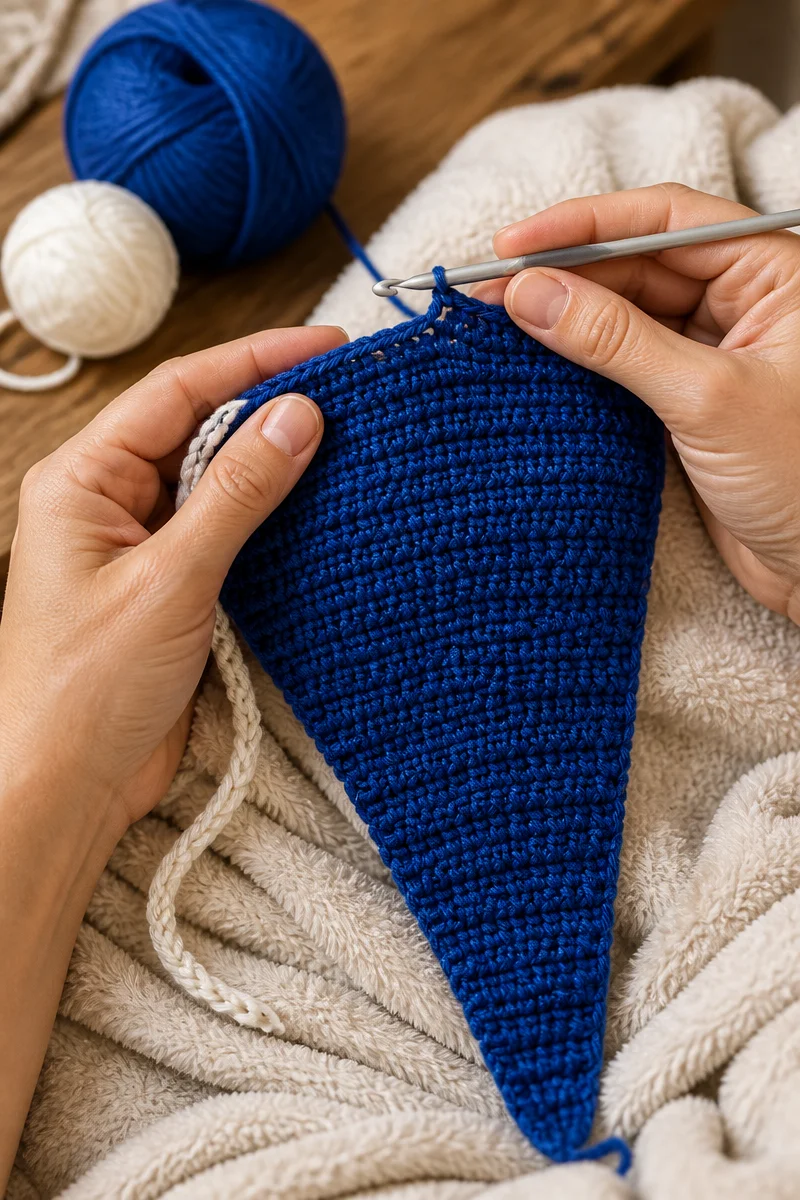
The crochet triangle technique is a way of shaping fabric so it forms a triangle rather than a rectangle. For a hair bandana, crocheters commonly begin at the narrow point and add stitches along the edges as each row grows. Alternatively, they can begin with a wide top edge and decrease stitches toward the point.
This shaping method does not refer to one specific stitch. Instead, it describes how the crocheter builds the triangle. The fabric might use single crochet for a firm, close texture, or double crochet for a lighter fabric with more drape. In either case, steady increases or decreases help create the bandana’s recognizable shape.
Crocheters like this technique because it is flexible and easy to adjust. For example, you can make the triangle wider or longer to suit your head, then finish it with ties or a simple edging. A sapphire blue color also gives the piece a clear, polished look without requiring a complicated stitch pattern.
Why This Is a Great Choice for a Hair Bandana
- Easy to customize: You can adjust the width, length, and ties for a comfortable fit.
- Small and portable: The compact project is convenient to take along and does not require much storage space.
- Useful for everyday wear: A bandana can help keep hair away from your face while adding a handmade touch.
- Works with simple stitches: Basic crochet stitches can create a neat fabric, so you can focus on shaping.
- A good way to use color: Sapphire blue stands out on its own, while a contrasting border can add another personal detail.
Yarn and Hook Recommendations
- Lightweight cotton yarn: Cotton feels cool and breathable, which can be comfortable in warm weather. It also holds its shape well.
- Cotton blends: A cotton-acrylic blend can offer a balance of softness, easy care, and durability.
- DK or light worsted yarn: These weights create a bandana with some substance without making it too bulky.
- Worsted-weight yarn: This can work for a warmer, more substantial bandana. However, check the fabric as you go so it does not feel heavy on your head.
- A hook near the yarn label recommendation: Start with the size suggested on the yarn label, then adjust if your fabric feels too tight or too loose.
- A slightly smaller hook for firmer ties or edging: A smaller hook can help these parts hold their shape, but use it only if the fabric remains comfortable and flexible.
Tips for Crochet Triangle Technique Success
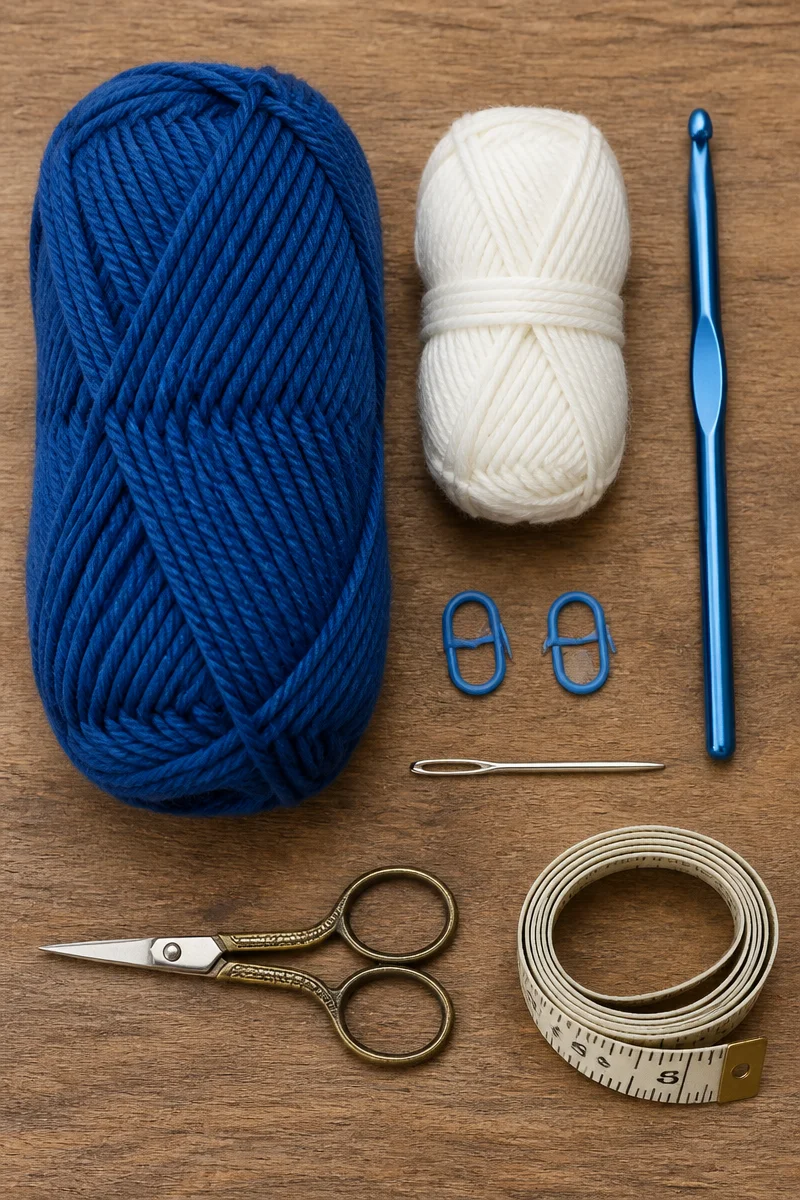
First, check your stitch count at the end of each row. Triangle shaping depends on steady increases or decreases, so a missed stitch can make one edge look uneven. Also, use a stitch marker at the starting point or at the place where you make an increase. That small reminder can help you keep the shape consistent.
Next, make a small sample with your chosen yarn and hook. This helps you see how the fabric feels against your skin and how much it stretches. If the bandana feels stiff, try a larger hook. If it looks too loose, try a smaller one. Finally, work at a comfortable pace and pause to lay the piece flat now and then. This makes it easier to spot shaping issues before they become hard to fix.
Common Mistakes to Avoid
One common issue is uneven increases. If you add stitches in different places from row to row, the sides may not form a balanced triangle. Therefore, follow the shaping method you have chosen and mark the increase points when helpful.
Another pitfall is losing track of stitches. A missed stitch can narrow one side, while an extra stitch can make the edge flare. Count each row, especially while you are learning the shape. If your stitch count changes unexpectedly, it is often easier to correct it right away.
The wrong yarn or hook can also affect comfort. A very thick yarn may make the bandana hot or bulky, while a tight hook can create a stiff fabric that does not tie easily. On the other hand, a very loose fabric may stretch out of shape. Test a small section before committing to the full piece.
Finally, avoid pulling the ties too tightly when you finish the bandana. Tight ties can feel uncomfortable and may distort the corners. Instead, make them long enough to tie securely without straining the fabric, and check that both sides feel balanced.
Care and Washing Instructions
Washing: Check the yarn label first. Cotton and many acrylic yarns can usually be hand-washed or machine-washed on a gentle cycle, but delicate fibers may need special care. Use cool or lukewarm water and a mild detergent when in doubt.
Drying: Gently press out excess water without twisting the bandana. Then lay it flat on a clean towel or drying surface. Hanging it while wet can stretch the triangle or pull the ties out of shape.
Blocking: Light blocking can help smooth the edges and even out the triangle, especially if the fabric curls. Dampen the bandana, shape it gently on a flat surface, and let it dry fully. Avoid stretching it more than you want it to grow.
More Ideas to Try
If you enjoy the crochet triangle technique, try a simple granny-style bandana, a striped head scarf, or a kerchief with a shell-stitch border. You might also explore a crochet hair scrunchie or a lightweight cowl. These projects offer new ways to use color and texture while building on skills you already know.
Conclusion
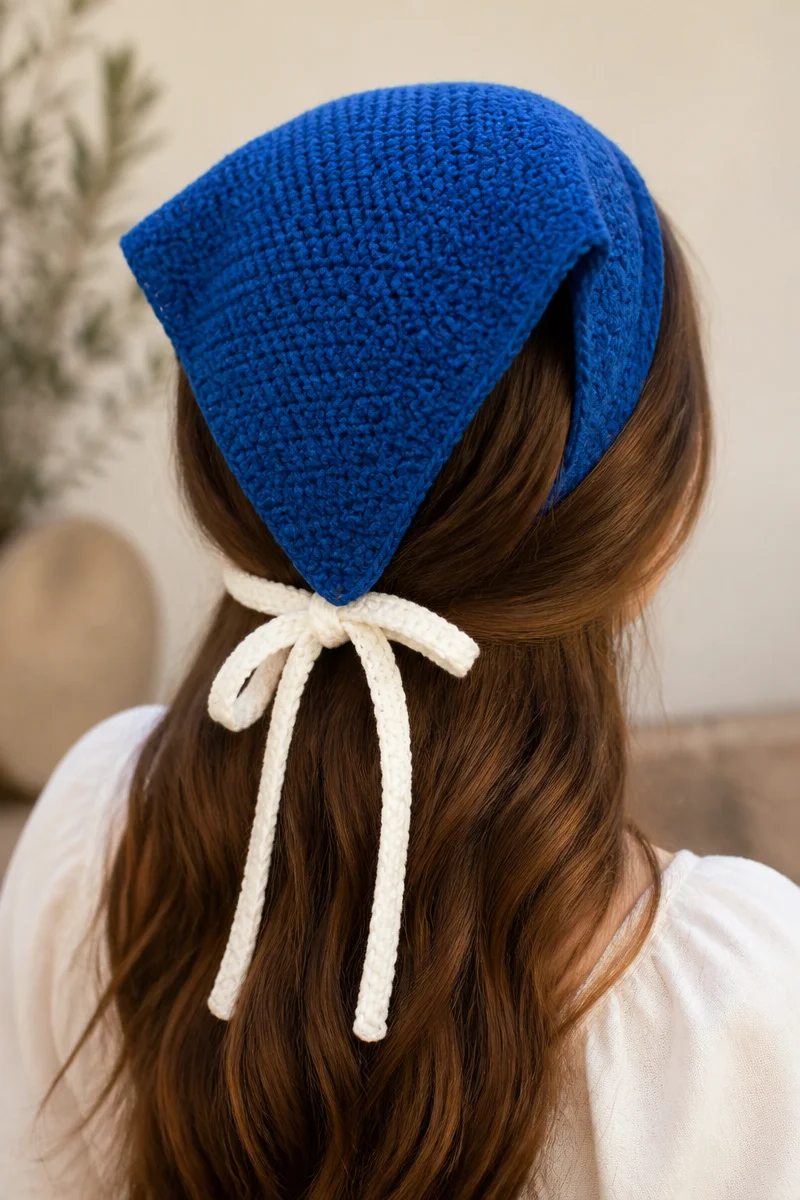
A Crochet Sapphire Blue Hair Bandana combines a simple triangle shape with plenty of room for personal style. Choose a comfortable yarn, use a hook that gives you flexible fabric, and keep a close eye on your shaping and stitch counts. With those basics in place, you can create a bandana that feels good to wear and looks lovely, too.
Give the triangle technique a try, and make the size, color, and edging your own. Then share your finished bandana or explore more crochet guides on the blog for your next project.