Crochet Olive Branch Hair Barrette

Affiliate disclosure: This post may contain affiliate links. I may earn a small commission at no extra cost to you. See our Privacy Policy for details HERE.
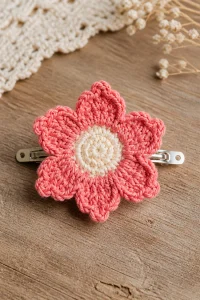
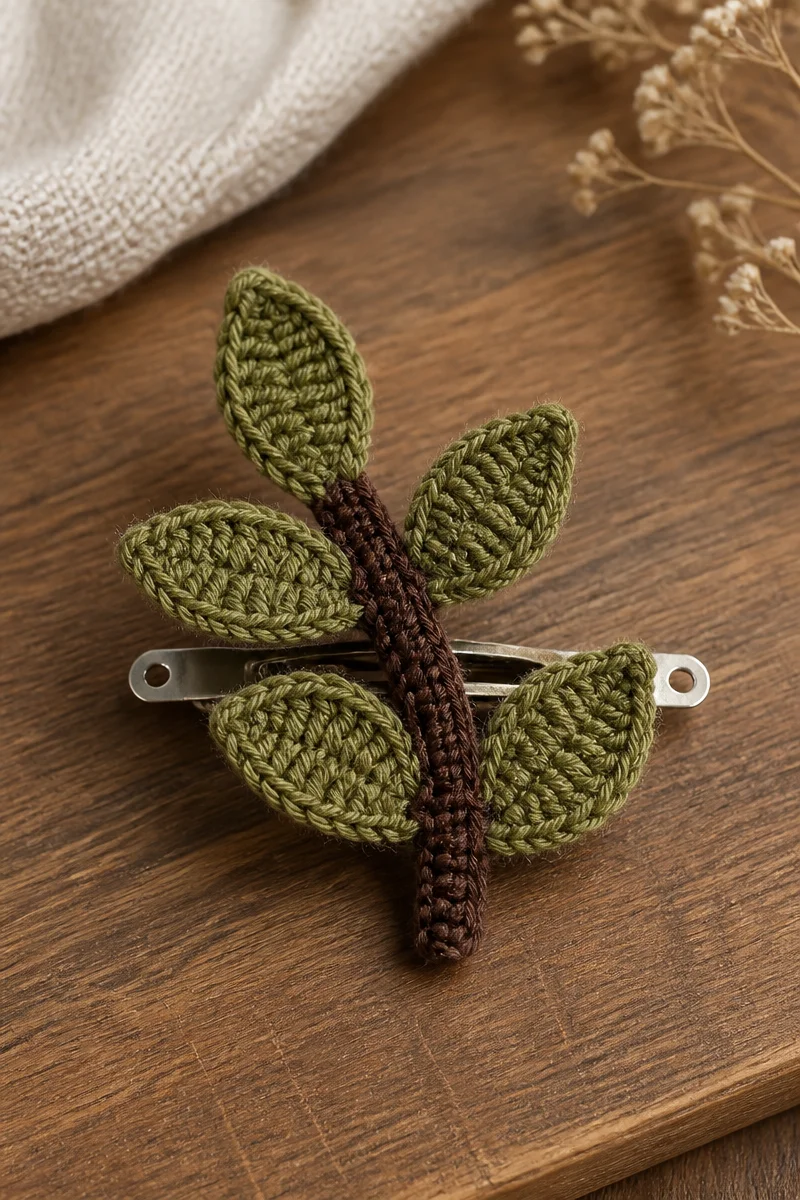
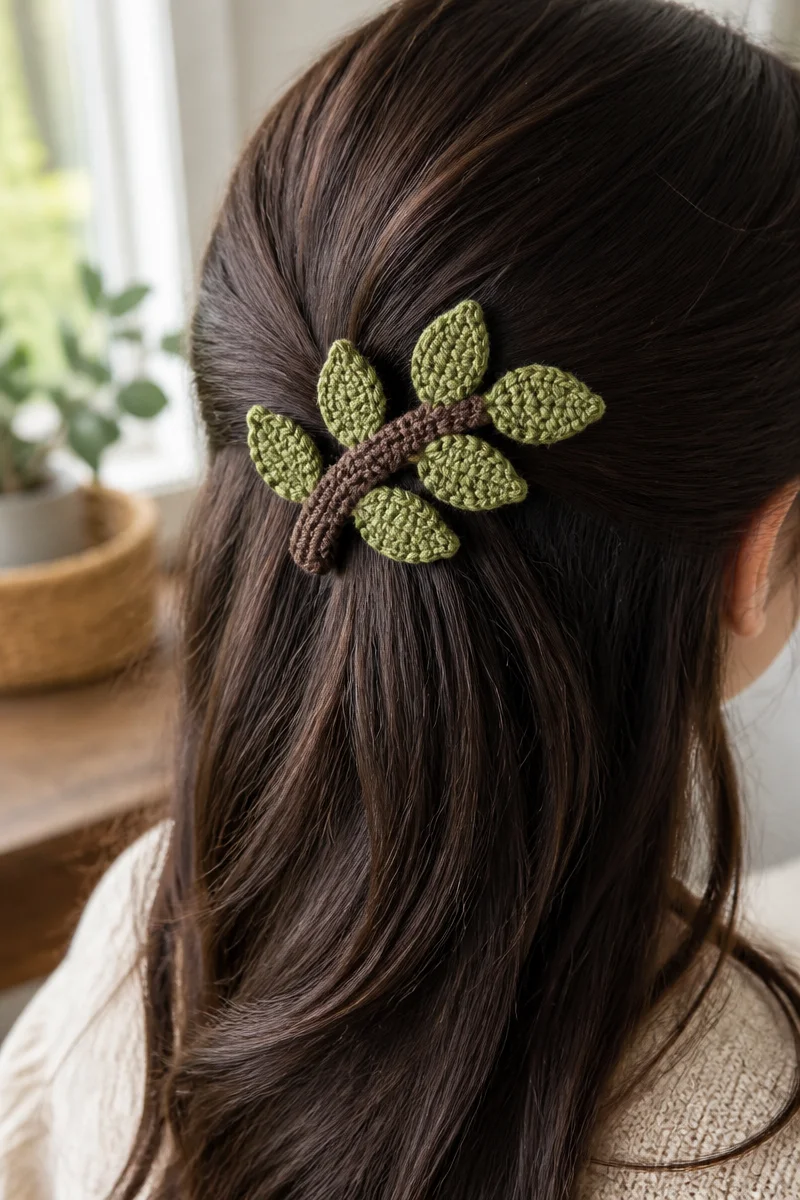
A crochet olive branch hair barrette is a lovely way to add a handmade touch to an everyday hairstyle. I especially like how this small accessory can feel both simple and special. Its leafy shape brings a bit of nature to a bun, braid, or ponytail.
The design usually combines crocheted leaves and a narrow stem, then attaches them to a barrette or hair clip. The leaves have a delicate texture, but the pieces are small, so you can finish them without committing to a large project. With basic crochet skills and careful shaping, this accessory can suit newer crocheters as well as experienced makers.
In this guide, you’ll learn how crocheted leaves and stems are formed, what yarn and hook choices work well, and how to attach the finished branch securely. You’ll also find practical tips for neat shaping, common mistakes to watch for, and simple care advice.
What Is the Crochet Olive Branch Hair Barrette Technique?
The crochet olive branch hair barrette is an embellishment technique, not a single standard stitch. It uses small crocheted leaves and a slim stem to create the look of an olive branch. A leaf is often shaped by working stitches along a short chain, then adding stitches at the tip and along the other side. This creates a pointed oval shape.
The leaves may use single crochet, half double crochet, or a mix of stitches. In addition, a small center vein can be made with surface crochet, embroidery, or a few chain stitches. Crocheters enjoy this technique because it turns a few simple pieces into a detailed botanical accent. The finished branch can look delicate, polished, or rustic, depending on the yarn and finishing choices.
Why This Is a Great Choice for Hair Accessories
- It uses small amounts of yarn. As a result, leftover yarn from another project may be enough.
- It works up quickly. Each leaf is small, so you can make progress in short sessions.
- It adds nature-inspired style. The olive branch shape pairs well with casual outfits and dressier looks.
- It offers room to personalize. You can change the leaf size, branch length, color, or number of leaves.
- It makes a thoughtful handmade gift. Because the barrette is small and useful, it can be a charming present for someone who enjoys hair accessories.
Yarn and Hook Recommendations
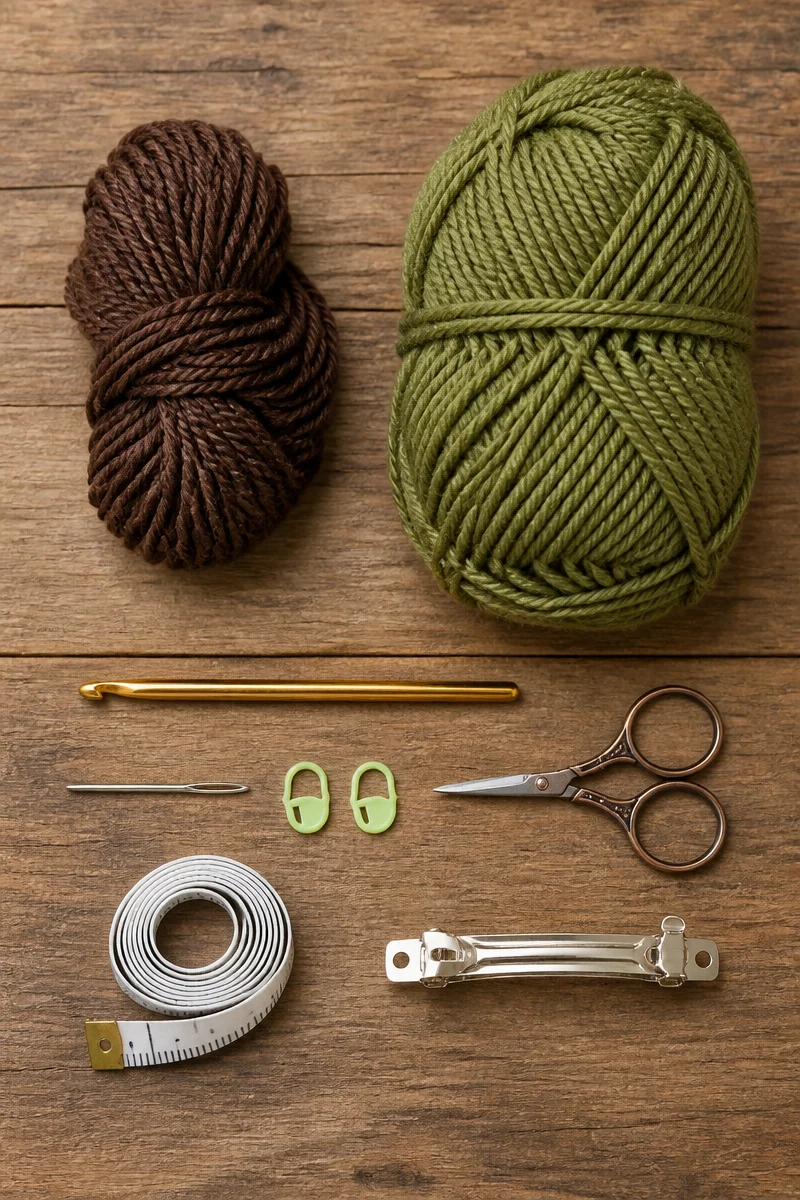
- Use lightweight yarn, such as fingering or sport weight, for small, delicate leaves. This weight helps the branch stay neat rather than bulky.
- Choose a smooth cotton yarn when you want clear stitch definition and a crisp shape. Cotton also comes in many natural green shades.
- Try a cotton blend for a soft feel with a little flexibility. However, check that the yarn does not stretch so much that the leaves lose their shape.
- Consider fine wool or wool blends for a softer, more textured look. These fibers may need gentler washing than cotton.
- Select a hook that suits your yarn and tension. A smaller hook can create firm leaves that hold their shape, but avoid sizing down so much that the fabric becomes hard to work.
- Test the yarn and hook together before making several leaves. A small sample will show whether the fabric looks tidy and feels firm enough for a barrette.
Tips for Olive Branch Hair Barrette Success
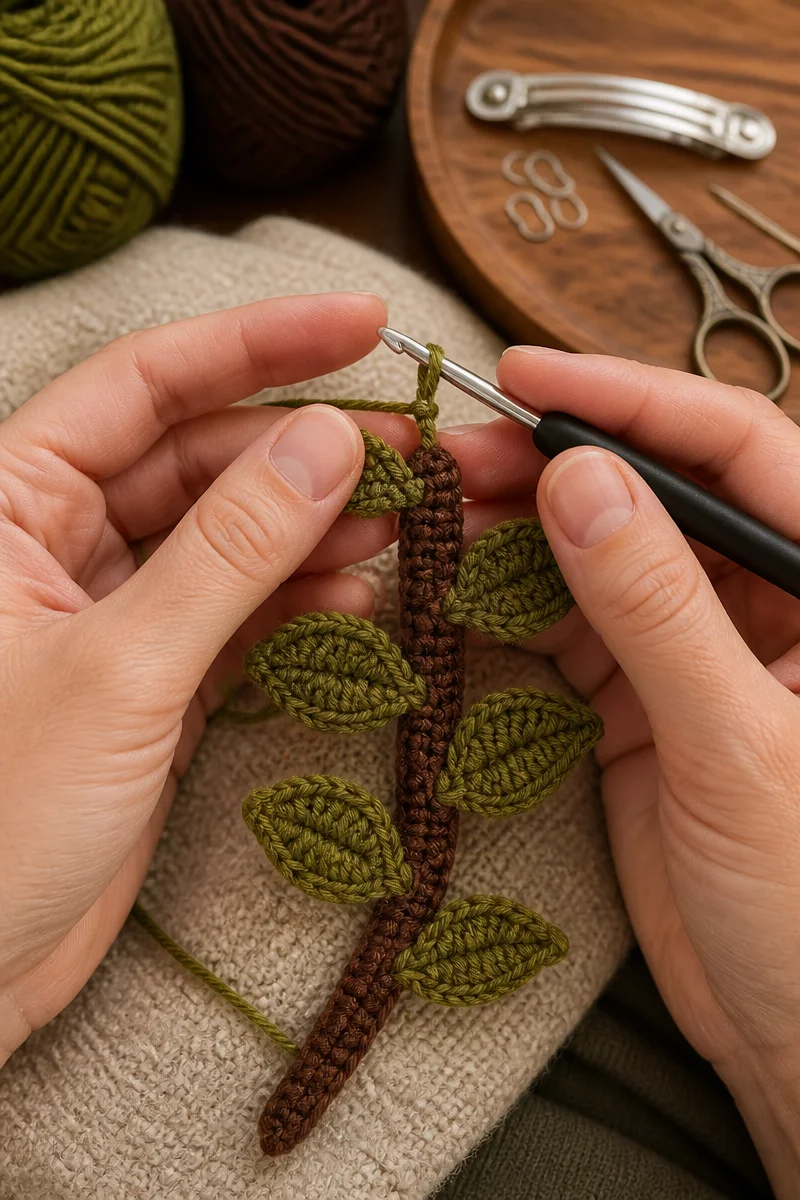
First, keep your tension even. If you crochet one leaf tightly and the next loosely, they may differ in size. A small hook adjustment or a short practice leaf can help you find a comfortable rhythm. Also, count the stitches on both sides of each leaf so the shape stays balanced.
Next, lay the leaves beside the barrette before attaching them. This gives you a chance to adjust their direction and spacing. For a secure finish, sew each piece down with matching yarn or strong sewing thread, and take small stitches through the crochet and around the barrette base. If the clip has moving parts, keep those areas clear.
Common Mistakes to Avoid
Leaves can curl when the stitches are too tight or the starting chain is too short. Therefore, check the leaf as you work, and loosen your tension if the edges pull inward. A gentle reshape with your fingers may help, but do not tug hard on the stitches.
Uneven leaves can also result from missed or added stitches. Count each side of the starting chain, especially near the pointed tip. Meanwhile, use a stitch marker if it helps you keep track of where a round or shaping section begins.
Bulky yarn may hide the small leaf details and make the barrette feel heavy. On the other hand, very fine yarn can be difficult to handle if you are new to crochet. Test a sample first, then choose a yarn that gives you both clear stitches and a comfortable grip.
Finally, avoid attaching the branch too close to the clip’s hinge or clasp. The barrette should open and close freely. Before finishing, test the clip several times and make sure the leaves stay in place.
Care and Washing Instructions
Washing: Check the yarn label before cleaning the barrette. Cotton pieces can often be hand washed in cool water with a small amount of mild detergent. For wool or delicate blends, use the care method recommended on the label. If the clip has metal parts, avoid soaking it for a long time.
Drying: Gently press out extra water with a towel. Do not wring or twist the leaves. Then reshape the branch and let it air-dry away from direct heat.
Blocking: Light blocking can help the leaves lie flat and show their shape. However, a small accessory usually needs only gentle shaping. Pin the leaves carefully, and avoid stretching them beyond their natural size.
More Ideas to Try
If you enjoy making a crochet olive branch hair barrette, try crocheted fern leaves, simple flower clips, a small ivy vine, or a leaf-shaped bookmark next. You can also change the leaf arrangement to make a fuller branch or use muted shades for a softer, more natural look.
Conclusion
A crochet olive branch hair barrette combines simple crochet skills with careful shaping and finishing. Choose a yarn that keeps the leaves clear, work with even tension, and place the branch so the clip can still open and close. Most of all, enjoy making a small accessory that reflects your own style. Try a leaf or two, share your finished barrette with fellow crocheters, and explore more handmade accessory guides on the blog.