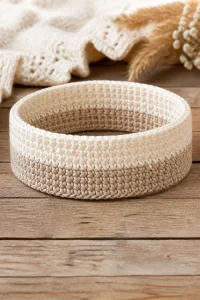
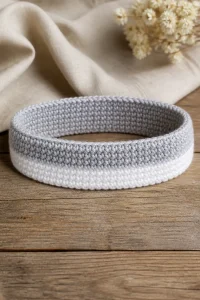
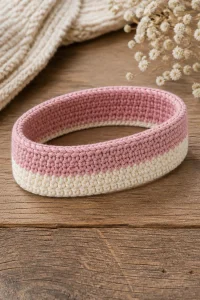
Crochet Oat Milk Ear Warmer Headband

Affiliate disclosure: This post may contain affiliate links. I may earn a small commission at no extra cost to you. See our Privacy Policy for details HERE.
An oat milk ear warmer headband is a cozy little project with a lot to love. I especially like how a simple crochet stitch can turn soft yarn into a warm accessory that looks polished and feels comfortable. It is also a useful project when you want to make something wearable without committing to a large blanket or sweater.
The headband’s look depends on the stitch and yarn, but many versions have a soft, textured finish and a snug fit over the ears. The design is often approachable for newer crocheters, though good sizing and steady tension still matter. Since an ear warmer is a narrow band, it can also be a handy way to practice before trying a larger project.
In this guide, you’ll learn about the half double crochet stitch, a common choice for an oat milk ear warmer headband, along with yarn and hook ideas, fit tips, and care advice. You’ll also find ways to avoid common problems, such as a band that stretches too much or feels tight.
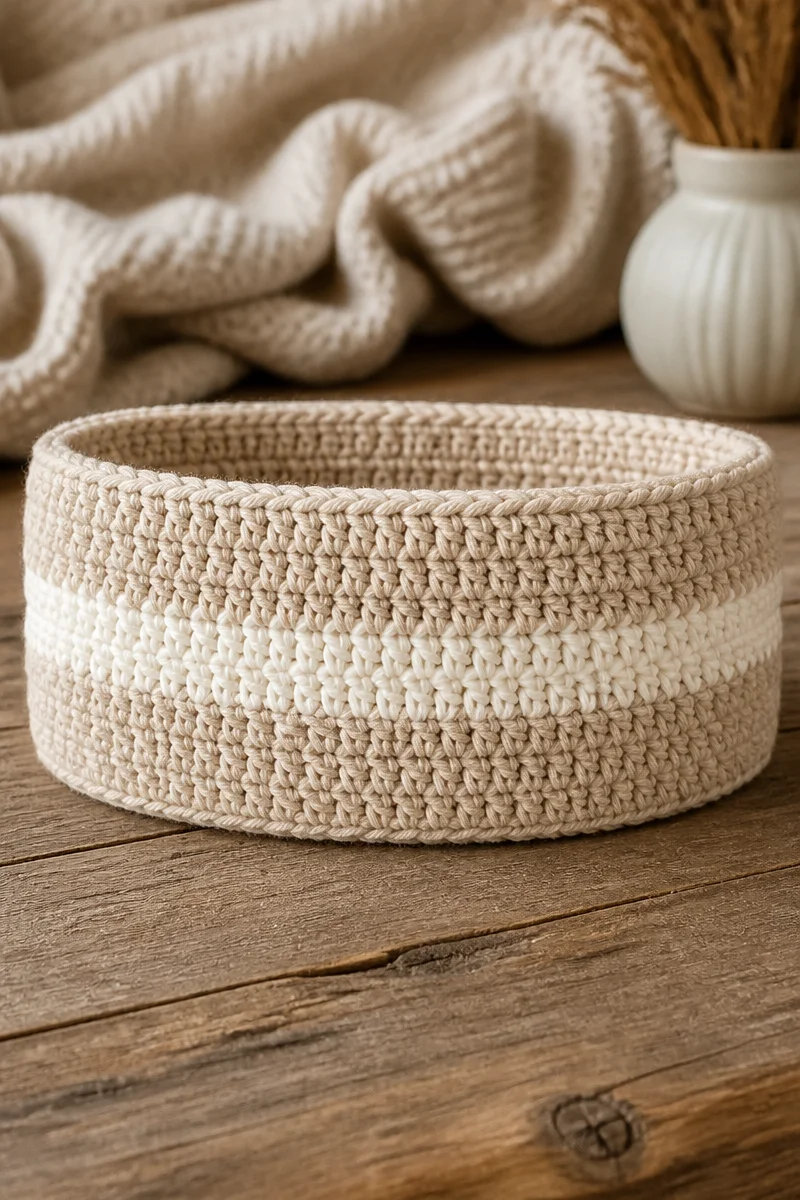
What Is the Half Double Crochet Stitch?
The half double crochet (HDC) is a basic stitch that sits between single crochet and double crochet in height. To make one, yarn over, insert the hook into the next stitch, yarn over and pull up a loop, then yarn over and pull through all three loops on the hook.
Because it is taller than single crochet but shorter than double crochet, HDC creates a fabric with a little more height and flexibility than a dense single crochet fabric. The result is a neat, gently ridged texture, especially when crocheting into the back loop. Crocheters often enjoy HDC because it works up at a comfortable pace and creates a fabric that suits accessories such as an oat milk ear warmer headband.
Why This Is a Great Choice for Ear Warmers
- It adds comfortable coverage. The HDC fabric offers more warmth than an open, lacy stitch.
- It has a soft texture. Back-loop HDC can create subtle ridges without adding bulky details.
- It works up at a steady pace. The stitch is simple to repeat across a narrow band.
- It suits many skill levels. New crocheters can learn the stitch, while experienced makers can adjust the fit and finish.
- It pairs well with simple shaping. A straight strip can be joined into a loop or finished with a twist for a different look.
Yarn and Hook Recommendations
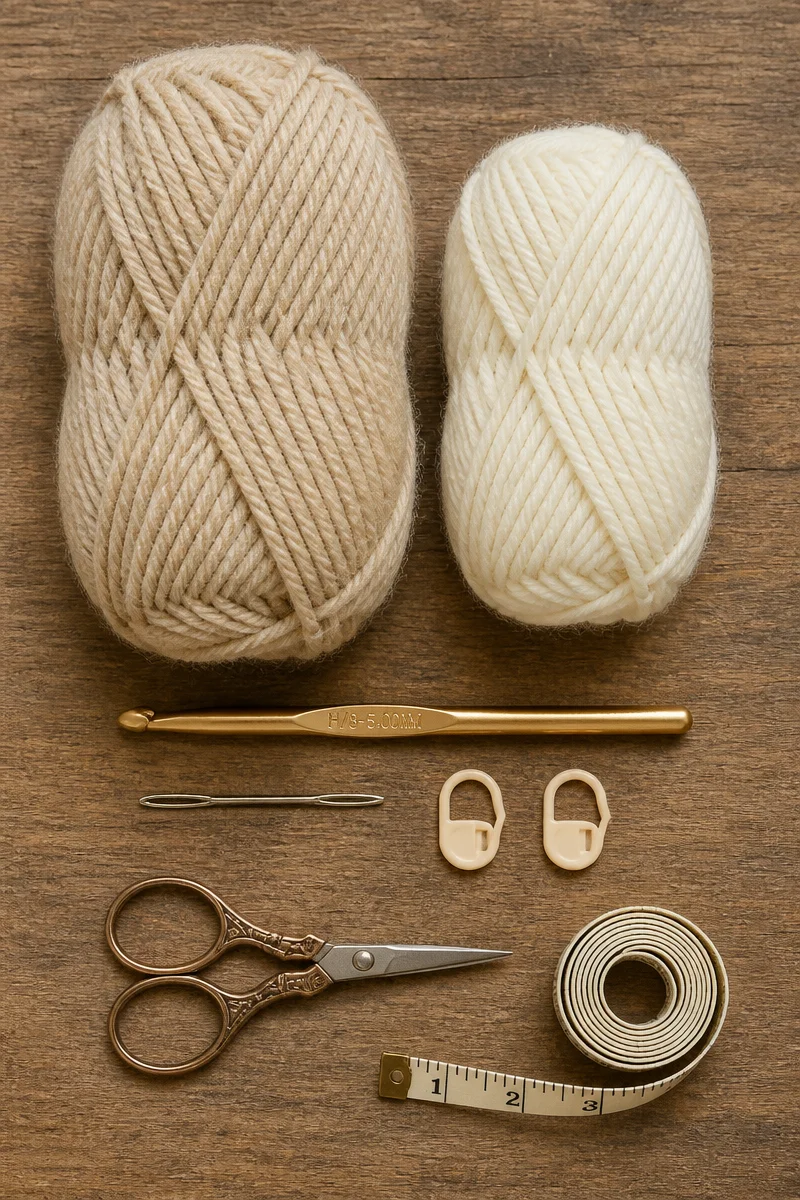
- Worsted-weight yarn: This common choice makes a warm, sturdy headband. It also gives clear stitch definition.
- DK-weight yarn: Choose DK yarn for a lighter oat milk ear warmer headband that fits comfortably under a hood or coat.
- Wool or a wool blend: Wool offers warmth and some stretch. A blend may be easier to care for and less likely to feel scratchy.
- Soft acrylic: Acrylic is often affordable, widely available, and machine washable. Check the yarn label for care directions.
- Cotton or cotton blends: These can feel smooth and breathable, though cotton may have less spring than wool. A blend with acrylic or another elastic fiber may help the band keep its shape.
- A hook that matches your yarn: Start with the size suggested on the yarn label, then check your fabric. A slightly smaller hook can make a firmer band, while a larger hook can create a softer, more flexible fabric.
Tips for Half Double Crochet Success
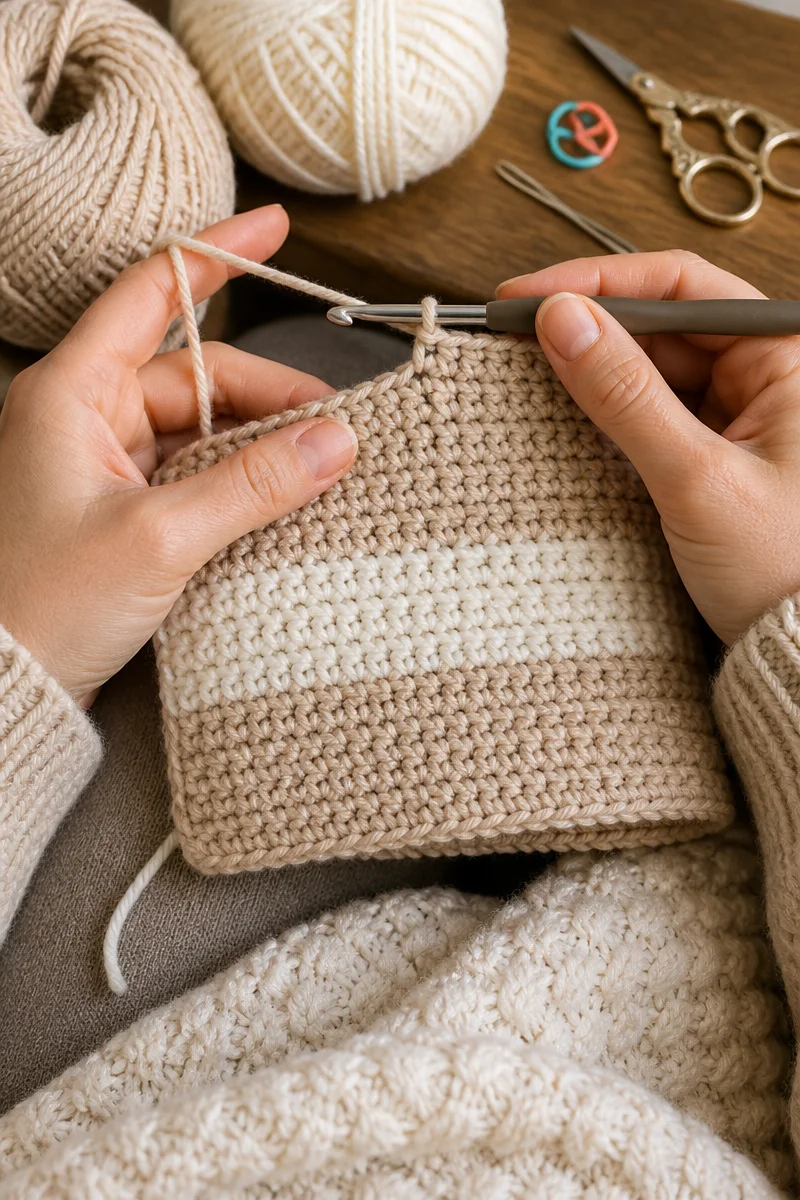
First, keep your loops a similar height as you work. If your stitches are very tight, the fabric may feel stiff; if they are loose, the headband may stretch out of shape. Make a small swatch with your chosen yarn and hook, then stretch it gently to see how it feels.
Next, count your stitches at the end of each row, especially while you are learning. Also, check the pattern’s instructions for turning chains, since patterns differ on whether a turning chain counts as a stitch. Take breaks when your hands feel tired. A relaxed pace can help you keep your tension even and enjoy making your oat milk ear warmer headband.
Common Mistakes to Avoid
One common issue is uneven tension. A band may become wider or narrower if your stitches change size from row to row. To help prevent this, hold the yarn comfortably and check your work every few rows.
Another mistake is losing or adding stitches at the edges. This can make the headband slant or create uneven sides. Count the stitches often, and look closely at the first and last stitch in each row.
It is also easy to choose yarn that feels too heavy or scratchy for a headband. Since this project sits close to the skin, softness matters. Feel a sample against your forehead or cheek before making the full band.
Finally, avoid guessing at the finished fit. Yarn can stretch with wear, and different fibers behave in different ways. Measure the intended wearer’s head, consider the fabric’s stretch, and follow the sizing guidance in your pattern.
Care and Washing Instructions
Washing: Always check the yarn label first. Many acrylic headbands can go in the washing machine on a gentle cycle, while wool may need hand washing in cool water with a mild detergent. When in doubt, wash gently by hand.
Drying: Press out extra water with a towel rather than wringing the headband. Then lay it flat to dry and smooth it into shape. Avoid hanging it while wet, since that can pull the band out of shape.
Blocking: A simple HDC headband usually needs little or no blocking. However, gentle blocking can even out the edges and help the band lie flat. Use a method that is safe for your yarn, and avoid high heat unless the yarn label says it is safe.
More Ideas to Try
If you enjoy the oat milk ear warmer headband, try a ribbed headband made with back-loop single crochet, a soft cowl in half double crochet, or a beanie with a matching texture. You could also explore moss stitch for a flatter fabric or front-post stitches for a more raised ribbed look.
Conclusion
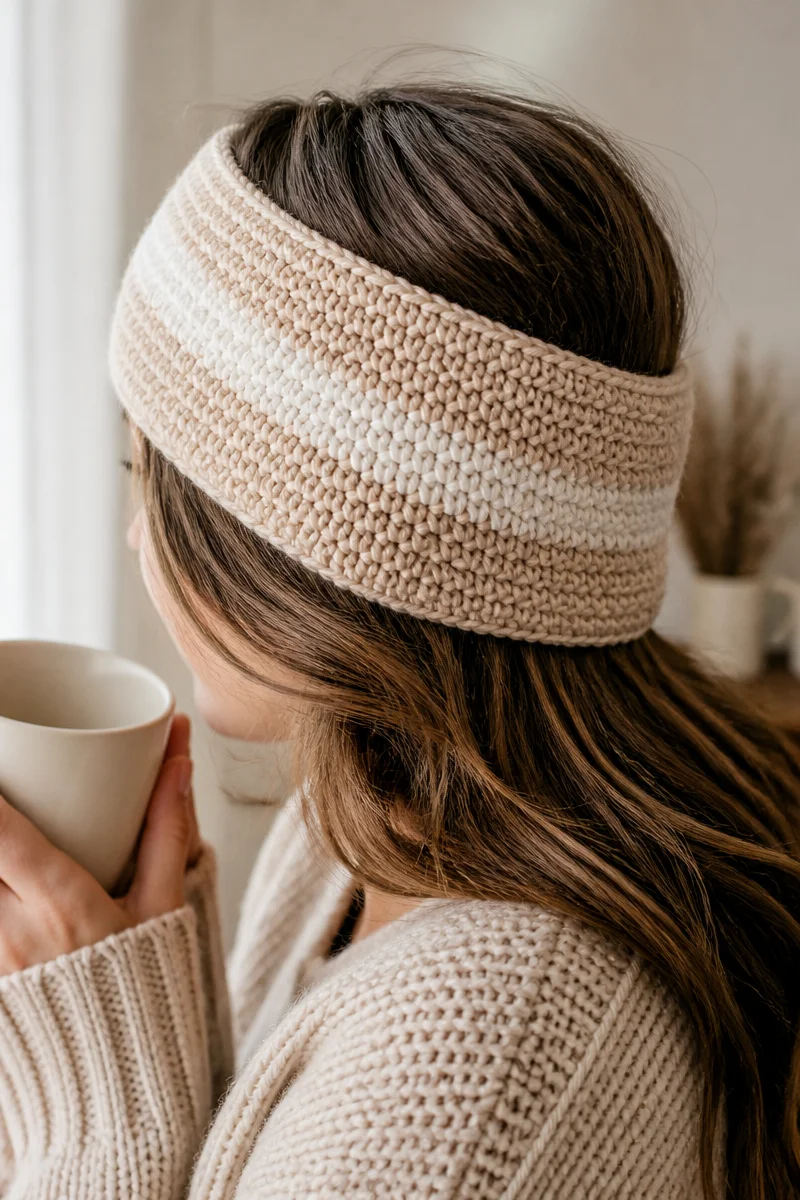
A crocheted oat milk ear warmer headband is a practical project with room for personal style. The half double crochet stitch offers a simple way to make a warm, textured fabric, while the right yarn, hook, and fit help the finished band feel comfortable. Make a small swatch, check your sizing, and take your time with the edges. Then try the technique for yourself, share how your headband turns out, or explore another crochet accessory guide on the blog.