Crochet Kalanchoe Flower Plant Pot Cover

Affiliate disclosure: This post may contain affiliate links. I may earn a small commission at no extra cost to you. See our Privacy Policy for details HERE.
A Crochet Kalanchoe Flower Plant Pot Cover is a lovely way to dress up a simple flowerpot. I enjoy projects like this because they add a handmade touch to a room without taking up much space. Plus, you can choose colors that suit your home or complement the kalanchoe’s bright blooms.
This project uses crochet to create a fitted sleeve for a plant pot. The finished cover can have a soft, textured look, and its size is easy to adjust for different pots. It is a practical project for crocheters who know basic stitches, though beginners can also try it with a little patience.
In this guide, you will learn how the crocheted pot-cover technique works, which yarn and hook choices suit it, and how to get a neat fit. You will also find helpful tips, common mistakes to avoid, and care advice so your cover stays looking its best.
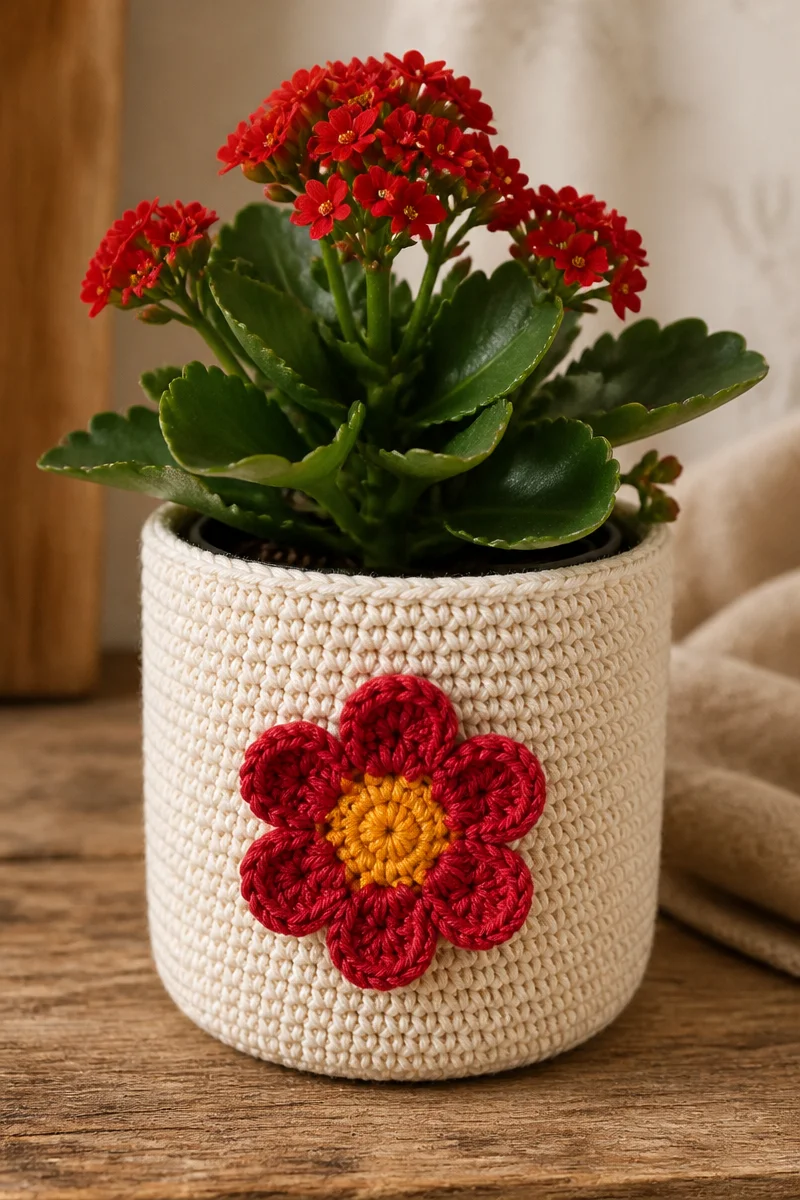
What Is the Crochet Plant Pot Cover Technique?
A crochet plant pot cover is a fabric sleeve made to fit around the outside of a flowerpot. It is usually crocheted in the round, starting at the base and working upward, or made as a flat piece that is joined at the side. The stitches form a flexible fabric that can stretch slightly around the pot.
For a kalanchoe pot, the cover is decorative rather than structural. It hides a plain nursery pot and adds color and texture, while the plant remains in its original pot inside. Crocheters like this technique because it is easy to customize: you can change the height, width, stitch pattern, and color to suit your pot.
Why This Is a Great Choice for Flowerpots
- It adds charm quickly. A small cover can brighten a shelf, windowsill, or table without requiring a large project.
- It is easy to personalize. Choose a color that brings out the kalanchoe’s flowers or matches your room.
- It works with many stitch patterns. Simple single crochet makes a firm fabric, while textured stitches give the cover more character.
- It can fit a range of pots. You can adjust the circumference and height as you work, which is helpful when pot sizes vary.
- It makes a thoughtful handmade gift. A crocheted cover can dress up a potted kalanchoe for a housewarming or birthday.
Yarn and Hook Recommendations
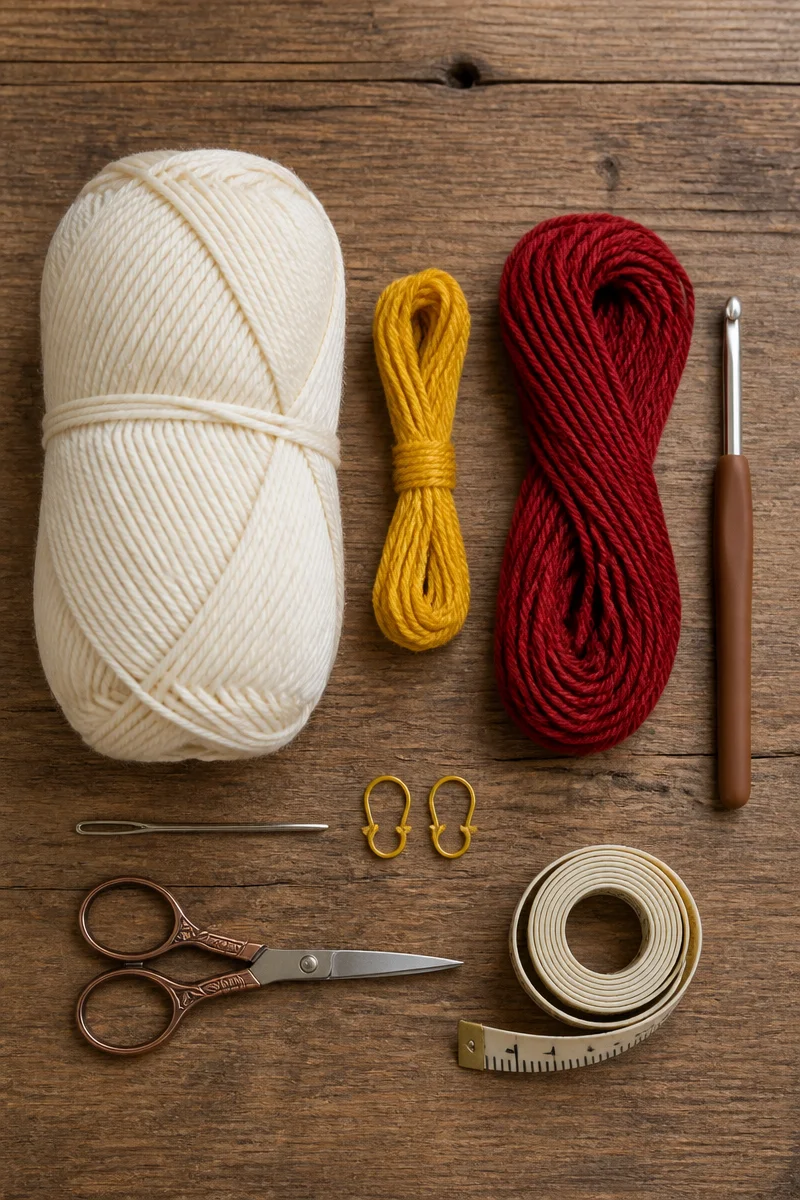
- Worsted-weight cotton yarn: Cotton holds its shape well and is a practical choice for a firm pot cover.
- Cotton blends: A cotton-acrylic blend can feel softer while still offering useful structure.
- DK-weight yarn: This creates a lighter cover, especially if you want a finer texture or need to fit a smaller pot.
- Medium or worsted yarn: This is a good everyday option for a cover that works up at a comfortable pace.
- A hook near the yarn label’s recommendation: Start with the suggested size, then adjust if your stitches look too loose or too tight.
- A slightly smaller hook, if needed: A smaller hook can help create a snug fabric that stays around the pot instead of sagging.
Keep in mind that the pot itself should hold the plant and any water. A crocheted cover is not waterproof, so place the nursery pot inside it only after excess water has drained.
Tips for Crochet Plant Pot Cover Success
First, measure the widest part of the pot and its height before you begin. Then, check the fit as you crochet rather than waiting until the end. The cover should sit comfortably around the pot, but it should not squeeze it so tightly that you have trouble removing it for watering.
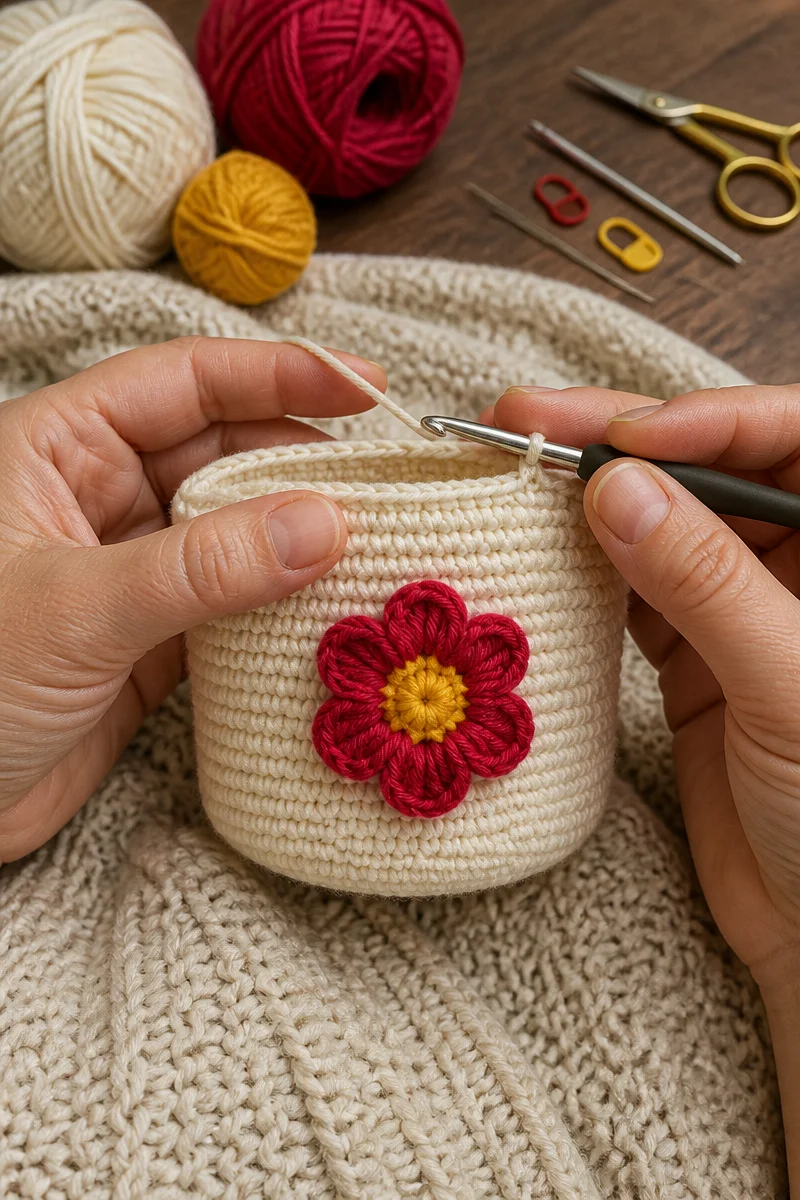
Also, keep your tension steady and count your stitches as you go. If you are working in the round, mark the beginning of each round so you can spot where it ends. Finally, make a small sample if you are unsure about the yarn or hook. This lets you check the fabric’s firmness before you make the full cover.
Common Mistakes to Avoid
One common mistake is guessing the pot size. Pots that look alike can differ in width, shape, or taper. So, measure your actual pot and try the cover on as it grows.
Loose stitches can make a cover sag, while very tight stitches can make it hard to fit over the pot. Instead, aim for an even fabric with a little give. If the cover feels floppy, try a smaller hook or a firmer stitch pattern.
Another pitfall is making the cover too tall or too short. A tall cover may hide the pot rim and make it harder to remove the plant pot. A short cover may not hide enough of the nursery pot. Check the height before you finish the top edge.
Finally, avoid letting water collect inside the cover. Crochet fabric can hold moisture, which may affect the yarn and the surface it rests on. Remove the inner pot for watering, allow it to drain fully, and wipe the cover or pot tray if needed.
Care and Washing Instructions
Washing: Check the yarn label first. Many cotton and acrylic yarns can be hand-washed in cool water with mild soap. If the label allows machine washing, use a gentle cycle and place the cover in a laundry bag.
Drying: Press out extra water gently without twisting the fabric. Then reshape the cover and lay it flat to dry. Make sure it is completely dry before putting it back around the pot.
Blocking: Blocking is usually optional for a small plant pot cover. However, a light block can smooth the fabric and even out the edges. Avoid heavy blocking if you want the cover to keep a snug fit.
More Ideas to Try
Once you have made a Crochet Kalanchoe Flower Plant Pot Cover, try a ribbed cover for extra stretch, a basket-style stitch for a bolder texture, or a color-blocked design that echoes the plant’s blooms. You could also crochet matching covers for herb pots or make a small hanging planter sleeve for another spot in your home.
Conclusion
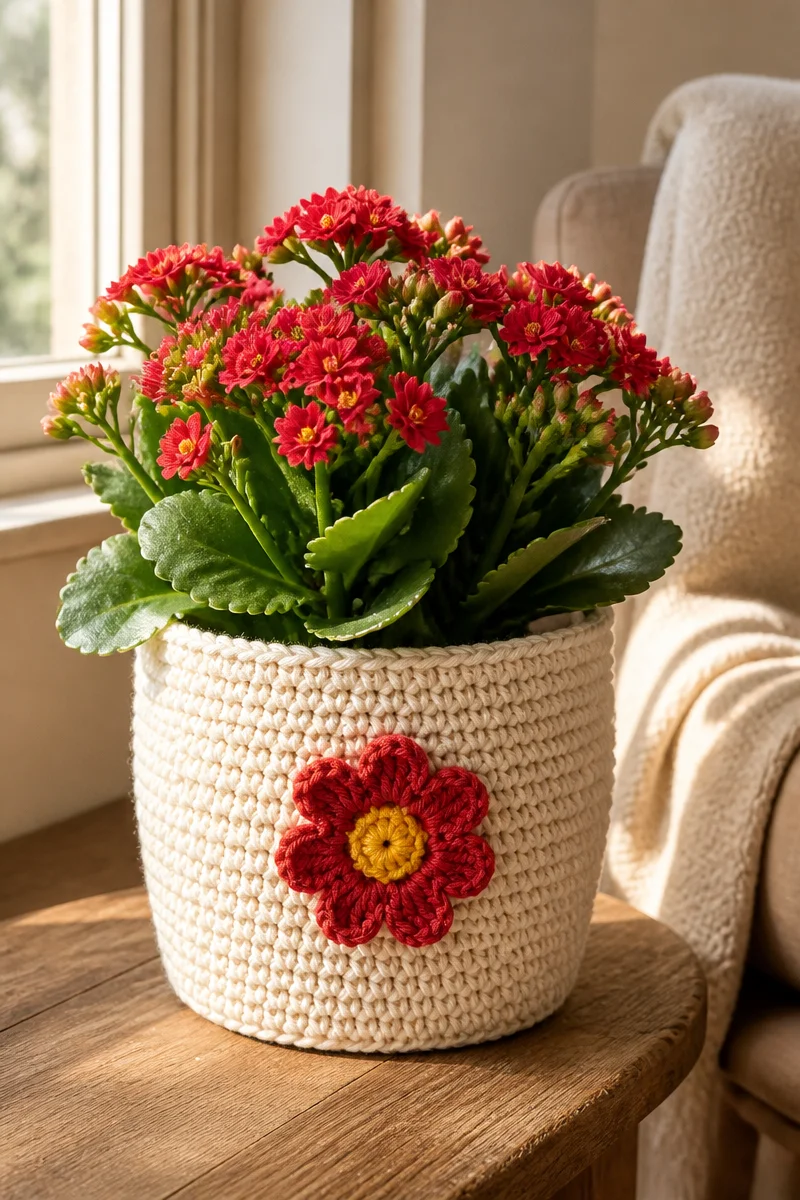
A Crochet Kalanchoe Flower Plant Pot Cover is a small, useful project that lets you practice working a fitted crochet piece while adding handmade style to your home. Measure the pot, choose a yarn with enough structure, and check the fit as you work. Most of all, enjoy making a cover that suits your plant and your space. Try one in your favorite color, share how it turns out, and explore more crochet home-decor ideas on the blog.