Crochet Dusty Blue Stripe Baby Beanie

Affiliate disclosure: This post may contain affiliate links. I may earn a small commission at no extra cost to you. See our Privacy Policy for details HERE.
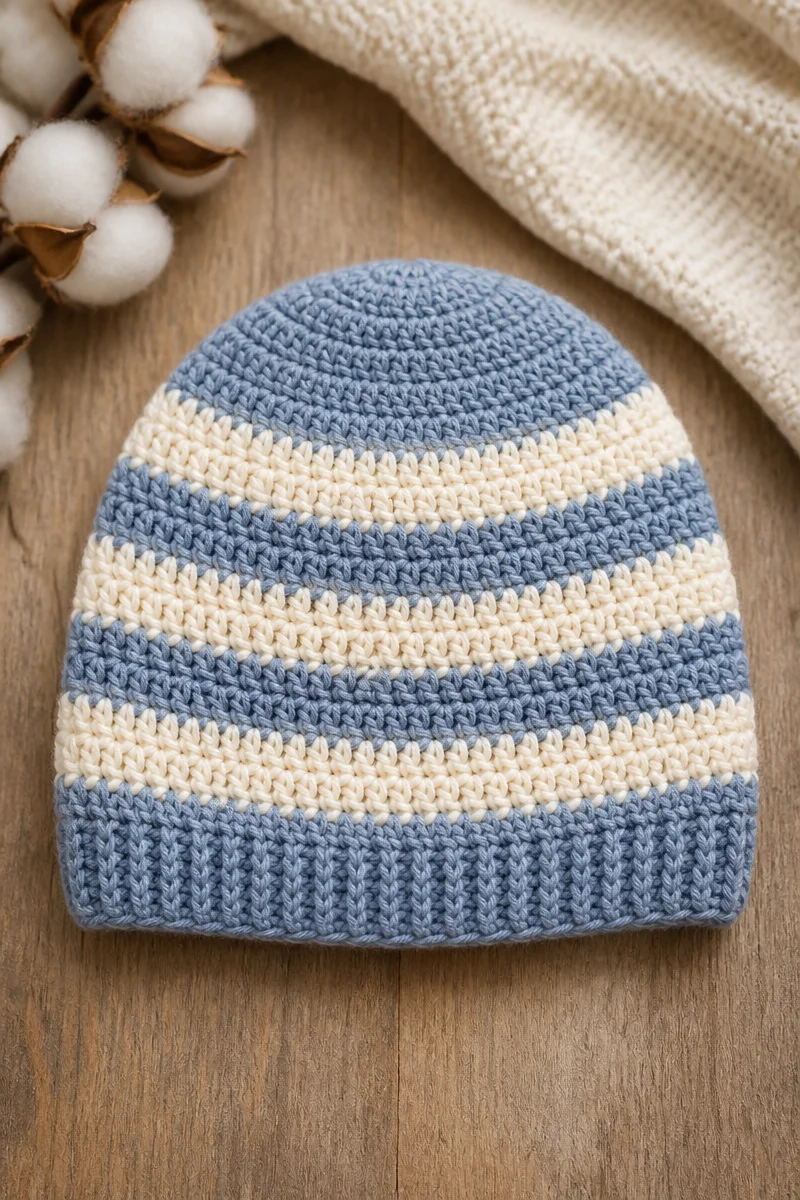
A Crochet Dusty Blue Stripe Baby Beanie is a lovely way to make a small gift feel special. I’m drawn to the calm blue shades and simple stripes because they look sweet without feeling too busy. The finished hat can be practical, too, when you choose a soft, washable yarn.
This project is a striped crochet baby beanie, rather than a named stitch pattern. It usually combines familiar stitches worked in rounds with color changes that create neat bands. As a result, it can suit newer crocheters who already know basic stitches, while still offering plenty of room for personal touches.
In this guide, you’ll learn how stripes work on a baby beanie, which yarn and hook choices can help, and how to keep the hat comfortable. You’ll also find tips for even tension, care advice, and common mistakes to watch for before you begin.
What Is the Striped Crochet Baby Beanie Technique?
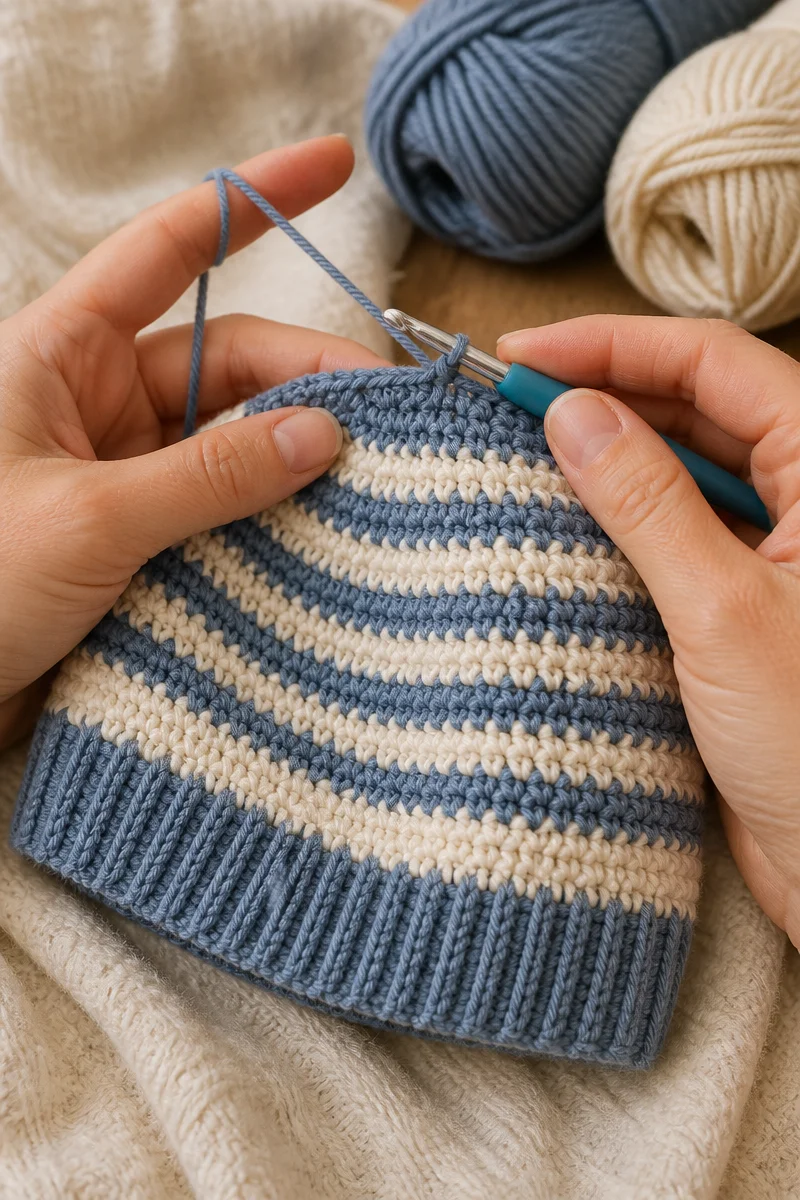
A striped crochet baby beanie is made by working rounds in one color, then changing to another color to create bands around the hat. The fabric may use single crochet, half double crochet, double crochet, or another stitch named in a pattern. So, the stripe technique is about changing colors between rounds, not about one special stitch.
Many crocheters like this approach because it adds visual interest while keeping the basic construction simple. Dusty blue pairs well with white, cream, gray, or a paler blue. Meanwhile, stripes can be narrow and subtle or wider and bold, depending on how many rounds you work in each shade.
Because the hat is worked in the round, pay attention to how the pattern handles the join between rounds. Some patterns join each round with a slip stitch, while others use a continuous spiral. Either method can work well, but the stripe edges may look different.
Why This Is a Great Choice for Baby Beanies
- The stripes add charm without extra decoration. A few color bands give the beanie a finished look while keeping it comfortable for a baby.
- The project uses familiar crochet skills. If you can follow a pattern in the round, you can often manage the color changes, too.
- It is easy to personalize. For example, you can adjust the stripe widths or pair dusty blue with a soft neutral.
- A small hat is a useful gift project. It can be a thoughtful choice for a baby shower or a handmade welcome gift.
- The design works with different stitch patterns. You can use the stitch suggested by your chosen pattern while keeping the same striped color plan.
Yarn and Hook Recommendations
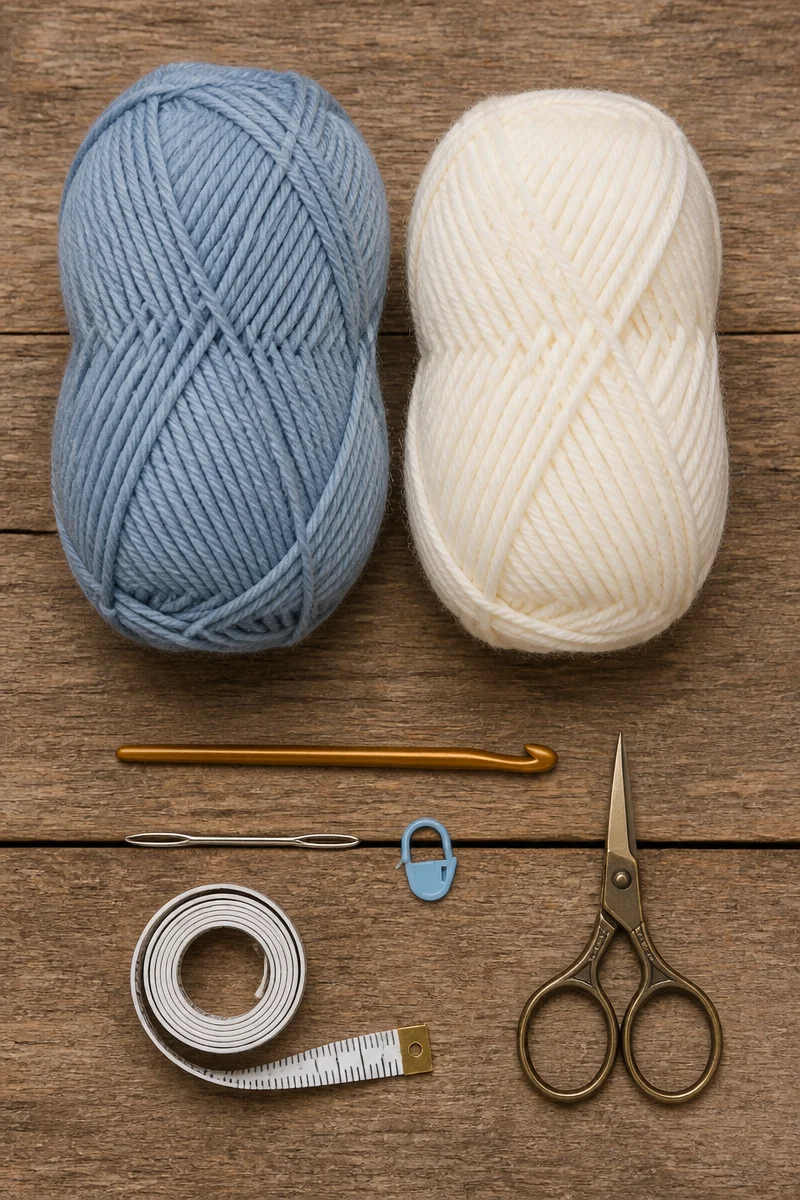
- Choose a light- or medium-weight yarn only if the pattern calls for it. Baby beanie patterns vary, so match the yarn weight to the pattern’s gauge and size.
- Look for soft, washable fibers. Machine-washable acrylic or a soft cotton blend can make everyday care easier. Check the yarn label for washing directions.
- Consider merino wool only when it suits the baby and care needs. Soft merino can feel gentle, but it may need more careful washing. Avoid scratchy yarns.
- Use the hook size listed in the pattern as your starting point. The right size helps you reach the intended fabric feel and hat size.
- Make a gauge swatch before starting. If your stitches are too tight or loose, try a different hook size and check the gauge again.
- Choose colors with clear contrast. Dusty blue and cream, white, or light gray can make the stripes easy to see without looking harsh.
Tips for Striped Crochet Baby Beanie Success
First, check the pattern’s gauge and sizing notes before you begin. A baby beanie needs a comfortable fit, so do not rely on age alone to estimate size. If possible, compare the pattern measurements with the intended wearer’s head measurement.
Next, keep your tension steady as you work each round. When you change colors, follow the pattern’s instructions for the last stitch of the old shade and the first stitch of the new one. Also, count stitches at the end of rounds when the pattern asks you to. Even a small count change can affect the shape of the crown or the fit around the head.
Common Mistakes to Avoid
Do not assume that every baby beanie uses the same yarn weight or hook size. A yarn that feels soft in the skein may still make a fabric that is too stiff or too warm. Instead, follow the pattern’s yarn guidance and check the finished fabric for softness and stretch.
Watch for loose or bulky color changes. If you pull the yarn too tightly when switching shades, the hat may pucker. If you leave long, loose strands, they can catch or feel uncomfortable. Follow the pattern’s method for carrying yarn or weaving in ends, and keep the inside tidy.
It is also easy to lose track of rounds when the stripes look similar. Mark the beginning of each round if needed, and count stitches regularly. That way, you can catch a mistake early instead of discovering it after several more rounds.
Finally, avoid guessing the size based only on the baby’s age. Babies grow at different rates, and patterns may use different sizing standards. Check the finished measurements, and remember that a hat should fit comfortably without squeezing.
Care and Washing Instructions
Washing: Follow the care label on the yarn and any washing instructions included with the pattern. Many washable acrylic yarns can go in the washing machine on a gentle cycle, while some wool or cotton blends may need hand washing. Use mild detergent, and avoid hot water unless the yarn label allows it.
Drying: Reshape the beanie gently after washing, then lay it flat on a clean towel to dry. Avoid wringing it out, since twisting can stretch the stitches. Also, check the yarn label before using a dryer.
Blocking: A baby beanie usually needs little or no blocking. If the brim or stripes look uneven, gentle shaping while the hat dries may help. However, avoid stretching the beanie beyond its intended size.
More Ideas to Try
If you enjoy making a Crochet Dusty Blue Stripe Baby Beanie, you could try a solid-color beanie with a ribbed brim, a two-tone hat with a pom-pom, or a simple striped baby blanket. You might also explore textured stitches, such as moss stitch or half double crochet in the back loop, for a different look.
Conclusion
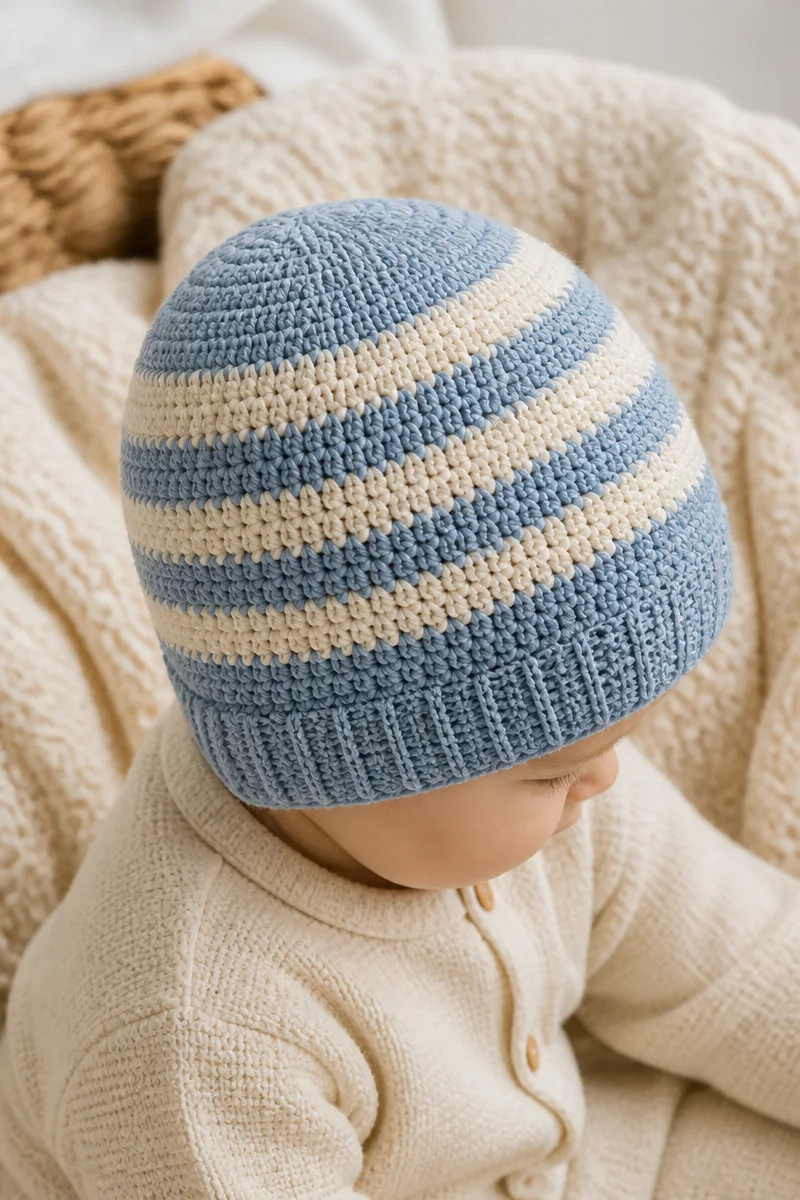
A Crochet Dusty Blue Stripe Baby Beanie combines a practical hat shape with a simple, appealing color design. Choose yarn that feels soft and suits the pattern, check your gauge, and take care with round counts and color changes. Most of all, enjoy making something small and thoughtful. Try your own stripe combination, share how your beanie turns out, or explore another crochet baby project on the blog.