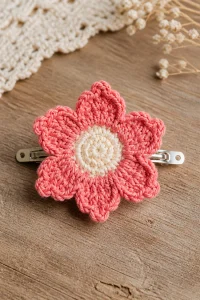
Crochet Dianthus Flower Hair Clip Pair

Affiliate disclosure: This post may contain affiliate links. I may earn a small commission at no extra cost to you. See our Privacy Policy for details HERE.
A Crochet Dianthus Flower Hair Clip Pair is a sweet way to add handmade color to a hairstyle. I love how these little flowers bring a cheerful, garden-inspired touch to an everyday look without needing a large amount of yarn or time.
Dianthus flowers are known for their ruffled petals, and crochet can capture that soft, frilly shape with simple shaping and layered stitches. The finished flowers are small, lightweight accessories that suit ponytails, braids, and special occasions. With a little practice, this project can work well for newer crocheters, too.
In this guide, you’ll learn how crocheted dianthus petals are shaped, which yarns and hooks work well, and how to attach the flowers to hair clips. You’ll also find practical tips for neat results and advice on avoiding common problems.
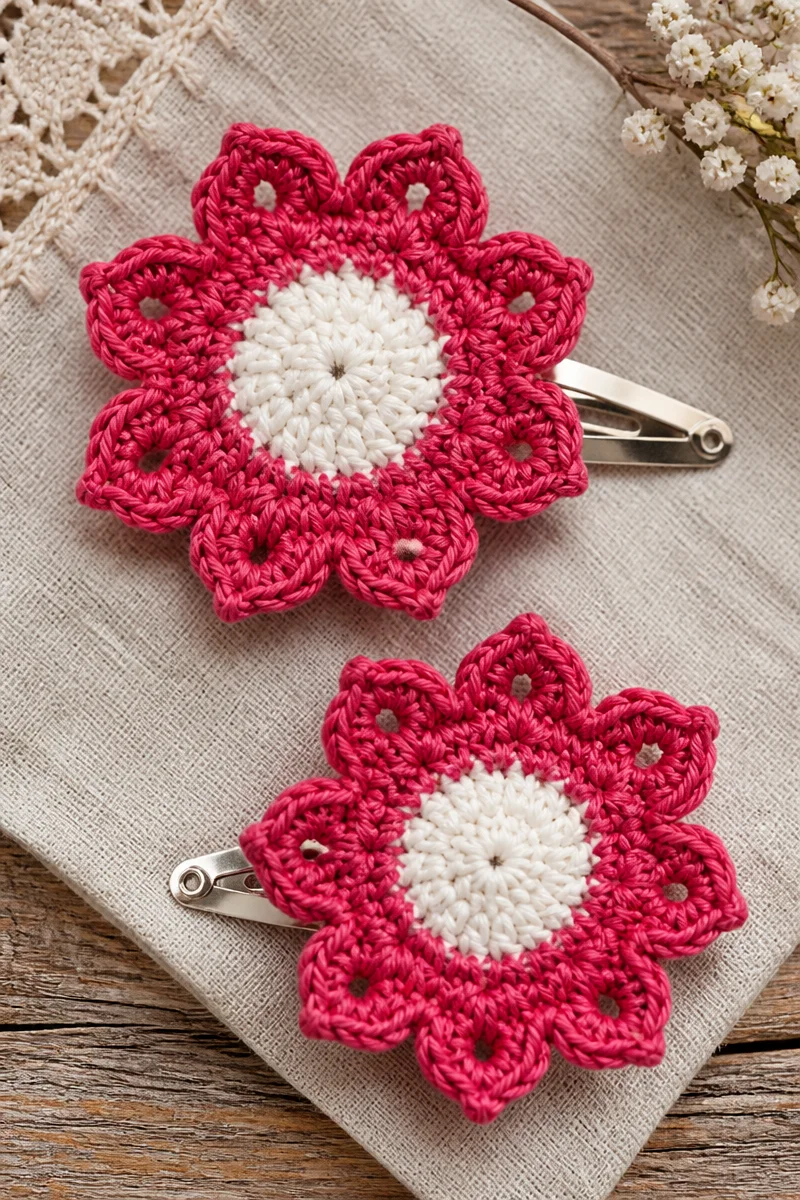
What Is the Crochet Dianthus Flower Technique?
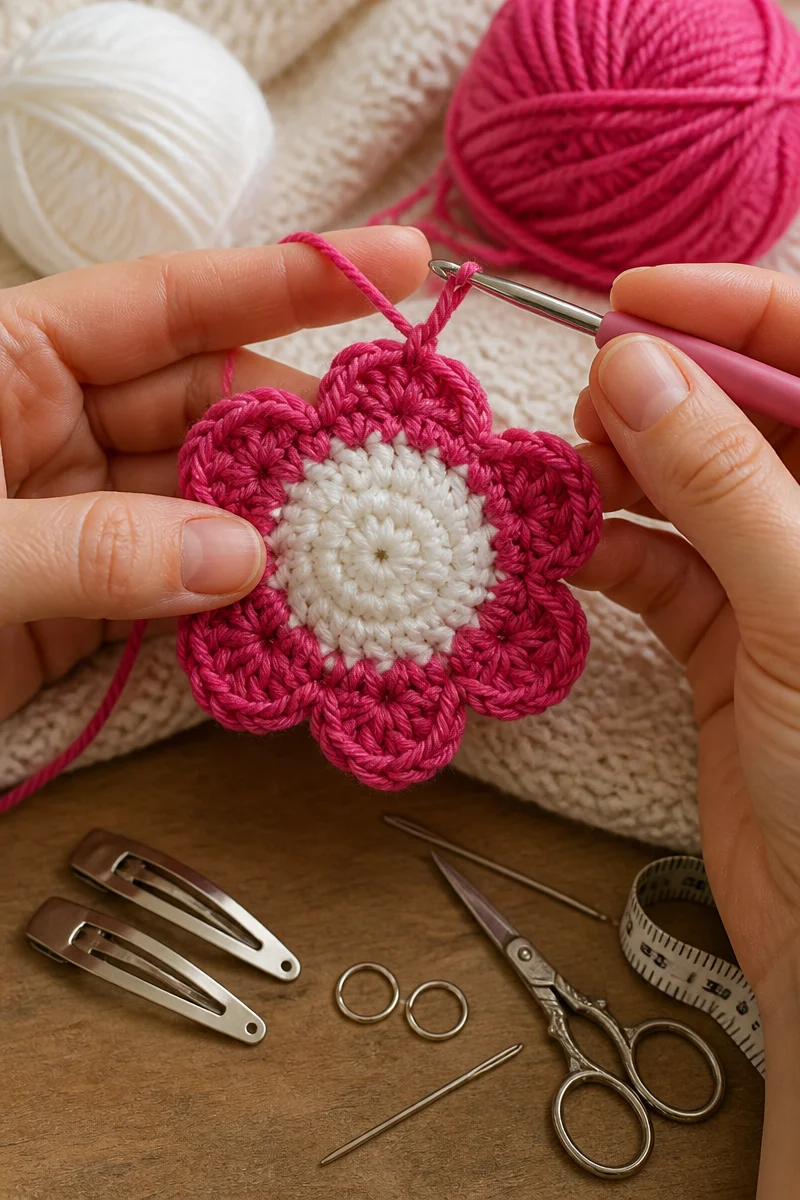
A crochet dianthus flower is a small flower motif made with a center and a ring of shaped petals. The petals often use increases, chain spaces, or clusters of stitches to create a wavy, ruffled edge. As a result, the flower has more dimension than a flat, simple flower motif.
There is no single stitch called the dianthus stitch. Instead, crocheters use familiar stitches, such as single crochet, half double crochet, and double crochet, to form the flower’s center and petals. The ruffled outline gives the motif its dianthus-inspired look. Crocheters enjoy this technique because it adds texture and personality to a small project.
For a hair clip pair, make two similar flowers and secure each one to a clip. You can match their size and color, or make each flower slightly different for a playful set.
Why This Is a Great Choice for Hair Clips
- Small and quick to make: Each flower uses little yarn, so you can finish a pair in a short crafting session.
- Lightweight to wear: Fine yarn helps keep the clips comfortable and less likely to pull on hair.
- Easy to personalize: Choose bright shades, soft pastels, or colors that match an outfit.
- A useful way to practice shaping: The petals let you try increases and stitch changes on a manageable project.
- Lovely for gifts and special days: A pair of handmade flower clips makes a thoughtful accessory for birthdays, family photos, or everyday wear.
Yarn and Hook Recommendations
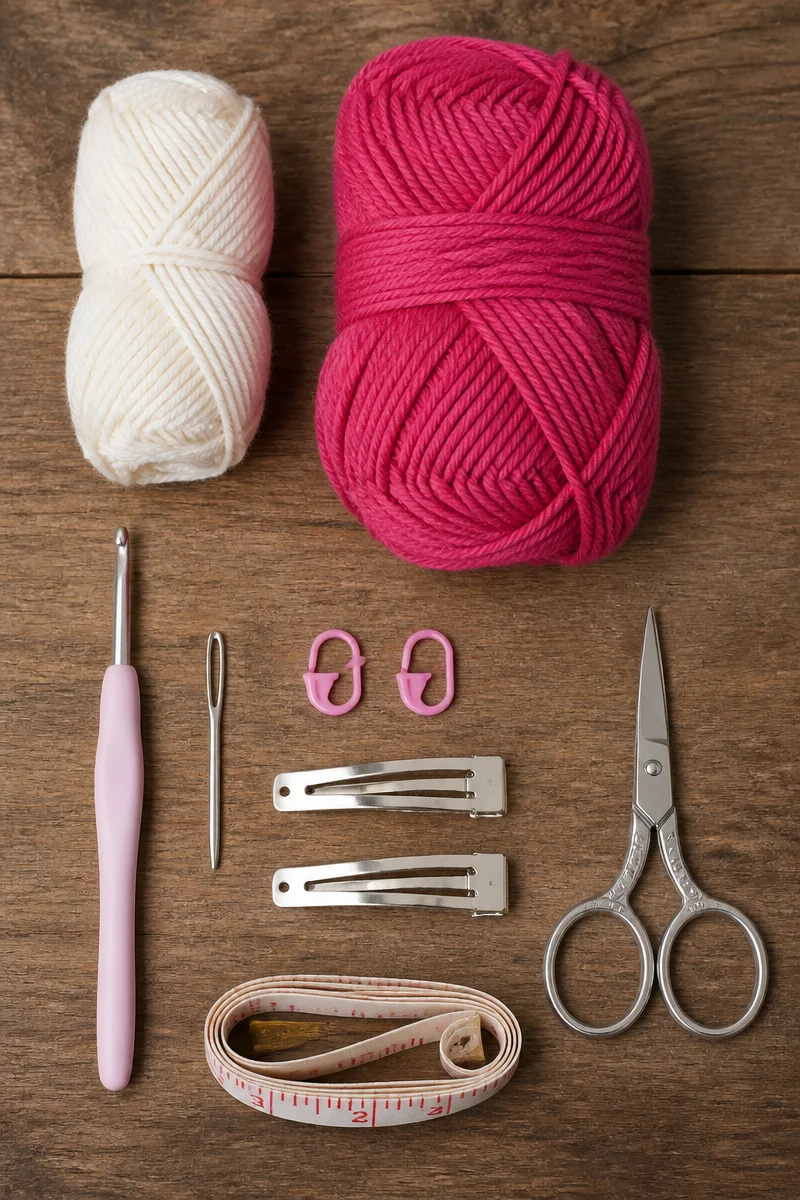
- Lightweight cotton yarn: Cotton holds its shape and shows off the petal texture. It is a good choice for crisp, colorful flowers.
- Sport-weight or fingering-weight yarn: These lighter yarns help make delicate flowers that sit comfortably on small clips.
- Fine acrylic yarn: Soft acrylic can be easy to find and comes in many colors. Check that the finished flower is not too floppy.
- A small crochet hook: A hook around 2.0 to 3.5 mm often suits fine yarn, but follow the yarn label and the flower pattern you are using.
- A slightly smaller hook for firm stitches: Tighter fabric can help petals keep their shape. However, choose a hook that still lets you work without strain.
- A sturdy hair clip and sewing thread: A snap clip or alligator clip provides a base. Strong thread can help secure the flower neatly and safely.
Tips for Crochet Dianthus Flower Success
First, keep your stitches even, especially around the flower’s center. If the center becomes too tight, it may cup or bunch. If it is too loose, the petals may spread out more than you want. So, pause after each round and check that the flower lies as expected.
Next, count the stitches and petal groups as you work. A stitch marker can help you track the start of a round. Also, make both flowers with the same yarn, hook, and stitch tension so the pair looks balanced. When attaching them, sew through the flower’s base and around the clip’s attachment points. Keep the thread secure, but avoid bulky knots that could catch in hair.
Common Mistakes to Avoid
Using thick yarn can make a small flower look bulky and heavy. Instead, choose a fine or lightweight yarn that suits the clip. If you want a larger flower, try a slightly larger hook or add a petal round rather than switching to very thick yarn.
Uneven tension can make the petals look different in size. This often happens when you rush through the increases. Take your time, and gently shape the flower with your fingers as you finish each section.
It is also easy to miscount stitches in a small motif. Then, one petal may look wider or more ruffled than the others. Use a stitch marker and count each petal group before moving on.
Finally, do not attach the flower with only a few loose stitches. A clip may shift or come away from the flower during use. Sew it firmly to the back, and check that no sharp clip edges or loose ends can snag hair.
Care and Washing Instructions
Washing: Follow the care label for your yarn. For a small cotton or acrylic flower, gently hand-wash it in cool water with a mild soap if needed. Avoid twisting or pulling the petals.
Drying: Press out extra water with a clean towel, then let the flower air-dry. Keep it away from high heat, which may affect the yarn or clip. If the clip is not washable, remove it first when possible.
Blocking: Heavy blocking is usually unnecessary for a small hair clip flower. However, you can lightly shape the petals while the flower is damp and let it dry flat. Avoid stretching the petals, since their ruffled form is part of the design.
More Ideas to Try
Once you have made a Crochet Dianthus Flower Hair Clip Pair, try a layered rose clip, a simple daisy pin, or a small crochet bow for another handmade accessory. You could also use the same dianthus motif on a headband, a gift wrap, or a brooch.
Conclusion
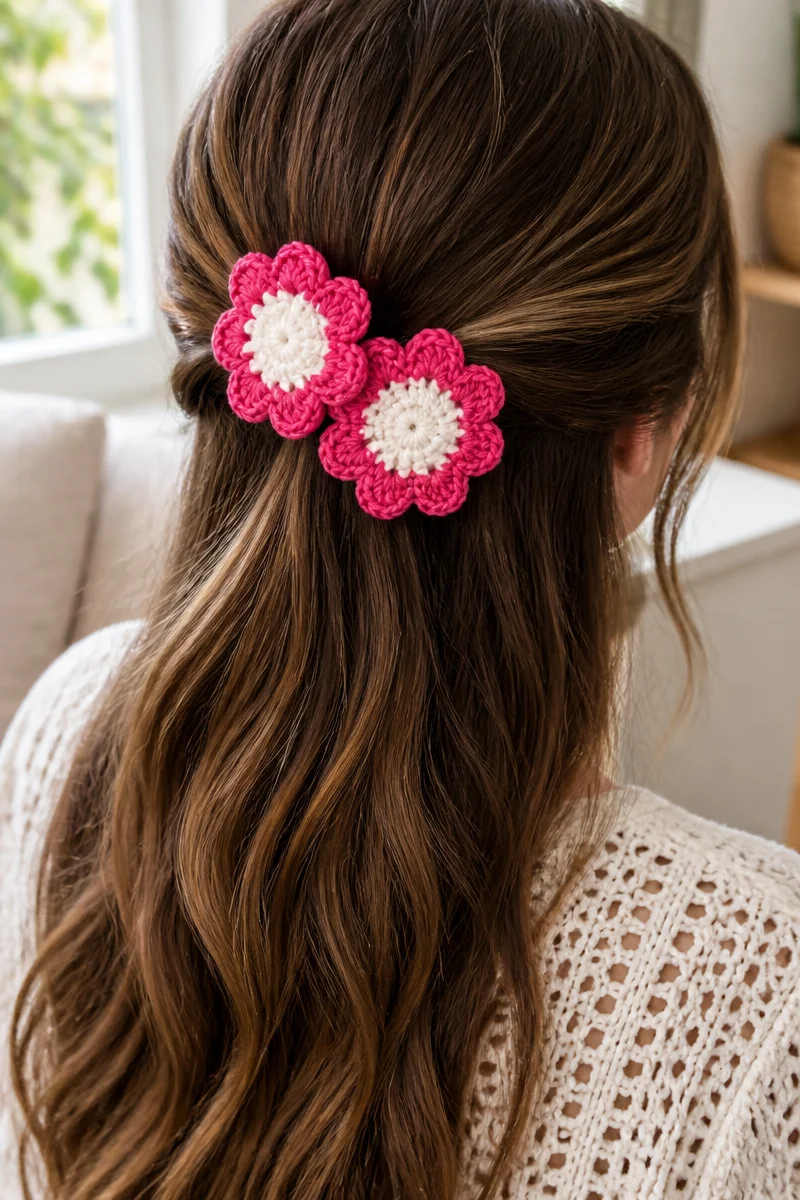
A crochet dianthus flower brings ruffled texture, color, and handmade charm to a pair of hair clips. With lightweight yarn, even stitches, and a secure attachment, you can make a comfortable accessory that is easy to personalize. So, choose your favorite colors and give this flower project a try. Then share your finished clips or explore more crochet flower guides on the blog.