Crochet Juniper Sprig Hair Barrette

Affiliate disclosure: This post may contain affiliate links. I may earn a small commission at no extra cost to you. See our Privacy Policy for details HERE.
A Crochet Juniper Sprig Hair Barrette is a lovely way to bring a touch of nature to an everyday hairstyle. I’m especially fond of small crochet accessories like this because they use just a little yarn yet can feel personal and special. A leafy sprig also makes a thoughtful handmade gift.
This project combines a simple crocheted botanical motif with a hair clip. The finished sprig has a delicate, textured look, and you can adjust its size or leaf shape to suit your style. It is a small project that can be a comfortable choice for newer crocheters who already know basic stitches and enjoy working with fine yarn.
In this guide, you’ll learn what makes a crocheted juniper sprig, which yarn and hook choices work well, and how to attach the motif to a barrette. You’ll also find practical tips, care advice, and common mistakes to avoid. Since this is an educational guide rather than a fixed pattern, you can use the ideas to create a barrette that feels like your own.
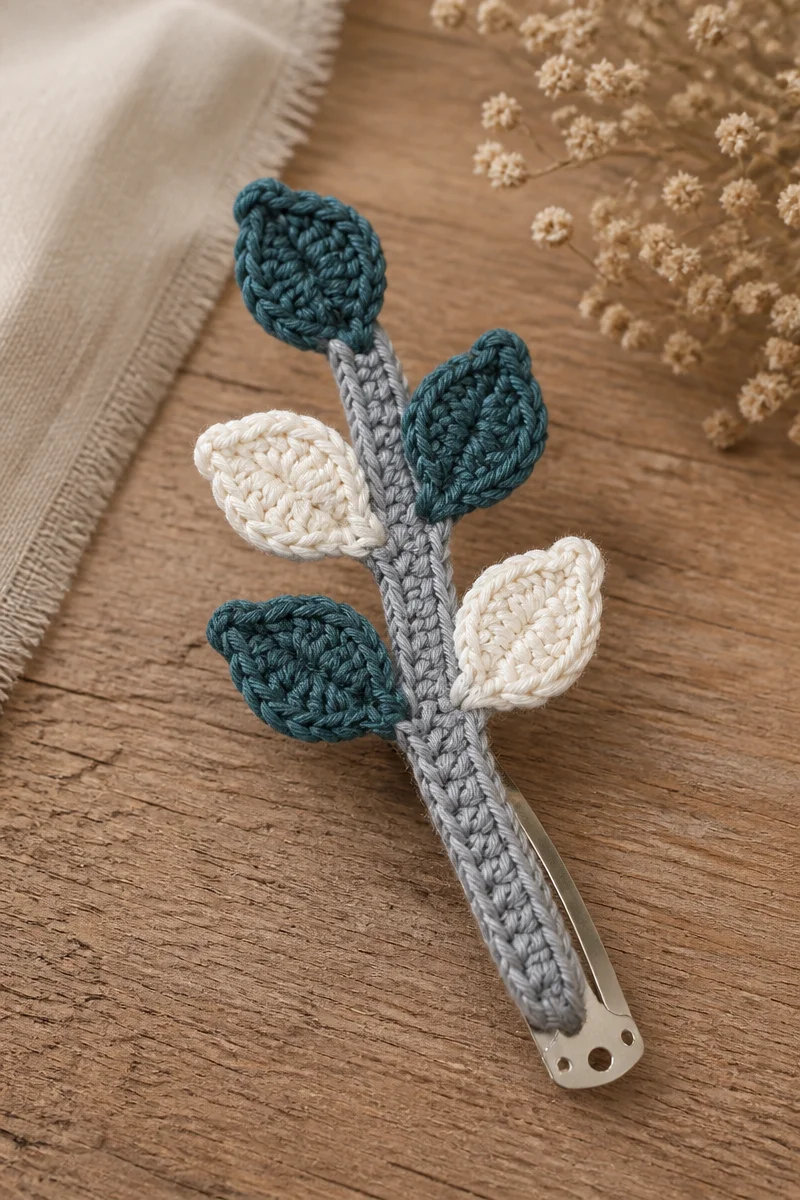
What Is the Crochet Juniper Sprig Technique?
A crochet juniper sprig is a small botanical motif made by crocheting a slender stem and adding compact leaves or needle-like shapes along it. The sprig may be worked in one piece, with the leaves formed from stitches around a central chain, or it may be assembled from separate crocheted pieces. The exact method depends on the design.
Unlike a fabric stitch that repeats across rows, this technique focuses on shaping a small motif. Short stitches, chains, and slip stitches can create neat points and gentle curves. As a result, the sprig looks like a tiny branch rather than a flat strip of crochet.
Crocheters enjoy this project because it offers room for creativity without needing a large amount of yarn. You can change the leaf spacing, branch length, or shade of green. Then, once the motif is secure, you can attach it to a barrette blank for a wearable accessory.
Why This Is a Great Choice for Hair Barrettes
- It is small and portable. You can work on a sprig in a short session, so it suits a quick craft break.
- It uses little yarn. Leftover green yarn is often enough for one or more motifs.
- It offers a natural, textured look. The leaves and stem add dimension to a simple hair clip.
- It is easy to personalize. Try different greens, add a small flower, or make the branch longer or fuller.
- It makes a thoughtful handmade gift. A crochet juniper sprig barrette can suit nature lovers and anyone who enjoys handmade accessories.
Yarn and Hook Recommendations
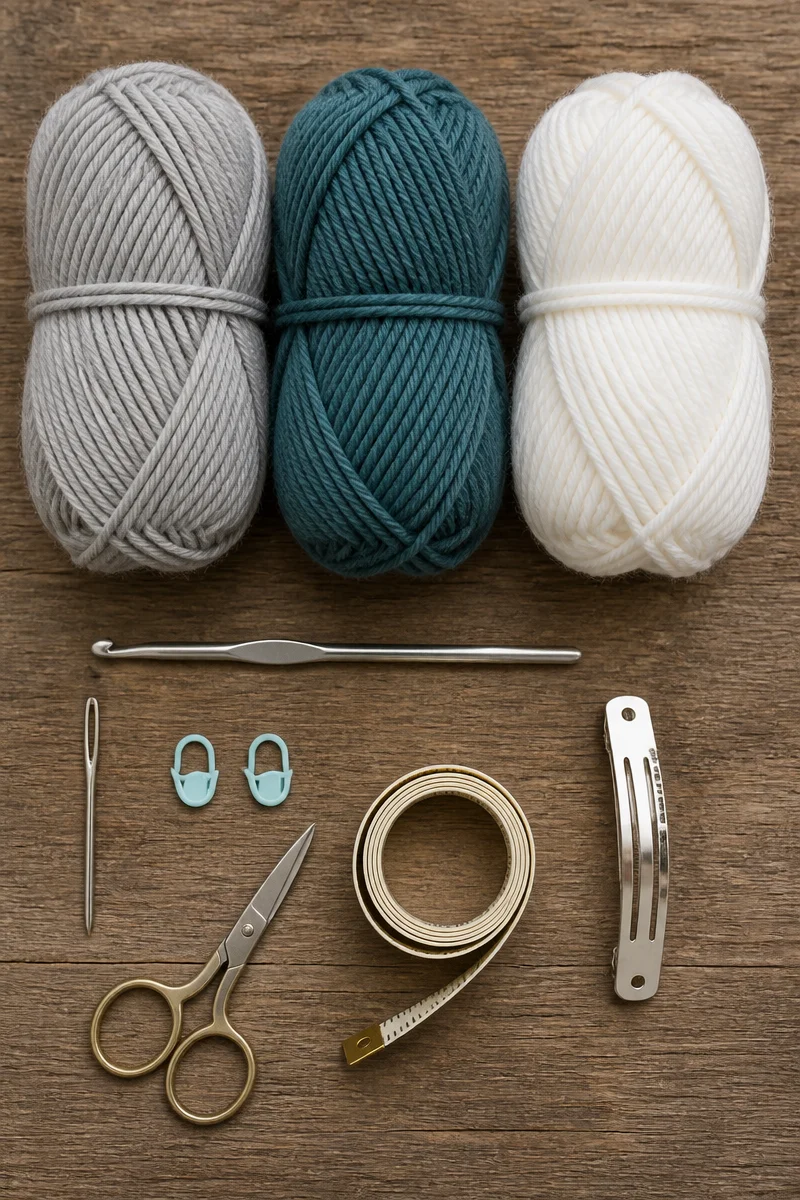
- Sport-weight cotton: This yarn makes firm, defined leaves. A hook around 2.25 to 3.25 mm often works well, depending on your tension.
- Fingering-weight cotton: Choose this for a fine, delicate sprig. A hook around 1.75 to 2.5 mm can help keep the stitches neat.
- Lightweight wool or wool blend: This can add softness and a slightly fuller look. Check the yarn label and make a small test piece before choosing a hook.
- Mercerized cotton: Its smooth finish can help leaf shapes stand out. It also gives the motif a tidy, polished appearance.
- Acrylic yarn: This is easy to find and comes in many shades. Use a finer strand so the finished sprig does not feel bulky on the clip.
- Hook size and fit: The best hook is the one that gives you compact stitches without making your hand strain. For a barrette, a firm fabric is usually more useful than a loose, drapey one.
Tips for Crochet Juniper Sprig Success
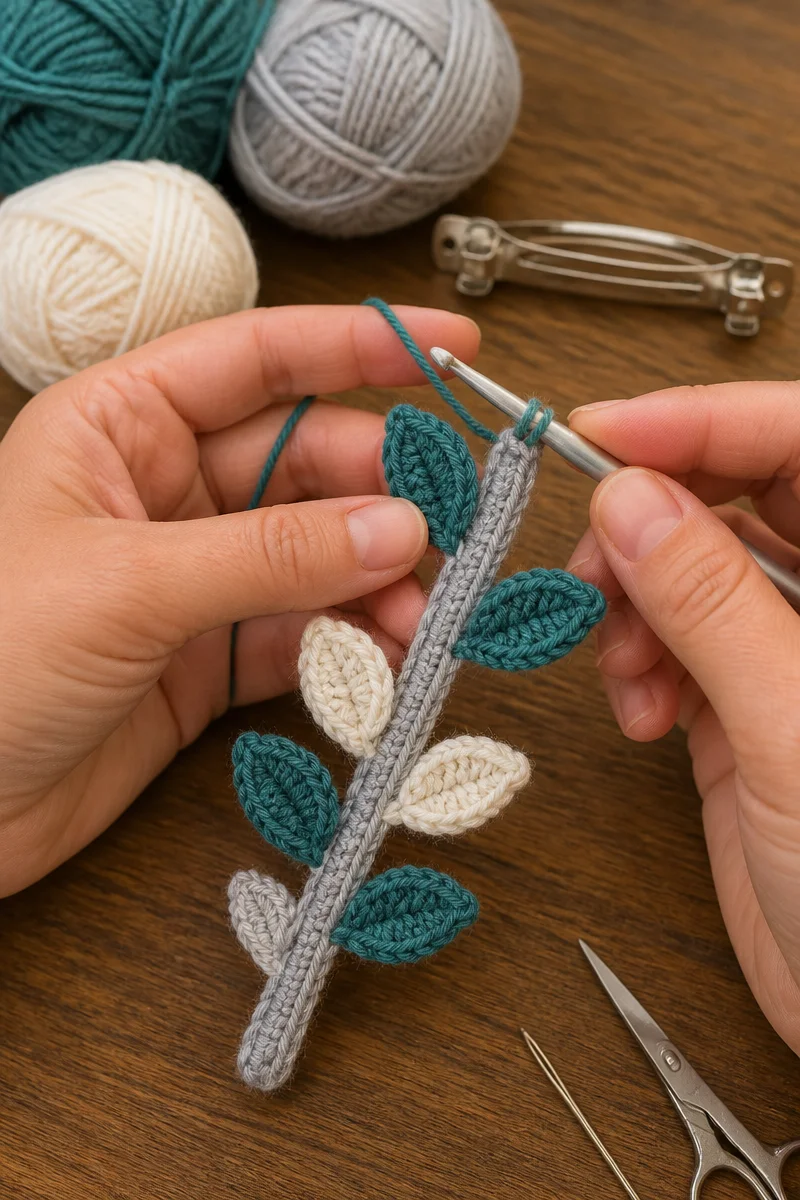
First, keep your stitches fairly even. A small sprig can look lopsided if one leaf is much larger than the others. Therefore, pause now and then to check the shape against the rest of the branch. If the motif curls or twists, gently adjust it with your fingers before adding it to the clip.
Next, take time to secure the ends and test the fit. A crochet juniper sprig should sit flat enough to attach well, but it does not need to look stiff. Before fastening it to the barrette, place the motif on top and check that the clip can still open and close. Also, use a needle and matching thread or yarn to attach it firmly, so the sprig stays in place during wear.
Common Mistakes to Avoid
Using yarn that is too thick can make the sprig bulky and heavy. As a result, it may cover the barrette or pull on fine hair. Choose a lighter yarn, and test a few stitches first if you are unsure about the finished size.
Uneven tension can make the leaves vary more than you intended. However, small differences can add a handmade look, so there is no need to aim for perfect uniformity. Instead, keep your working loop relaxed and compare each new leaf with the previous one.
Another common problem is attaching the motif before checking the clip. If the crochet piece sits over the hinge or closure, the barrette may not work smoothly. So, position the sprig carefully and leave the moving parts clear.
Finally, do not rely on a loose knot or a tiny dab of glue alone. Hair accessories get handled often, and the motif may come loose if it is not well secured. Sew through the sprig and the attachment area several times, while keeping the stitches hidden where possible.
Care and Washing Instructions
Washing: Follow the care label for your yarn. For cotton or washable acrylic, gently hand wash the barrette in cool water with mild soap. Avoid soaking the metal clip for a long time, since water may affect some finishes. If the clip is not washable, remove the crochet piece only if the design allows it.
Drying: Press out extra water with a clean towel, but do not wring or twist the sprig. Then, reshape it and let it air dry fully. Keep the clip open while it dries so moisture does not remain around the hinge.
Blocking: A small sprig may benefit from gentle shaping, especially if its leaves curl. Pin it lightly to a towel or blocking mat while damp, and let it dry. Avoid heavy blocking, since the motif needs to stay compact and sturdy on the barrette.
More Ideas to Try
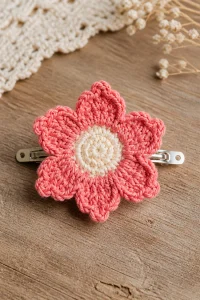
If you enjoy making a crochet juniper sprig, try a tiny crochet leaf, a simple flower barrette, a small botanical brooch, or a set of clips in different shades of green. You could also explore crochet berries or a miniature fern motif for another nature-inspired accessory.
Conclusion
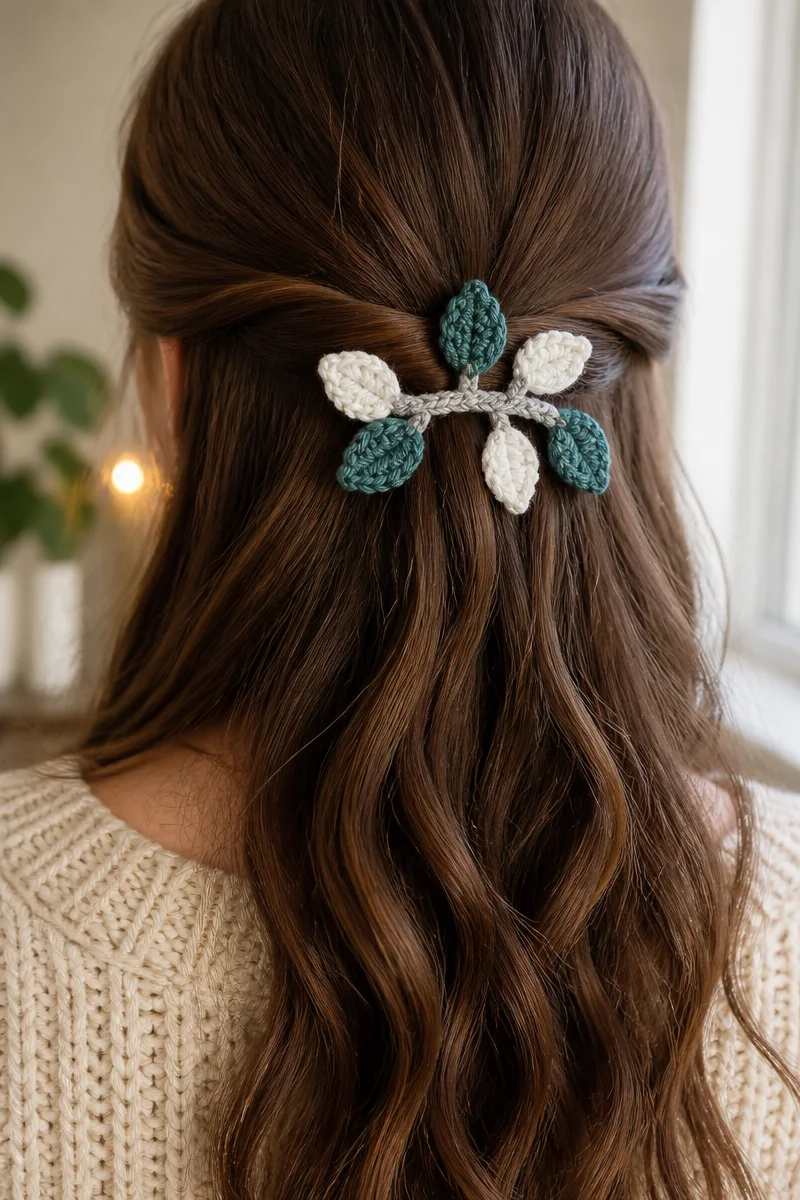
A Crochet Juniper Sprig Hair Barrette is a small, creative project that pairs a leafy crochet motif with a useful accessory. With fine yarn, even stitches, and a secure attachment, you can make a sprig that looks neat and feels special. Most of all, feel free to adjust the shape and colors to suit your own style. Try making one, share how yours turns out, or explore more crochet accessory guides on the blog.